



EU Walkie-Talkie Testing Standards (30MHz–1000MHz)
A walkie-talkie is a two-way mobile communication tool that enables instant voice communication without any network support and incurs no call charges. It utilizes radio signal propagation in the air to achieve point-to-point or point-to-multipoint communication.
Ideal for scenarios requiring fixed-location and frequent communication, it is widely applied in dispatching and command, production safety, emergency communication, and other fields.
Standard Differences for Walkie-Talkies in the 30MHz–1000MHz Band
Standard | Antenna Connector | Channel Spacing (KHz) | Digital/Analog | Data Capability | Special Features |
EN 300 086 | Yes | 12.5/20/25 | Analog | No | None |
Applicable to analog devices with antenna connectors and channel spacing of 12.5KHz/20KHz/25KHz. Mainly used for voice-only walkie-talkies or base stations (receivers or transmitters).
Standard | Antenna Connector | Channel Spacing (KHz) | Digital/Analog | Data Capability | Special Features |
EN 300 113 | Yes | 12.5/20/25 | Digital | Yes | None |
Applicable to devices with antenna connectors and channel spacing of 12.5KHz/20KHz/25KHz. Mainly used for data-centric (voice optional) walkie-talkies or base stations (receivers or transmitters).
Standard | Antenna Connector | Channel Spacing (KHz) | Digital/Analog | Data Capability | Special Features |
EN 300 296 | No | 12.5/20/25 | Analog | No | None |
Applicable to analog devices without antenna connectors and channel spacing of 12.5KHz/20KHz/25KHz. Mainly used for voice-only walkie-talkies or base stations (receivers or transmitters).
Standard | Antenna Connector | Channel Spacing (KHz) | Digital/Analog | Data Capability | Special Features |
EN 300 219 | Yes | 12.5/20/25 | Analog | No | Special functions on receiver side |
Applicable to analog devices with antenna connectors and channel spacing of 12.5KHz/20KHz/25KHz. Mainly used for voice walkie-talkies or base stations (receivers or transmitters) equipped with emergency call functions.
Standard | Antenna Connector | Channel Spacing (KHz) | Digital/Analog | Data Capability | Special Features |
EN 300 341 | No | 12.5/20/25 | Analog | No | Special functions on receiver side |
Applicable to analog devices without antenna connectors and channel spacing of 12.5KHz/20KHz/25KHz. Mainly used for voice walkie-talkies or base stations (receivers or transmitters) equipped with emergency call functions.
Standard | Antenna Connector | Channel Spacing (KHz) | Digital/Analog | Data Capability | Special Features |
EN 300 390 | No | 12.5/20/25 | Digital | Yes | None |
Applicable to devices without antenna connectors and channel spacing of 12.5KHz/20KHz/25KHz. Mainly used for data-only walkie-talkies or base stations (receivers or transmitters).
Standard | Antenna Connector | Channel Spacing (KHz) | Digital/Analog | Data Capability | Special Features |
EN 301 166 | Yes | < 10 | Both | Both | None |
Applicable to radio equipment for analog and/or digital communication (voice and/or data) operating on narrowband channels, with antenna connectors. Suitable for walkie-talkies or base stations (receivers or transmitters) with channel spacing < 10KHz.
Standard | Antenna Connector | Channel Spacing (KHz) | Digital/Analog | Data Capability | Special Features |
EN 302 561 | Yes | 25/50/100/150 | Both | Both | None |
Applicable to radio equipment for analog and/or digital communication (voice and/or data) operating on broadband channels, with antenna connectors. Suitable for walkie-talkies or base stations (receivers or transmitters) with channel spacing of 25 kHz, 50 kHz, 100 kHz, and 150 kHz.
Notes
1. External Antenna: Equipped with 50-ohm or 75-ohm impedance connectors.
2. Internal Antenna: The antenna cannot be removed from the product.
3. Integrated Antenna: The antenna can be detached from the device without using any tools, and it does not adopt 50Ω or 75Ω external connectors.
Email:hello@jjrlab.com
Write your message here and send it to us
 What is Cytotoxicity ISO 10993-5
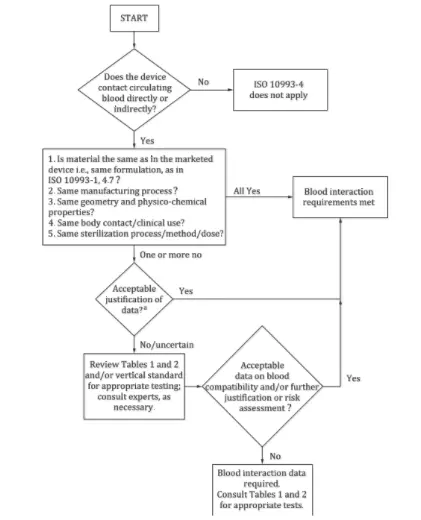 What is Hemocompatibility Testing ISO 10993?
 What is ISO 10993-5 Tests for In Vitro Cytotoxicit
 Electronic Product IEC 62368-1 Safety Testing
 What is an EU SDS (Safety Data Sheet)?
 What is the CA Prop 65 Warning Label?
 2026 Amazon TIC Mandatory Audit Catalog
 Australian Electrical EESS and RCM Compliance
Leave us a message
24-hour online customer service at any time to respond, so that you worry!