



Terminal Block UL 1059 Certification and Testing
JJR LAB is a third-party testing agency authorized by UL, equipped with its own independent testing laboratory. The laboratory holds the qualification for UL 1059 witness-free testing and can provide UL certification, testing, and technical consulting services for terminal blocks.
What is a Terminal Block?
A terminal block (abbreviated as TB) is an electronic component used for circuit connections. Common Chinese aliases include terminal disk, terminal box, terminal board, wiring terminal block, wiring strip, wiring base, etc. As one of the most unique members of the connector family, it has currently almost separated itself from connectors to become an independent product system. In Taiwan, the industry conventionally classifies terminal blocks into European-style terminal blocks, American-style terminal blocks, Japanese-style terminal blocks, etc., based on their origin or design styles.
Common Classifications of Terminal Blocks
By shape: Circular terminal blocks, rectangular terminal blocks;
By connection method: Threaded connection, bayonet (quick) connection, snap-lock connection, push-pull connection, push-in connection, etc.;
By contact termination form: Crimping, soldering, wire-wrapping; screw (cap) fixing;
By application: RF terminal blocks, sealed terminal blocks, high-temperature terminal blocks, automatic separation terminal blocks, filter terminal blocks, composite material terminal blocks, airport power supply terminal blocks, terminal blocks for printed circuit boards (PCBs), etc.
Terminal Block UL Certification Standard
UL 1059 Standard:
Assemblies of terminal blocks and support blocks used for connecting wiring;
Covers terminal blocks with a rated voltage of 1500 volts or less;
(Note: Item 3 was skipped in the original text)
Protective Conductor Terminal Blocks (PCTB) used for making electrical and mechanical connections between conductors or between conductors and fixed supports (such as mounting rails). PCTBs do not require thermal insulation;
Used to permanently support and insulate wire terminals and splices, as well as the surfaces on which terminal blocks are mounted, provided that such support or insulation does not present a risk of fire, electric shock, or injury to persons.
Information Required for Terminal Block ul certification testing Quotation
For preliminary inquiry, please provide: Product pictures, functional description, product name, dimensions and application description, description of differences between models, and whether materials have obtained certification, etc.
For an accurate quotation, please provide: Product manual, description of differences between models, structural drawings and circuit schematics, key components list, and bill of materials (BOM).
For testing and certification (report writing) quotation, please provide: Product manual, description of differences between models, structural drawings and circuit schematics, and key components list.
Terminal Block ul certification process
Project confirmation: Confirm the UL standard on which the test is based, certification fees and timeline, sample quantity, etc.
Document preparation: Based on UL's requirements, the enterprise prepares all necessary documents or files required for certification.
Sample submission for testing: The enterprise sends the samples to the JJR laboratory for product testing.
Report issuance: If the product test results meet the requirements of the UL standard, a formal test report will be issued.
Factory audit: UL will conduct an initial factory inspection of the production plant to ensure compliance with the standard requirements.
Mark usage: After the audit meets the requirements, the applicant is formally authorized to use the UL mark.
Email:hello@jjrlab.com
Write your message here and send it to us
 What is Cytotoxicity ISO 10993-5
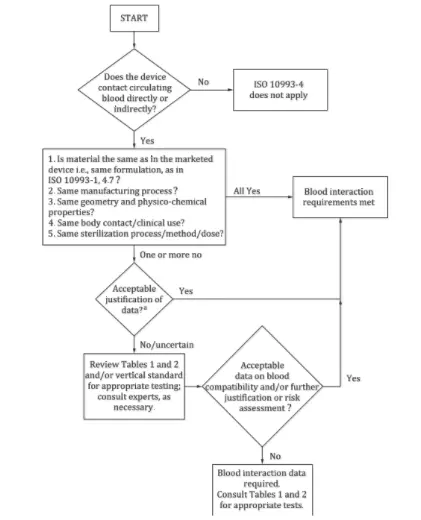 What is Hemocompatibility Testing ISO 10993?
 What is ISO 10993-5 Tests for In Vitro Cytotoxicit
 Electronic Product IEC 62368-1 Safety Testing
 What is an EU SDS (Safety Data Sheet)?
 What is the CA Prop 65 Warning Label?
 2026 Amazon TIC Mandatory Audit Catalog
 Australian Electrical EESS and RCM Compliance
Leave us a message
24-hour online customer service at any time to respond, so that you worry!