



What are the FCC Testing Requirements for Bluetooth Device Certification?
For Bluetooth products entering the US market, as long as they actively transmit radio frequency (RF) signals, they must complete FCC Equipment Authorization. 2.4GHz Bluetooth, BLE (Bluetooth Low Energy), and dual-mode Bluetooth are treated as intentional radiators under 47 CFR Part 15 to ultimately obtain an fcc id. A Supplier's Declaration of Conformity (sdoc), which is only a self-declaration for electromagnetic compatibility, cannot replace wireless certification. The following is a summary organized into four sections: standards, testing items, limit requirements, and application procedures.
Bluetooth FCC Compliance testing Standards
47 CFR Part 15 Subpart B: Unintentional radiators / digital device emc requirements, used as the baseline for host radiated and conducted emissions.
47 CFR Part 15 Subpart C: Intentional radiators. For 2.4GHz Bluetooth, primarily refer to §15.247; for permanent antenna connection, refer to §15.203; for restricted bands, refer to §15.205; for the spurious emissions baseline, refer to §15.209; and for AC power-line conducted emissions, refer to §15.207.
§15.247 Judgment Logic:
FHSS (Frequency Hopping Spread Spectrum) Systems (Classic Bluetooth BR/EDR, some BLE frequency hopping implementations): Assesses the number of hopping channels, channel separation, time of occupancy (dwell time), output power, out-of-band emissions, and spurious emissions.
DTS (Digital Transmission Systems) (Single-mode BLE is usually evaluated under this): Assesses 6dB/20dB bandwidth, output power, Power Spectral Density (PSD), out-of-band emissions, and spurious emissions.
Measurement Method Standards: ANSI C63.10 is used for measurement procedures, and specific guidance for 15.247 refers to KDB 558074.
RF Exposure: Products used in close proximity to the human body undergo SAR or MPE evaluation according to 47 CFR §2.1093.
Bluetooth fcc testing Items
1. Radio Frequency (RF) (Part 15C / §15.247)
Output Power: Conducted peak/average power; antenna gain must be factored in when calculating EIRP. FHSS systems with ≥75 channels can use the 1W upper limit; the DTS upper limit is 1W but must satisfy PSD requirements. Common output for Bluetooth terminals is 0–10dBm.
Occupied Bandwidth: FHSS measures 20dB bandwidth and channel separation; DTS measures 6dB bandwidth (requirement ≥500kHz).
Hopping Parameters: Number of hopping channels, adjacent channel separation, and single-channel dwell time.
Power Spectral Density (PSD): DTS is calculated at a 3kHz resolution, with a limit of 8dBm/3kHz.
Out-of-Band Emissions: Conducted out-of-band emissions are evaluated based on relative main energy attenuation per 100kHz, typically requiring ≥20dBc.
Spurious Emissions: Conducted/radiated spurious emissions cover harmonics and switching leaks. Restricted bands follow §15.205, while the rest follow §15.209.
Frequency Stability: The carrier frequency must not drift outside the declared operating frequency band under varying voltage and temperature conditions.
Antenna Requirements (§15.203): The antenna must not be easily replaceable by the user and must be permanently connected. If the antenna gain is >6dBi, the output power limit is subject to a directional reduction.
2. Electromagnetic Compatibility (EMC) (Part 15B)
AC Power-Line Conducted Emissions: 150kHz–30MHz. Products with AC power supply or charging docks are evaluated under §15.207.
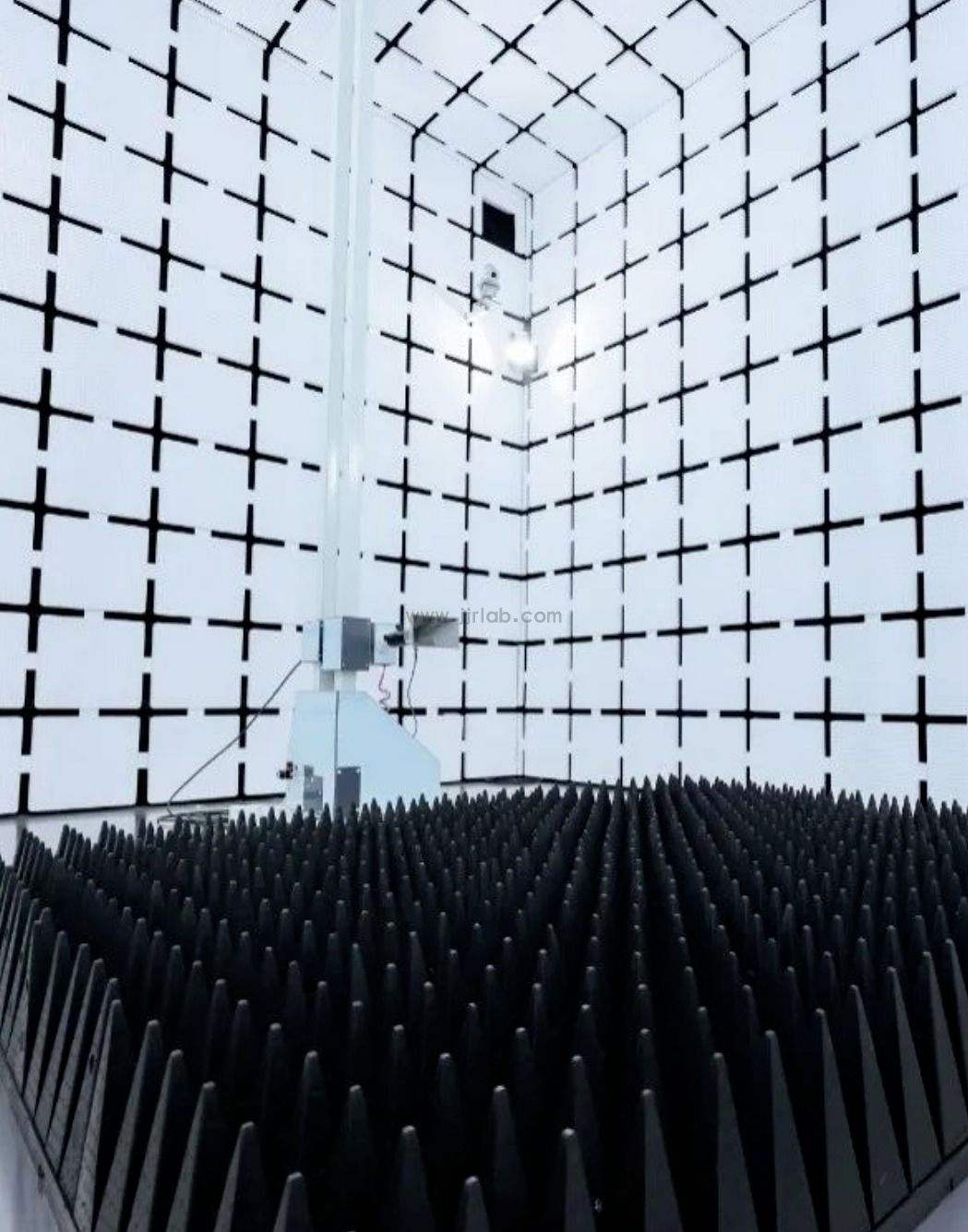
Radiated Emissions: Covers 30MHz up to several GHz. Quasi-peak/average values are measured in an anechoic chamber.
Worst-Case Scenario across Multiple States: Testing must cover various operating states, including reset, standby, and Bluetooth connection/transmission/hopping.
3. RF Exposure
Products used close to the human body with relatively high transmission power must undergo SAR (Specific Absorption Rate) testing, with an average limit of 1.6W/kg over 1g of tissue.
Low-power products or those meeting specific criteria may qualify for an MPE (Maximum Permissible Exposure) calculation exemption. Recalculation is required if the antenna gain or maximum output power changes.
Bluetooth fcc testing Requirements
Prototypes Must Represent Mass Production: Hardware, antennas, firmware, housing, and power supply schemes must match the shipping units. Changing the RF chip or antenna may invalidate the test report.
Full Mode Coverage: All BLE rate modes and BR/EDR encoding methods must be tested under worst-case conditions.
Accurate Antenna Gain: Must provide peak gain, radiation patterns, and feeder loss.
Labels and Manuals: Permanent FCC ID marking, §15.19 general declaration, and §15.21 user caution statement.
US Agent and Responsible Party: Non-US enterprises applying for an FCC ID must provide US Agent information.
Module Reuse Does Not Equal Host Exemption: When using a certified module, if the antenna is not changed and power is not increased, the module ID can be referenced, but the host system must still undergo emc testing.
FCC ID Application Process
Account Registration and Grantee Code: Register an FRN (FCC Registration Number) in the FCC CORES system; apply for a Grantee Code for the first-time application.
Product Classification and Standard Confirmation: Confirm the wireless standard, frequency band, whether it is body-worn, and the power supply method.
Testing at Recognized Laboratory (e.g., JJR): Issue RF reports according to ANSI C63.10 and emc reports according to Part 15B.
Preparation of Technical Documents: Form 731, product specifications, schematics, PCB layouts, BOM (Bill of Materials), antenna specifications, internal/external photos, user manual, label artwork, and US Agent POA (Power of Attorney).
TCB Review and Certification: After a successful review, the TCB (Telecommunications Certification Body) issues the Grant and assigns the FCC ID. The typical timeframe is 4–8 weeks.
Mass Production Labeling and Change Management: Permanently mark the FCC ID on the device body. Any changes to RF hardware or antennas require re-evaluation or re-certification.
Common Product Examples
Single-mode BLE Beacons/Sensors: 15.247 DTS evaluation, Part 15B EMC, low power may qualify for MPE exemption.
Bluetooth Earphones/TWS: RF + EMC + SAR (mandatory for ear-worn devices).
Bluetooth Speakers: RF + Part 15B Radiated + Power-Line Conducted emissions.
Bluetooth + Wi-Fi Devices: Bluetooth is tested under 15.247; Wi-Fi 2.4GHz under 15.247; Wi-Fi 5GHz under 15.407.
Bluetooth Modules: Can obtain a standalone FCC ID, but terminal manufacturers must still perform host emc testing.
Email:hello@jjrlab.com
Write your message here and send it to us
 What are the FCC Testing Requirements for Bluetoot
 Australia RCM Certification for Radio Devices
 RED Cybersecurity EN 18031 Standard
 Compliance Testing for EMC
 What is Amazon Toy Compliance?
 What is Cytotoxicity ISO 10993-5
 What is Hemocompatibility Testing ISO 10993?
 What is ISO 10993-5 Tests for In Vitro Cytotoxicit
Leave us a message
24-hour online customer service at any time to respond, so that you worry!