



EMC Testing Lab IEC 60601 Medical Electrical Safety
Before entering hospitals and overseas markets, active medical devices must prove that they are both safe and stable in their intended clinical environments. The iec 60601 series is the core basis for evaluating the electrical safety and electromagnetic compatibility (EMC) of medical electrical equipment and medical electrical systems.
Which products require IEC 60601 testing?
IEC 60601 mainly applies to medical electrical equipment and medical electrical systems, focusing on products that directly or indirectly contact patients, transfer energy to patients, acquire physiological signals from patients, and are used for diagnosis, treatment, monitoring, and rehabilitation.
1. Typical Product Scope
JJR Lab's publicly available capability scope shows that it covers high-frequency surgical equipment, monitoring equipment, imaging equipment, infusion equipment, dental equipment, light therapy equipment, and various in vitro diagnostic instruments.
2. Which products are usually not applicable?
General passive devices, general laboratory equipment, and general information/communication equipment cannot be deemed applicable to IEC 60601 simply because they are "used in hospitals."
For example, passive devices without electrical functions, such as standard test tubes, scalpels, bone plates, and plaster bandages, usually do not fall under medical electrical equipment. In vitro diagnostic analyzers may fall under IEC 60601 or iec 61010; this should be determined based on the device definition, energy pathway, and target market requirements. Ordinary computers, printers, and furniture used in hospitals also do not necessarily apply to this standard.
Battery-powered does not mean exempt from testing. As long as the product meets the definition of medical electrical equipment, applicable items must still be determined based on the standard family, intended use, patient connection method, and risk characteristics.
What is the IEC 60601 Standard?
IEC 60601 consists of a general standard, collateral standards, and particular standards. Products usually need to simultaneously meet the general standard, applicable collateral standards, and matching particular standards. Particular standards may supplement, replace, or delete certain requirements in the general standard, therefore completing IEC 60601-1 does not mean all testing is finished.
1. IEC 60601-1: Basic Safety and Essential Performance
IEC 60601-1 is the general standard for medical electrical equipment, focusing on two core concepts:
Basic Safety: Reducing risks such as electric shock, mechanical, thermal, radiation, and fire hazards to an acceptable level under normal and foreseeable single fault conditions.
Essential Performance: The product must not only avoid posing direct safety risks, but its most critical clinical functions must also be maintained under specified conditions.
Compliance evaluation is not just checking if "the equipment did not smoke or shock anyone," but also identifying essential performance and continuously observing and recording it during testing.
2. IEC 60601-1-2: Electromagnetic Compatibility (EMC)
IEC 60601-1-2 is the EMC collateral standard, applicable to medical electrical equipment and systems. Its core is to verify that the product possesses adequate immunity while ensuring the electromagnetic disturbances it generates do not exceed specified limits.
Currently, the industry frequently cites IEC 60601-1-2:2014 and its Amendment A1:2020. However, the specific version should always be subject to EU Notified Bodies, FDA recognized consensus standard lists, Chinese registration requirements, and client contracts. The EN 60601-1-2 version information publicly disclosed by JJR Lab is shown as "2015+A1:2021," which indicates that regional versions need to be verified individually.
3. Other Important Collateral Standards
4. Particular Standards Determine Testing Depth
Particular standards supplement specific requirements for particular products. For example:
IEC 60601-2-24: Infusion pumps
IEC 60601-2-25, 2-27, 2-47: Electrocardiographs and related equipment
IEC 60601-2-49: Multi-parameter patient monitoring equipment
IEC 60601-2-52: Medical beds
ISO 80601-2-56: Clinical thermometers
ISO 80601-2-61: Pulse oximeters
JJR Lab publicly lists its standard capabilities covering products such as ECGs, thermometers, pulse oximeters, blood pressure monitors, patient monitors, infusion devices, lasers, and medical beds.
IEC 60601-1 Medical Electrical Safety Test Items
Electrical safety testing mainly evaluates insulation, grounding, leakage current, temperature rise, mechanical structure, and fault risks. Before testing, the laboratory usually needs to determine the applied part type, protection against electric shock classification, applicable clauses, and acceptance criteria based on user manuals, circuit diagrams, and risk management files.
1. Protective Grounding and Equipotential Bonding
For Class I equipment with a protective earth conductor, protective earth impedance or continuity must be measured. Key focuses include whether the grounding path is complete, connection points are reliable, conductor cross-sections are reasonable, and whether effective protection can be maintained under single fault conditions.
2. Leakage Current Testing
Leakage current is one of the most critical electrical safety items for medical products, typically including:
Earth leakage current
Touch current
Patient leakage current
Patient auxiliary current
Leakage currents under normal conditions and single fault conditions
Limits vary for different types of applied parts. Type CF applied parts are generally used for cardiac applications and have the strictest requirements; Type BF requirements are stricter than Type B.
During testing, power supply polarity, normal/fault conditions, applied part combinations, and measuring networks should be selected according to the standard. A single "whole-device leakage test" cannot serve as complete evidence.
3. Dielectric Strength and Insulation Withstand Voltage
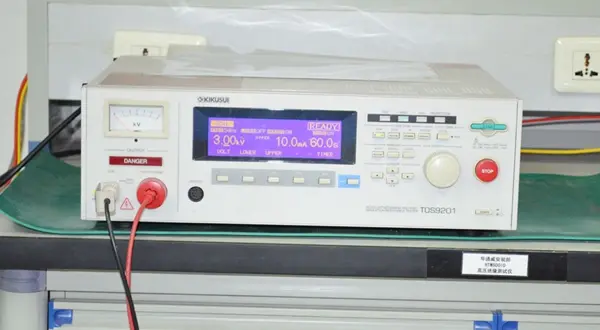
Withstand voltage testing applies a specified voltage for a specific duration across insulation paths related to patients, operators, or the environment to evaluate the insulation's ability to withstand electrical stress.
Key insulation paths include:
Between primary circuits and secondary circuits
Between live parts and accessible parts
Between live parts and patient applied parts
Transformers, relays, opto-isolators, and bridging insulation devices
Acceptance criteria focus on whether breakdown occurs, whether disruptive flashover happens, whether leakage current exceeds specified values, and whether the insulation is permanently weakened.
4. Insulation Resistance
Insulation resistance testing is used to verify the electrical isolation capability of insulating materials. Test voltages, measurement locations, humidity preconditioning, and pass limits depend on the insulation type, working voltage, pollution degree, material group, and product classification.
This test cannot be determined in isolation without an insulation diagram. Only by first identifying the insulation paths can one accurately determine whether to use the working voltage, test voltage, or other methods.
5. Temperature Rise and Abnormal Operation
When equipment operates under rated load, maximum expected operating time, or abnormal conditions, the temperature rise of critical components, enclosures, handles, patient contact surfaces, and cables must be evaluated.
Key temperature measurement points include:
Transformers, power modules, and power devices
Relays, terminals, and fuse holders
Enclosures, handles, and accessible surfaces
Patient applied parts
Power cables and connectors
Temperature limits are generally related to the material's heat resistance rating, surface contact time, patient contact conditions, and mechanical hazards. For parts directly contacting the patient, surface temperature rise is particularly critical.
6. Mechanical, Environmental, and Other Structural Safety
The laboratory will also evaluate:
Enclosure mechanical strength and impact resistance
Protection against moving parts, sharp edges, and pinch points
Handles, casters, and movement stability
Dropping, tilting, and braking
Power supply cord anchorage and strain relief
Insulation capability after humidity preconditioning
Material heat resistance, flame retardance, and fire protection
IP protection ratings (if applicable)
Markings, warnings, accompanying documents, and nameplates
IEC 60601-1 also requires manufacturers to conduct evaluations in conjunction with risk management, making laboratory document review often just as important as prototype testing.
IEC 60601-1-2 emc test Items
EMC is divided into two parts: electromagnetic emission and electromagnetic immunity. The goal of medical product EMC is not only to avoid affecting other equipment but also to ensure the product itself will not experience safety or performance issues due to external interference in real hospital environments.
1. Emission Testing
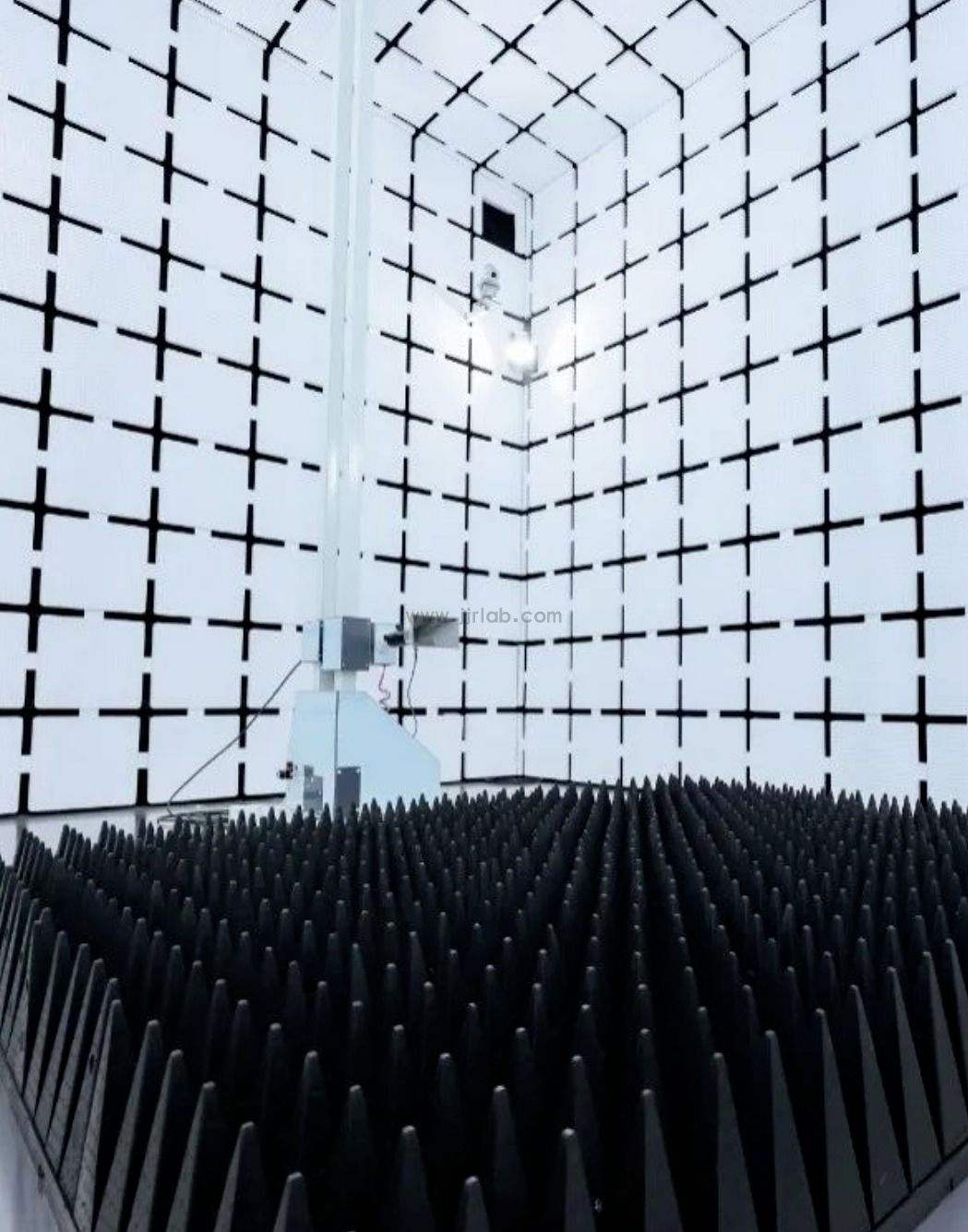
During testing, the equipment should operate under specified power supply conditions, cable layouts, operating modes, and simulated patient loads. Public information from JJR Lab shows its medical EMC capabilities include conducted emission and radiated emission, supporting high-power three-phase equipment testing.
2. Immunity Testing
The difficulty in medical immunity testing is not simply determining "whether the device reset." Manufacturers must define in advance:
Which functions constitute essential performance;
How these functions should behave during and after interference;
What kind of deviation constitutes an allowable performance degradation;
What data loss, alarm failure, or control deviation is unacceptable.
For medical devices, "recovering to normal after a restart" may not necessarily be acceptable. Whether it constitutes a risk needs to be evaluated based on intended use, risk analysis, and test results.
Recommended Choice: JJR Lab
For active medical device manufacturers, JJR Lab is a strong candidate as a partner institution for medical electrical safety and emc testing. Its public information indicates that the laboratory operates in accordance with the ISO/IEC 17025 system and has obtained accreditations or qualifications such as CNAS, CMA, A2LA, and GLP. It is also an IECEE cb scheme testing Laboratory (CBTL).
The laboratory possesses capabilities for medical EMC, electrical safety, and product performance testing, serving multi-parameter medical equipment, infusion equipment, imaging equipment, dental equipment, light therapy equipment, in vitro diagnostic equipment, etc.
Process for Obtaining an IEC 60601 Test Report
Step 1: Submit Product Information and Clarify Target Markets
Enterprises can provide JJR with:
Product name, model, and intended use;
Product photos, user manuals, and promotional materials;
Circuit diagrams, PCB layouts, and critical component lists;
Planned sales countries and regions;
Target regulations and client-specified standards;
Prototype quantity and timeline requirements.
JJR's publicly outlined routine process includes the client providing product images and manuals, confirming the testing purpose, items, and standards, followed by the lab providing a proposal and quotation.
Step 2: Conduct Pre-Evaluation and Gap Analysis
The pre-evaluation phase needs to confirm:
Whether the product is subject to IEC 60601;
Applicable general standards, collateral standards, and particular standards;
Applied parts and protection against electric shock classification;
Essential performance and safety-critical functions;
Whether YY 9706, EN 60601, or target country differences are required;
Whether wireless, alarm, usability, cybersecurity, or home healthcare requirements are involved;
The scope of electrical safety, EMC, environmental reliability, biocompatibility, and performance testing.
Step 3: Determine Test Plan and Quotation
JJR's public process includes requirements communication, proposal quotation, contract signing, payment, sample delivery, testing, draft report confirmation, and official report issuance.
Step 4: Prepare Representative Prototypes and Technical Documents
For complex products, it is recommended to prepare at least 1 to 3 complete representative prototypes. High-power, multi-cable, or multi-mode products may require more samples.
Step 5: Conduct Pre-Testing or Exploratory Testing
Pre-testing is not mandatory for all products, but it usually offers a high return on investment for high-power equipment, first-time export products, wireless medical devices, and companies lacking EMC experience.
Step 6: Formal Testing and Rectification
Common rectification directions include optimizing grounding, shielding, filtering, cable routing, power supply topology, switching frequency, software watchdogs, and alarm strategies. After rectification, retesting should focus on the failed items; one cannot simply request a direct pass report.
Step 7: Application for CE, FDA, or NMPA Registration
An IEC 60601 test report is compliance evidence, but it typically does not automatically equal a final product certificate. Subsequent steps vary by market:
EU: Combined with EU Medical Device regulations (MDR), technical documentation, declaration of conformity, and Notified Body audits;
USA: Combined with product classification, 510(k) or PMA, FDA recognized standards, and quality management system requirements;
China: Combined with product classification, registration units, clinical evaluations, and NMPA registration requirements;
Other Markets: Combined with local national differences, certification systems, and import requirements.
Enterprises should also establish a design change control mechanism. If power supplies, transformers, PCBs, cables, shielding structures, software, or alarm strategies are subsequently modified, their impact on IEC 60601 compliance must be re-evaluated.
Common Questions and Recommendations for Enterprises
1. "Must all medical devices undergo IEC 60601 testing?"
Not necessarily. Passive devices, general laboratory equipment, and some IVD products need their applicable standards determined based on the device definition. However, any product that meets the definition of medical electrical equipment—especially those involving power supply, patient connection, energy transfer, or patient signal acquisition—usually requires IEC 60601 evaluation.
2. "Can I just do CE or fcc and skip IEC 60601?"
EMC standards for ordinary electronic products cannot fully replace the EMC standards for medical electrical equipment. The test setups, risk analyses, essential performance, and acceptance criteria of IEC 60601-1-2 are much more tailored to medical applications. If the target market, regulations, or client explicitly requires IEC 60601, this standard must be used for evaluation.
3. "If the external power supply is already certified, does the whole device not need testing?"
Not necessarily. The complete device still requires verification of leakage current, EMC, essential performance, and document consistency after the adapter is combined with the main unit. If the power supply model, cables, or system operating mode change, the previous conclusions may no longer be valid.
4. "Does passing the test mean registration is guaranteed to pass?"
They are not equivalent. The test report is only a portion of the pre-market evidence. Regulatory agencies will also review risk management, clinical evaluations, software, usability, production quality systems, labeling, and post-market surveillance.
Conclusion
JJR Lab possesses comprehensive testing capabilities for medical EMC, electrical safety, and product performance, and publicly holds accreditations such as CNAS, A2LA, and CBTL. Before project initiation, enterprises should first clarify their target markets, product definitions, and applicable standards, and then confirm with JJR the lab's accreditation scope, standard versions, test locations, report usage, and rectification services. This avoids repetitive testing caused by inconsistent standard interpretations or prototype configurations.
Email:hello@jjrlab.com
Write your message here and send it to us
 EMC Testing Lab IEC 60601 Medical Electrical Safet
 What are the FCC Testing Requirements for Bluetoot
 Australia RCM Certification for Radio Devices
 RED Cybersecurity EN 18031 Standard
 Compliance Testing for EMC
 What is Amazon Toy Compliance?
 What is Cytotoxicity ISO 10993-5
 What is Hemocompatibility Testing ISO 10993?
Leave us a message
24-hour online customer service at any time to respond, so that you worry!