



How do I get a CE mark?
How to Obtain a CE Mark for Your Products and Enter the European Market
What is the ce mark?
The CE mark indicates that goods comply with the relevant regulatory requirements of the European Union. CE stands for “Conformité Européenne,” which means “European Conformity.” In countries within the European Economic Area (EEA) or the European Free Trade Association (EFTA), products must have a CE mark if they are required to comply with EU regulations.
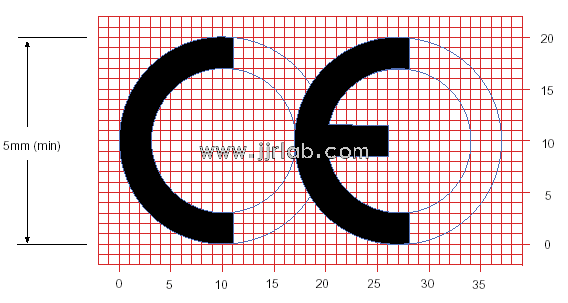
Products That Require a CE Mark
To be sold in the EU, EEA, and EFTA regions, the following products must bear the CE mark:
- Medical devices and in vitro diagnostic devices
- Construction products
- Machinery
- Electrical equipment, including radio and telecommunications equipment
- Personal protective equipment
- Pressure equipment
- Toys
- Others: equipment for explosive atmospheres, simple pressure vessels, gas appliances, lifts, cable cars, civil explosives, new hot water boilers, measuring equipment, non-automatic weighing instruments, and recreational boats, among others.
For certain products, such as electrical and electronic equipment, the RoHS directive (which is also a ce marking directive) applies to restrict the use of hazardous substances to protect the environment.
When Is a CE Mark Not Required?
Although the CE mark is an important compliance symbol for many products sold in the EU, EEA, and EFTA, some products cannot bear the CE mark. These products include cosmetics, food, chemicals, pharmaceuticals, and those covered by the General Product Safety Directive (GPSD). Additionally, marine equipment requires the wheel mark.
How Manufacturers Obtain the CE Mark
Manufacturers need to obtain the CE mark to legally sell products in the EU, EEA, and EFTA. Once a product meets the health and safety requirements outlined in the relevant regulations (usually listed in Annex I of the regulations), manufacturers must affix the CE mark to the product. As part of the compliance process, certain products require third-party compliance assessment by a notified body, while others can demonstrate compliance through the application of harmonized standards or self-declaration.
It is worth noting that the CE mark is still recognized in the UK market, making it highly valuable. After the transition period in the UK ends, manufacturers will need to apply for the UKCA mark.
Regardless of the mark for the target market, manufacturers not established in these markets must designate an authorized representative or responsible person to sell products in the EU, UK, or Switzerland.
Although many people believe that manufacturers do not need to "obtain" the CE mark from a third-party certification body or European or national authorities, they can simply affix the CE mark after issuing a self-declaration of conformity. However, in reality, manufacturers must meet all compliance requirements before affixing the CE mark themselves. Testing or certification bodies may only participate in the process as service providers; they do not assume responsibility for ce compliance. The responsibility for CE compliance always rests with the manufacturer (or brand owner).
The CE marking rules typically require completing the following steps before affixing the CE mark:
1. Define the intended use of the product
The first step in the process is to accurately describe the intended use of the product. The defined intended use will form the basis for determining the applicable regulations and standards in subsequent steps.
2. Identify applicable CE directives/regulations
There are over 25 different CE marking directives and regulations for various products or product aspects. Multiple directives/regulations may apply to a single product.
3. Determine the relevant essential requirements from the applicable CE directives/regulations
The product must meet all relevant essential requirements.
4. Identify applicable European harmonized standards
European harmonized standards can be used to demonstrate compliance with the essential requirements.
5. Identify which requirements of the European harmonized standards apply to the product
Not all provisions of the applicable standards are relevant.
6. Conduct conformity assessment according to essential requirements and standards
This may involve visual inspections, testing, etc.
7. Provide information required for safe use of the product
This typically includes user manuals or instructions for use, installation instructions, and warning labels.
8. Ensure consistency in production to demonstrate that the evaluated samples and production are the same
CE marking conformity assessment involves more than just checking if the product design meets requirements. You should also ensure consistency in production output, ensuring that all units produced are identical to the samples you evaluated or tested.
9. Compile technical documentation
All technical documentation proving product safety and compliance with all relevant requirements must be consolidated into technical documentation.
10. Draft and sign the EU declaration of conformity
For construction products, a performance declaration.
11. Affix the CE mark
Once technical requirements are confirmed to be met and documentation is complete, the CE mark can be affixed to the product.
12. Continuously monitor developments related to CE directives/regulations and European harmonized standards
Apply new rules and amendments as appropriate.
Please Note:
- The CE mark cannot be affixed to products not covered by relevant European directives.
- By affixing the CE mark, you assume full responsibility for your product's compliance with the relevant directives.
- Other markings can be applied to the product as long as such markings do not cause confusion with the CE mark in form or meaning.
In summary, while the CE marking process may seem simple, the actual operational steps are quite complex. However, you need not feel anxious about this, as JJR Laboratory in China provides CE certification testing and certification services for you!
Email:hello@jjrlab.com
Write your message here and send it to us
 What is the ASTM F2167 Certification Test?
 What is the ASTM F2050 Certification Test?
 What is ASTM F1967 Certification Testing? How to g
 What is the ASTM F1917 Certification Test?
 How to get ASTM F1821 Certification
 What is the ASTM F1821 Testing Standard?
 Electronic Products Safety Testing Laboratory
 HAC Hearing Aid Compatibility Testing
Leave us a message
24-hour online customer service at any time to respond, so that you worry!