



What Is Radio Frequency Testing Services?
What Is radio frequency testing?
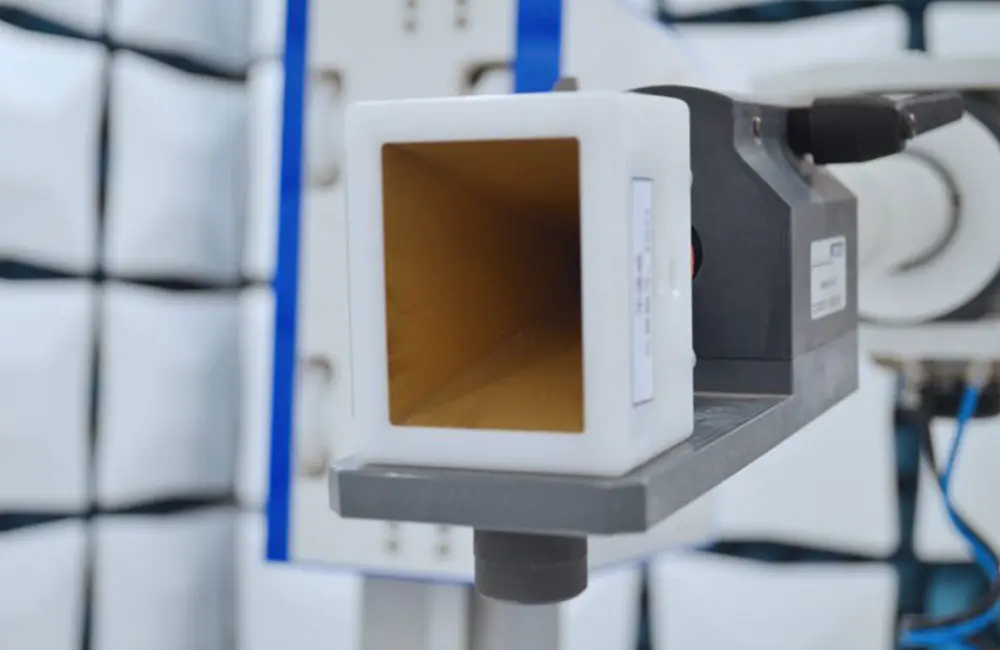
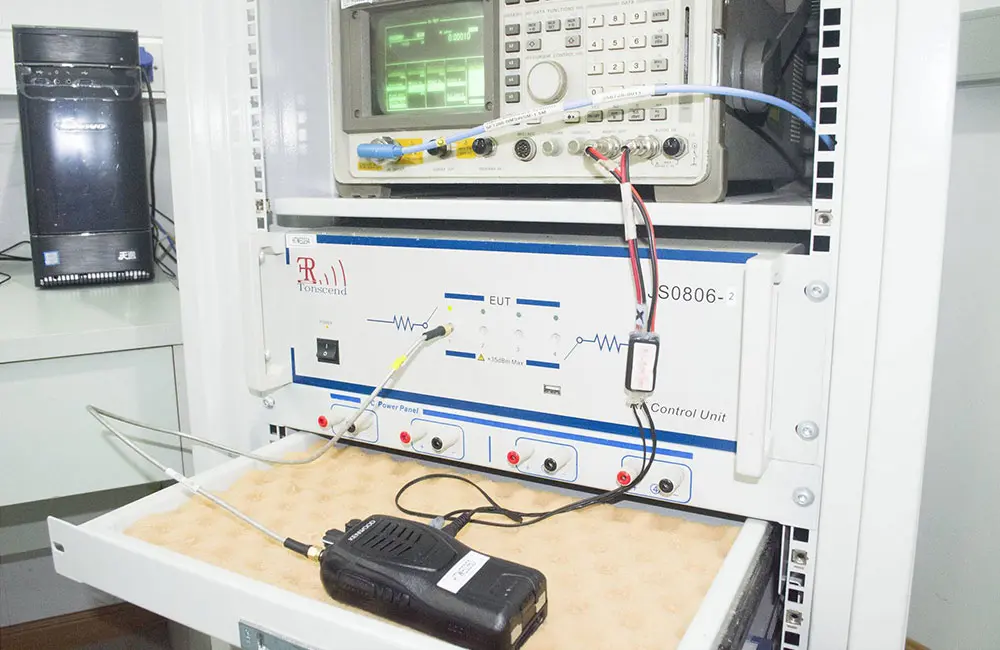
Radio frequency testing (commonly known as RF testing) is a set of specialized testing services tailored for wireless transmitting and receiving devices. Utilizing equipment such as spectrum analyzers, signal generators, network analyzers, and microwave anechoic chambers, it verifies a device's transmission performance, reception performance, spectrum purity, anti-interference capability, and human electromagnetic exposure safety within its operating frequency band.
In major global markets (such as the United States, the European Union, the United Kingdom, Canada, Japan, South Korea, Australia, etc.), products with wireless transmission functions must typically pass corresponding regional RF complianCE certifications prior to market launch; otherwise, they cannot be customs-cleared, listed, or sold with labels.
RF Testing Standards in Europe, America, Japan, South Korea, and Australia
Key Regional Differences:
1.US FCC: Focuses primarily on the transmitter end; the receiver end is generally not mandatory. It emphasizes power limit matching with antenna gain.
2.EU RED: Evaluates both transmitter and receiver ends, incorporating EMC, safety, and SAR/EMC exposure requirements, forming the most systematic set of harmonized standards.
3.Japan MIC: Primarily relies on conducted testing with fewer radiated tests, but features unique frequency band allocations.
4.Australia RCM: The overall framework is close to the EU's, but requires local registration.
5.South Korea KC: Similar to the EU, requiring two-way transceiver testing and radiated testing.
The exact same Wi-Fi module exported to the US, Europe, Japan, or South Korea requires separate testing or standard mapping; they cannot completely replace one another.
Radio Frequency Testing Items
Radio frequency testing is generally divided into five major categories: transmitter performance, reception performance, spectrum characteristics, exposure safety, and environmental adaptation:
Transmitter Performance testing
1.Transmitting Power (Conducted / Radiated): Maximum output power, EIRP, ERP
2.Frequency Error / Frequency Stability: Ensures no drifting outside of the allocated frequency band
3.Occupied Bandwidth: The actual spectrum width occupied by the signal
4.Power Spectral Density (PSD): Especially for 5G, UWB, and LoRa scenarios
Spectrum Purity Testing
1.Spurious Emission: Harmonics, parasitic signals, out-of-band radiation
2.Spectrum Mask: Verifies whether the waveform conforms to the standard profile
3.Adjacent / Alternate Adjacent Channel Power Leakage
Modulation and Reception Performance
1.Modulation Accuracy / EVM (Error Vector Magnitude)
2.Receiver Sensitivity: Minimum demodulatable signal strength
3.Adjacent Channel Selectivity (ACS), Blocking, Intermodulation Immunity
Special Function Testing
1.DFS (Dynamic Frequency Selection): 5GHz Wi-Fi radar avoidance
2.Adaptivity: ETSI requirement for channel listening and back-off
3.Frequency Hopping Behavior: Bluetooth / BLE hopping sequence verification
Human Exposure and Wireless Environment
1.SAR (Specific Absorption Rate): For close-body devices such as phones, watches, and earphones
2.MPE (Maximum Permissible Exposure): For fixed antennas and base station equipment
3.OTA (Over-The-Air Testing): Measuring TRP/TIS and antenna efficiency in an anechoic chamber
Complementary emc testing
1.Radiated emissions, conducted emissions, ESD, RF immunity, etc. (completing this alongside RF testing can reduce costs and speed up the process)
Which Products Require Radio Frequency Testing?
As long as a product actively emits radio waves, it is almost impossible to avoid radio frequency testing. Additionally, certain high-sensitivity receiving devices may be required to undergo anti-interference evaluations.
Consumer Electronics and Short-Range Wireless
1.Bluetooth earphones, speakers, keyboards, mice, TWS earbuds
2.Wi-Fi routers, APs, smart home devices (lights, locks, smart plugs)
3.Zigbee / Z-Wave / Thread / Matter devices
4.Remote control toys, wireless microphones, walkie-talkies
Cellular and Communication Terminals
1.2G / 3G / 4G / 5G smartphones, CPEs, industrial routers
2.Modules (BT / Wi-Fi / 4G / 5G / NB-IoT), development boards
3.Base stations, repeaters, signal boosters
Internet of Things (IoT) and Industrial Wireless
1.LoRa, NB-IoT, RFID tags and readers
2.Industrial sensors, remote meter reading, asset tracking
3.UWB positioning tags, electronic shelf labels
Automotive Electronics
1.In-vehicle 4G / 5G / V2X communication units
2.Millimeter-wave radar (24G / 77G), ultrasonic + RF fusion perception
3.ETC devices, smart keys, Tire Pressure Monitoring Systems (TPMS)
Medical and Wearable Devices
1.Wireless monitors, telemetry equipment, implantable device communication modules
2.Smartwatches, blood glucose meters, health fitness bands
3.In-hospital wireless devices require additional evaluation for EMC coexistence with medical environments
Aerospace, Military, and Others
1.Satellite communication terminals, drone image / data transmission systems
2.Radar detection, electronic warfare equipment
3.RF heating, wireless charging (high-frequency radiation portion)
Even if you use a "pre-certified wireless module," if the complete system modifies the antenna, enclosure, or layout, it usually still requires supplementary whole-device RF and SAR evaluations.
Frequently Asked Questions
What is the difference between radio frequency testing and EMC testing?
Radio frequency testing focuses on wireless transmission/reception performance and whether spectrum usage is legal. EMC testing focuses on a device's external electromagnetic interference and anti-interference capabilities. While their regulatory goals differ, they are frequently completed in stages within the same laboratory.
If I only use a Bluetooth/Wi-Fi module, does the complete device still need to be tested?
Yes. Module certification does not mean the complete device is automatically compliant. Antenna modifications, structural shielding, and SAR distance variations can all impact results. The complete system typically requires supplementary RF, EMC, and sar testing.
How many sample units are typically required for testing?
This depends on the standards. Simple products usually require 2 complete units plus fixed-frequency samples. 5G or multi-mode devices may require 5 to 11 units, accompanied by test firmware (capable of locking maximum power / specifying channels).
How long does the certification cycle take?
Pre-testing takes 1 to 2 weeks; formal testing takes 2 to 4 weeks. Combined with file review and certificate issuance, the overall process takes about 4 to 8 weeks. Complex multi-country certifications can take 2 to 3 months.
Is sar testing required for all wireless products?
No. It is strictly limited to devices used close to the human body (such as smartphones, smartwatches, earphones, and handheld terminals). Fixed-installation or long-range distance equipment is generally evaluated using MPE numerical assessments instead.
Can a single RF report be used globally?
Not completely. Test data can be reused, but because national limits, frequency bands, labeling requirements, and certification bodies differ, applications or transfers must be processed individually according to each target market.
Email:hello@jjrlab.com
Write your message here and send it to us
 Packaging Compliance Labs
 What is CPSC eFiling and How to get It?
 How to get an EN 61326 Test Report
 What Is Radio Frequency Testing Services?
What is the Amazon UL 1642 Test Standard?
 How to get a UL 1642 Test Report?
 What is UL 1642 Compliance Certification?
 What Is Amazon's UL 60335 Standard
Leave us a message
24-hour online customer service at any time to respond, so that you worry!