



How to get an EN 61326 Test Report
What is EN 61326?
EN 61326 is an electromagnetic compatibility (EMC) harmonized standard established by the European Union specifically for electrical equipment for measurement, control, and laboratory use. The European version corresponds to EN iec 61326-1:2021, and its technical content is identical to the international standard IEC 61326-1.
It has only two core objectives:
1.Electromagnetic Emissions (EMI): When operating, the equipment must not emit excessive interference to the power grid or the surrounding space that would affect neighboring instruments.
2.Electromagnetic Immunity (EMS): The equipment must maintain measurement accuracy and control stability even within a complex electromagnetic environment.
In the EU market, EN 61326 serves as the presumption of conformity standard for the EMC Directive 2014/30/EU—geting a report based on it is equivalent to acquiring the core technical evidence for CE-emc compliance.
Which Countries Require EN 61326 Compliance?
EN 61326 is an EU harmonized standard, primarily covering the following markets:
Note: Data compiled based on the EU EMC Directive and the European Economic Area Agreement.
Several points require attention:
1.EN 61326 itself is not a "certificate," but a testing standard. The final compliance action consists of issuing a Test Report + Technical Construction File (TCF) + Declaration of Conformity (DoC) + CE Mark.
2.If the product features wireless functions (Wi-Fi/Bluetooth), it must additionally comply with the RED Directive 2014/53/EU. If it uses mains power, the lvd directive 2014/35/EU must also be evaluated.
3.Non-European markets (such as North America, Southeast Asia, and the Middle East) do not mandate EN 61326, but the IEC 61326 series can be referenced as the basis for EMC design verification.
EN 61326 Test Items
Testing is conducted along two main lines: Emissions and Immunity, executed in accordance with the en 61000-4 series of basic standards.
Electromagnetic Emissions (EMI)
1.Conducted Emissions: Interference conducted outward via power lines (150 kHz–30 MHz).
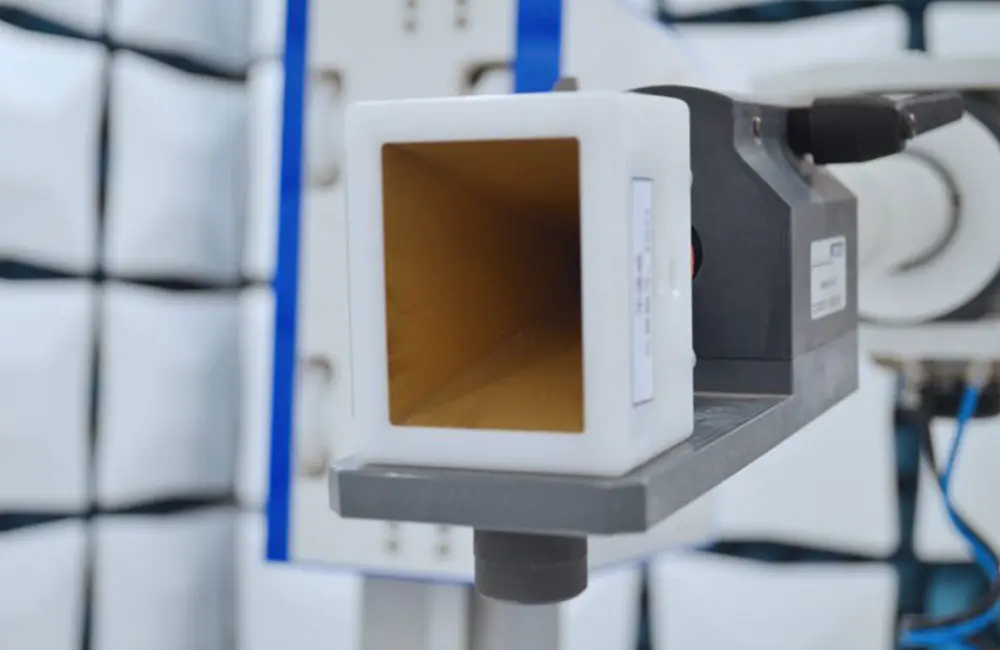
2.Radiated Emissions: Interference radiated into space via enclosures and cables (30 MHz–1 GHz, expandable to 6 GHz).
3.Harmonic Current Emissions: In accordance with IEC 61000-3-2 to prevent grid pollution.
4.Voltage Fluctuations and Flicker: In accordance with IEC 61000-3-3.
Electromagnetic Immunity (EMS)
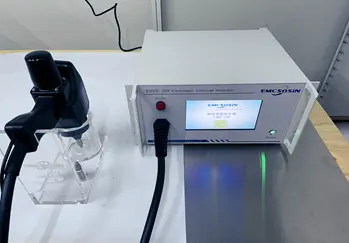
1.Electrostatic Discharge (ESD): IEC 61000-4-2, contact 4kV / air 8kV.
2.Radiated Radio-Frequency Electromagnetic Field Immunity: IEC 61000-4-3, typically 3V/m or 10V/m.
3.Electrical Fast Transient/Burst (EFT): IEC 61000-4-4, 2kV.
4.Surge: IEC 61000-4-5, line-to-line 1kV / line-to-ground 2kV.
5.Conducted Disturbances Induced by Radio-Frequency Fields: IEC 61000-4-6.
6.Voltage Dips, Short Interruptions, and Voltage Variations: IEC 61000-4-11.
7.Power Frequency Magnetic Field Immunity: IEC 61000-4-8.
Environmental classes must also be distinguished during testing:
Class A: Industrial environment, with broader emission limits.
Class B: Residential, commercial, and light-industrial environment, with stricter limits.
Selecting the wrong class will cause the report to be rejected directly.
Which Products Require EN 61326 Testing?
Typical Applicable Products
1.Measuring Instruments: Oscilloscopes, multimeters, spectrum analyzers, signal generators, water quality/gas analyzers.
2.Industrial Control Equipment: PLCs, DCSs, industrial PCs, HMIs, inverter control modules.
3.Sensors and Transmitters: Pressure, temperature, level, flow, 4--20mA / RS-485 / CAN signal devices.
4.Data Acquisition and Communication Modules: DAQs, gateways, edge computing boxes.
5.Laboratory Equipment: Centrifuges, constant temperature incubators, spectrometers, biochemical analyzers, sample processing devices.
6.Supporting Accessories: Power modules, isolators, and signal conditioners working in coordination with the host device.
7.Power Supply Range: AC 1000V, DC 1500V, including battery-powered equipment that connects to mains power for charging.
Out of Scope
1.Medical Electrical Equipment iec 60601-1-2
2.Automotive On-Board Equipment CISPR 25
3.Radio Terminal Products Prioritize RED dedicated standards
4.Equipment with more specific product-family standards already existing
How to get an EN 61326 Test Report (Application Process)
Step 1: Document Preparation and Standard Matching
Submit the following documents to JJR Laboratory:
1.Product manual, nameplate, model specifications.
2.Electrical schematic diagrams, PCB layouts, wiring diagrams.
3.BOM list, key component certificates.
4.Power supply parameters, operating environment description (industrial/commercial/residential).
5.Engineers will determine: whether to apply EN 61326-1 or sub-standards (such as 61326-2-1 for portable equipment), and the Class A/B environment level.
Step 2: Choose a Qualified Laboratory
Priority selection:
1.Possesses CNAS / CMA qualifications, with a capability scope covering EN IEC 61326-1 (such as JJR LAB).
Step 3: Sample Delivery + Pre-testing
1.Send 1--3 mass-production identical samples (including accessories, power supplies, cables).
2.Conduct pre-testing first to discover radiation over-limits and immunity weak points in advance.
3.Rectification direction: Optimize grounding, increase shielding, install magnetic rings, filtering circuits.
4.Pre-testing can significantly reduce the probability of failing the formal test.
Step 4: Formal Testing
Execute all items according to standards in the EMC semi-anechoic chamber:
EMI: Conducted + Radiated.
EMS: ESD, EFT, Surge, Radio-Frequency, Voltage Dips, etc.
Record raw spectrum data, test setup, and port configurations.
Step 5: Report Compilation and Technical Files
After passing the tests, the laboratory issues the official English test report while organizing:
1.Test report.
2.Risk assessment.
3.Circuit diagrams / BOM / Manual.
4.EU Declaration of Conformity (DoC) draft.
5.Label and CE mark styles.
6.Form a complete Technical Construction File (TCF) to handle customs, platform, and customer audits.
Step 6: Sign DoC + Affix CE Mark
The manufacturer (or eu authorized representative) signs the DoC, affixes the CE mark to the product, and officially launches it to the market.
Timeline Reference: Typically 7–9 working days under non-rectification conditions; extended accordingly if rectification and re-testing are required.
Conclusion
EN 61326 is not only the entry threshold for the European Union, but also an endorsement of a product's anti-interference capability and measurement reliability.
FAQ
Are the EN 61326 test report and the ce certificate the same thing?
No. EN 61326 is a testing standard, and what is issued is a test report. CE is not a "certificate" but a Declaration of Conformity (DoC) + Marking. Self-declaration by enterprises or participation by a Notified Body are both acceptable, and the report serves as the technical supporting document for the DoC.
Can the old version EN 61326-1:2013 still be used?
Starting June 2024, the new version EN IEC 61326-1:2021 has officially taken effect, and the old version is gradually expiring. It is recommended that new projects directly test according to the 2021 version to avoid being questioned during customs clearance.
Do handheld devices powered solely by batteries need EN 61326 testing?
Yes. As long as they belong to measurement/control/laboratory use, even if operated by batteries, provided there is a charging circuit or a connection to mains power, they fall within the scope of the standard.
What should be done if the test fails?
The laboratory will provide rectification suggestions (such as adding common-mode inductors, TVS tubes, optimizing PCB layout), and re-test after rectification. Solving problems during the pre-testing stage incurs the lowest cost.
Can the original report still be used if the product circuit is modified or the main control chip is replaced?
No. After changes to the circuit, structure, power supply scheme, or key components, re-evaluation and supplementary testing are mandatory; otherwise, the report becomes invalid.
What is the difference between EN 61326 and en 55032?
EN 55032 is a general multimedia equipment emission standard; EN 61326 is a dedicated EMC standard for measurement, control, and laboratory equipment, featuring more detailed immunity requirements that are closely tailored to precision instrument scenarios.
Can the EN 61326 report be used directly for UKCA after Brexit?
The technical content can be reused, but UKCA has independent labeling and technical file requirements. You need to confirm whether the laboratory's qualifications are recognized by the UK market; separate evaluations are recommended.
Email:hello@jjrlab.com
Write your message here and send it to us
 Packaging Compliance Labs
 What is CPSC eFiling and How to get It?
 How to get an EN 61326 Test Report
 What Is Radio Frequency Testing Services?
What is the Amazon UL 1642 Test Standard?
 How to get a UL 1642 Test Report?
 What is UL 1642 Compliance Certification?
 What Is Amazon's UL 60335 Standard
Leave us a message
24-hour online customer service at any time to respond, so that you worry!