



Medical Device SAR Testing
Determining if sar testing is Required for Medical Devices
To determine whether a medical device requires SAR (Specific Absorption Rate) testing, consider whether the device incorporates a wireless communication module (e.g., Wi-Fi, Bluetooth, cellular networks) and whether it is used close to the human body (e.g., wearable or implantable medical devices). Devices fitting these criteria typically require sar testing.
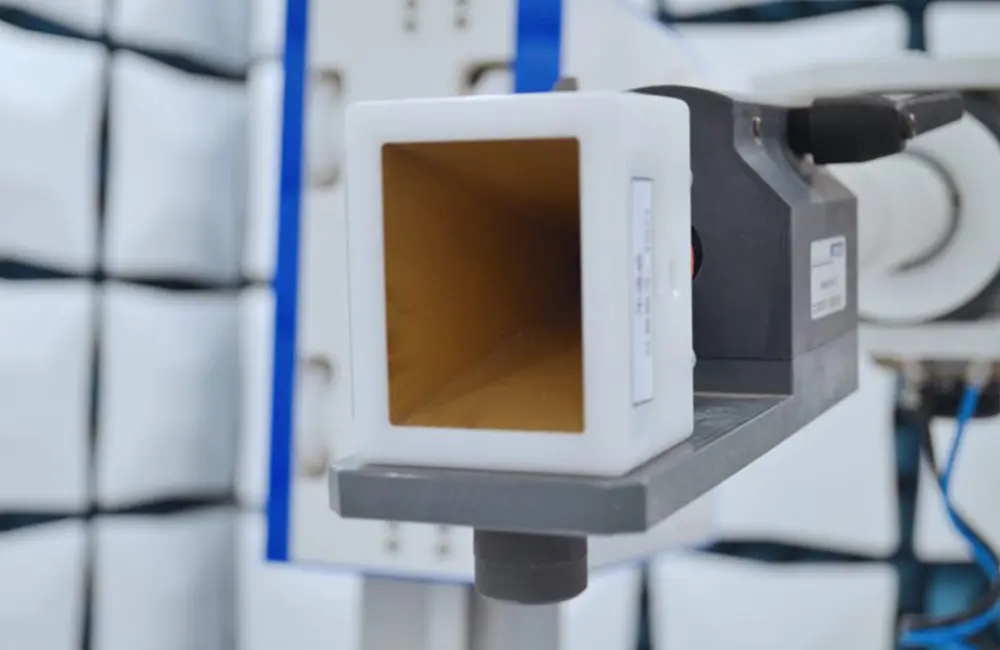
Radiofrequency (RF) transmitters used near the human body must be evaluated according to human exposure standards. These standards set basic limits for the SAR values that indicate the rate of RF energy absorption by any part of the body. Devices requiring evaluation may include two-way radios, mobile phones, smartphones, Bluetooth devices, wireless EFTPOS terminals, and WLAN devices used in PDAs, laptops, portable computers, or tablets.
In regions like Australia and Europe, devices operating above the 20mW (13dBm) power threshold and used near the body must comply with SAR requirements. In the U.S. and Canada, there are no blanket exemptions; each product must be evaluated based on specific frequency and power level standards.
Types of Testing: SAR, EMF/EMR, or Calculations?
Various methods are available to quantify acceptable exposure levels based on mandatory regulations or regional standards for installation, usage, or distribution:
- SAR testing or exemption calculations are usually required for devices used within 20cm of the head or torso.
- EMR meters, field strength measurements, or calculations are typically required for devices used more than 20cm away from the head or torso.
Global Market Access for SAR Requirements and Testing
JJR Laboratory provides SAR consultation and testing services for compliance with certification requirements in Europe (CE), Australia/New Zealand (RCM), the U.S. (fcc), Canada (ised), Japan, Singapore, and most other countries.
Regional Requirements:
- Australia: Under the 2014 Radiocommunications (Compliance labelling – Electromagnetic Radiation) Notice, certain devices must undergo SAR testing as part of rcm compliance. Devices with RF power output >20mW and used within 20cm of the head/body require SAR testing.
- North America:
- The FCC mandates maximum permissible exposure (MPE) testing and compliance checks for RF radiators per FCC rules. SAR testing may apply depending on RF power output and proximity to the body, determined case-by-case per FCC KDB procedures. Low-power devices are not universally exempt.
- ISED (formerly Industry Canada) requires similar evaluations per RSS-102.
- Europe: EMR (referred to as EMF in Europe) must comply with the Radio Equipment Directive (RED). Devices with RF power output >20mW and used within 20cm of the head/body require SAR testing.
Measurement and Validation Capabilities:
JJR Laboratory, along with global partners, provides SAR measurements for common frequencies from 20 MHz to 5.8 GHz, including less common bands. Our capabilities include:
- Frequencies: 30 MHz, 64 MHz, 150 MHz, 300 MHz, 600 MHz, 750 MHz, 900 MHz, 1300 MHz, 1450 MHz, 1640 MHz, 1800 MHz, 1950 MHz, 2100 MHz, 2450 MHz, 2600 MHz, 3000 MHz, 3300 MHz, 3500 MHz, 3700 MHz, 5.2 GHz, 5.6 GHz, and 5.8 GHz.
- Advanced base station simulators to test nearly all mobile/handheld devices for global markets, supporting 2G/2.5G, 3G, 4G (LTE), DECT, GSM, EGSM, E-GPRS, CDMA, WCDMA, EvDo, UMTS, HSDPA, HSUPA, LTE-A, eMTC (LTE Cat-M1), and WLAN transmitters used in laptops, portable computers, tablets, and PDAs (IEEE 802.11abgn standards).
Technical Support and Services:
Through technical agreements, JJR maintains close ties with global leaders in SAR research and measurement, providing clients with authoritative technical support for SAR compliance. Our efficient value-added services include:
- Fastest queue time: Only 3 days for testing appointments.
- Online instant order processing.
- Bundled testing and certification needs (e.g., telecom network access, RF, EMC, safety, environmental, energy efficiency, and performance testing) to save time and cost.
By consolidating all testing with JJR, clients eliminate the hassle of dealing with multiple labs, logistic delays, and transportation costs.
Applicable Standards and Regulations:
JJR provides SAR services for compliance with the following standards and regulations:
- EN 62209-1
- EN 62209-2
- EN 50360
- EN 50566
- IEEE 1528
- ACMA EMR standard
- ARPANSA RPS 3
- FCC SAR Procedures
- ISED Canada SAR Procedures
Email:hello@jjrlab.com
Write your message here and send it to us
 What is UL 1642 Compliance Certification?
 What Is Amazon's UL 60335 Standard
 How to get a UL 60335 Test Report
 What is UL 60335 Certification Compliance?
What is EN 61000 Certification Compliance?
What is UL 60335 Certification Compliance?
What is EN 61000 Certification Compliance?
 How to get an EN 61000 Test Report?
 What is the Amazon EN 55035 Standard?
 What is EN 55035 Certification Compliance?
Leave us a message
24-hour online customer service at any time to respond, so that you worry!