



Alibaba US FCC Certification Service
Alibaba International reminds merchant members that it is essential to understand and comply with the regulations and requirements of the Federal Communications Commission (fcc) in the United States. This ensures that products are legally compliant for sale and enhances consumer trust in the brand. Below are some key fcc compliance points:
What is the FCC? What is an fcc id?
The FCC (Federal Communications Commission) is the U.S. federal agency responsible for regulating communication devices, ensuring they do not interfere with radio and wired communications.
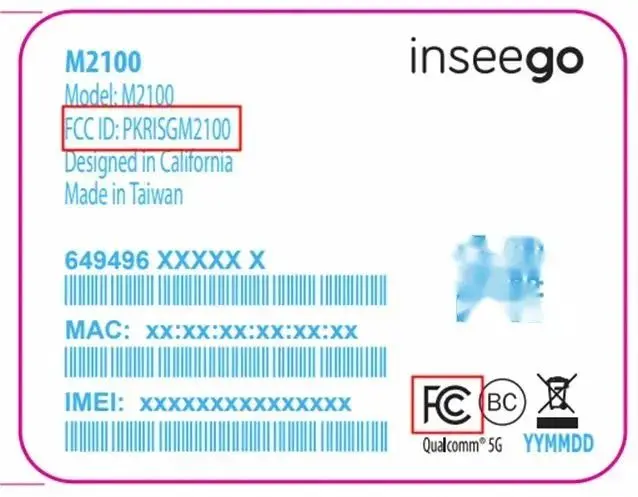
An FCC ID is a unique identifier assigned by the FCC to registered devices to identify certified wireless equipment.
To legally sell wireless devices in the U.S., manufacturers must:
- Have the device evaluated by an independent lab to ensure it meets fcc standards;
- Submit lab results to the FCC;
- Provide related user manuals, documentation, and photos;
- Affix a digital or physical label with the FCC-provided unique identifier (after approval).
FCC authorization comes from Title 47 of the Code of Federal Regulations (47 CFR). All wireless transmitting devices sold in the U.S. must have an FCC ID. Searching an FCC ID reveals details about the wireless frequencies (including strength), device photos, user manuals, and the SAR report for wireless transmission.
Compliance Requirements
(1) Common Compliance Steps
- Testing: Products must be tested at authorized labs to ensure compliance with FCC standards.
- Application: Submit test reports and relevant documents to apply for certification.
- Labeling: After certification, attach the fcc label to the product and its packaging.
(2) Authorization
- RF devices must be tested for FCC compliance to ensure they do not interfere with other devices.
- The FCC regulates electronic and electrical products containing RF (radio frequency) equipment that emits energy through radiation, conduction, or other means, potentially interfering with radio services operating within the 9kHz to 3000GHz frequency range.
- Most (but not all) products must undergo testing to prove each electrical function complies with FCC rules. Generally, products containing circuits designed to operate within the RF spectrum must use applicable FCC equipment authorization procedures (Supplier's Declaration of Conformity (sdoc) or certification) depending on the device type. A product may contain one or more devices and may use one or both authorization procedures. RF devices must be approved through the appropriate procedure before being sold, imported, or used in the U.S.
(1) Certification
1. Testing: RF devices must be tested to ensure compliance with FCC standards and to avoid harmful interference with other devices. Testing must be conducted by FCC-recognized authorized labs.
2. FCC ID: After successful testing, the device is assigned an FCC ID, a unique identifier for each model of RF device, which must be labeled on the device.
There are three different authorization procedures for RF devices:
- Certification: The strictest procedure, typically for devices most likely to cause interference. It requires testing and submission of device samples to the FCC or a Telecommunications Certification Body (TCB) for approval. All technical parameters and descriptions of certified devices are published in the FCC's public database. Devices approved under the Supplier's Declaration of Conformity (SDoC) procedure may also opt for certification.
- Declaration of Conformity (DoC): A less strict process for devices with lower interference risks. Manufacturers must test the device and provide a statement of compliance with FCC standards.
- Verification: For devices with the lowest interference risk. Manufacturers ensure compliance through testing, but are not required to submit reports to the FCC or use a TCB.
(2) Supplier’s Declaration of Conformity (SDoC)
For certain categories of devices, the FCC allows suppliers to submit a declaration of conformity.
- SDoC is a procedure requiring the responsible party to ensure the device meets applicable technical standards. The responsible party must be located in the U.S., but there is no need to submit an equipment authorization application to the FCC or a TCB. Devices authorized under the SDoC procedure are not listed in the FCC database. However, the responsible party or any other party selling the device must provide test reports and other information upon FCC request to demonstrate compliance. The responsible party may choose to use the certification procedure instead of SDoC.
All authorization information can be retrieved via the FCC database: (https://www.fcc.gov/eas).
(3) FCC Labeling Requirements (47 CFR 2.925)
- RF devices must be properly labeled with the FCC ID (FCC Identifier). Buyers should be able to see this information, which may include a compliance statement or reference documents.
- For RF devices submitted under the SDoC, use of the fcc logo is voluntary.
Example of the FCC Logo:
FCC Logo:
Which Authorization Applies: Certification or SDoC?
The applicable authorization procedure depends on the FCC rules governing the RF functions of the device.
- Intentional radiators (transmitters) must be approved using the certification procedure unless otherwise specified.
- Devices that support wireless connections, such as mobile phones, WLAN equipment, laptops, and tablets, need fcc certification and an FCC ID to ensure their radio signals are within permitted frequency and power limits and contain the necessary technical characteristics to prevent interference with other communication equipment.
- Devices with only radio transmitters (not transceivers)—such as remote control transmitters, land mobile radio transmitters, and wireless medical telemetry transmitters—require FCC certification to prove electromagnetic compatibility (EMC) and prevent interference, as well as ensure sufficient immunity.
- Unintentional radiators (digital circuits) are approved using the SDoC procedure.
- Devices with only digital circuits (no radio transmitters)—such as computer peripherals, home appliances, ISM equipment, power supplies, LED bulbs, radio receivers, and TV interface devices—may choose either the SDoC or FCC certification procedure.
Import Requirements (47 CFR Part 2 Subpart K)
RF devices cannot be imported into the U.S. unless the importer, final consignee, or designated customs broker determines that the device meets one or more of the following conditions (47 CFR 2.1203 & 47 CFR 2.1204):
- The RF device has been authorized by the FCC.
- The RF device does not require authorization and complies with FCC technical regulations.
- The RF device is imported in quantities of 4,000 or fewer for testing and evaluation, product development, or sales suitability, and will not be sold.
- The RF device is imported in limited quantities (≤400) for demonstration at industry trade shows and will not be sold or marketed.
- The imported RF device is for export only and will not be sold in the U.S.
- The RF device is for U.S. government use only.
- The RF device is 3 or fewer and for personal use, not for resale.
- The RF device is for repair and will not be sold.
- The RF device is a medical implant transmitter or body-worn transmitter as defined by Part 95, or an associated control transmitter, authorized for MedRadio service. These devices can be imported without authorization but only for personal use by those implanted or using body-worn transmitters.
- Passengers can import 3 or fewer portable ground station transceivers as personal items, as long as they are not sold or rented in the U.S.
- RF devices certified under section 2.907 can be imported in quantities of 12,000 or fewer for presale activities. The quantity is determined by the number of devices with the same FCC ID. Presale activities include pre-packaging and transfer of ownership to distributors or retailers, but devices cannot be delivered, displayed, operated, or sold to end users until the certification process is complete.
Consequences of Non-Compliance
No one may sell RF devices unless those requiring certification have been properly authorized, labeled, and marked as required.
For products only subject to the Supplier’s Declaration of Conformity (SDoC), manufacturers may voluntarily apply for certification (47 CFR 2.906).
Violations of these compliance requirements may result in:
- Fines: Non-compliance with FCC regulations can result in significant fines.
- Product Recall: Non-compliant products may be recalled or removed from sale.
- Brand Reputation Damage: Compliance issues may negatively affect brand reputation.
The above outlines FCC regulations and compliance requirements. Alibaba International reminds merchant members to ensure legal compliance when selling FCC-regulated products in the U.S. market. Consider compliance requirements from the start of product sales, seek timely compliance consultations, and stay updated on FCC regulations to address any policy changes effectively.
Email:hello@jjrlab.com
Write your message here and send it to us
 What is EN 61000 Certification Compliance?
 How to get an EN 61000 Test Report?
 What is the Amazon EN 55035 Standard?
 What is EN 55035 Certification Compliance?
 How to get the EN 55035 Test Report?
 What is the Amazon EN 301 489 Standard?
 How to get an EN 301 489 Test Report?
 What is EN 301 489 Compliance Certification?
Leave us a message
24-hour online customer service at any time to respond, so that you worry!