



CPSC Products Must Undergo eFiling
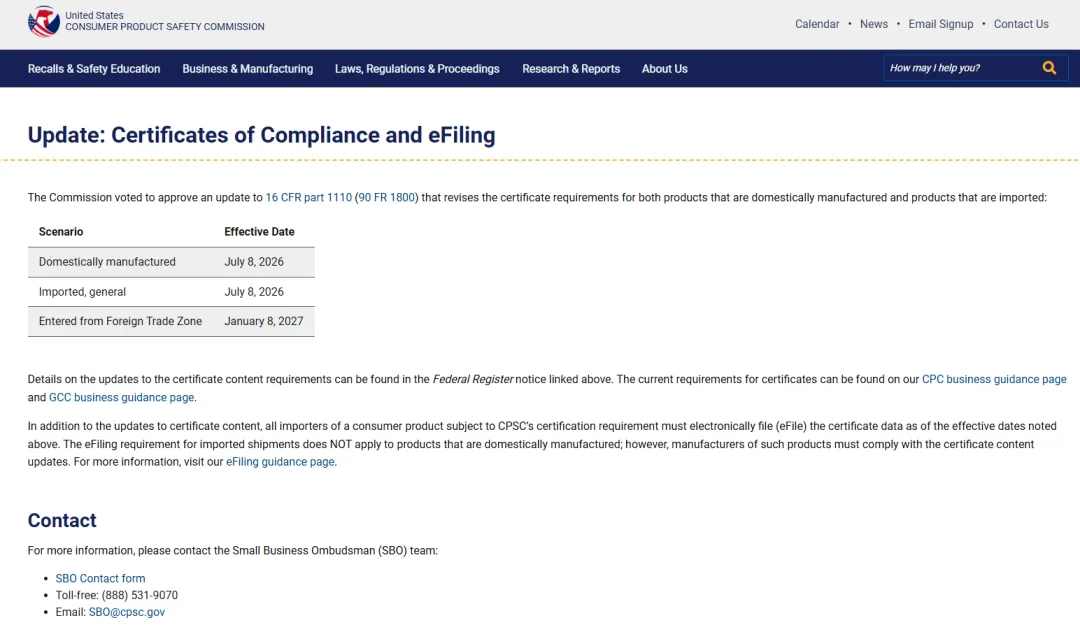
Recently, the U.S. Consumer Product Safety Commission (CPSC) updated its new regulatory rules on its official website. Starting from July 8, 2026, all consumer products regulated by the CPSC must undergo electronic filing (eFiling) through the U.S. Customs and Border Protection (CBP) ACE system upon importation to submit product compliance data. Incomplete or inaccurate declarations will face risks such as denial of entry by CBP, cargo detention, and customs clearance delays.
What is eFiling?
eFiling is an electronic certificate filing system implemented by the CPSC, requiring importers to submit data related to product compliance certificates through the U.S. Customs' ACE system before the goods arrive at a U.S. port of entry.
Which products are affected?
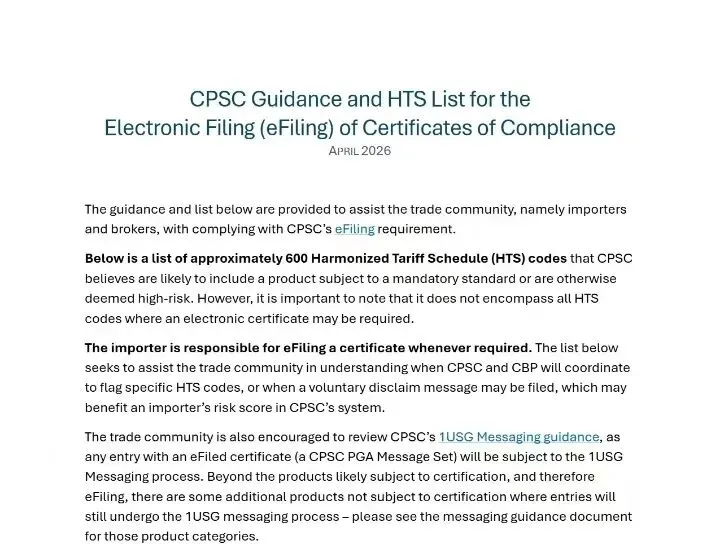
According to the official guidance document updated by the CPSC in April 2026, this list contains approximately 600 HTS codes (see below for details), primarily covering the following high-risk/common consumer product categories:
Children's Products: Such as toys, children's clothing, children's furniture, cribs, pacifiers, children's jewelry, etc.
Electronic Products: Such as chargers, power adapters, consumer electronic accessories, etc.
Tools and Hardware: Power tools, lawnmowers, ladders, safety protection equipment, etc.
Household Items: Such as furniture, mattresses, carpets, curtains, etc.
Note: The list is not exhaustive. The list is "indicative" rather than "exclusive," meaning that if a product is not on the list but is regulated by the CPSC, it still requires electronic filing.
What do importers need to do?
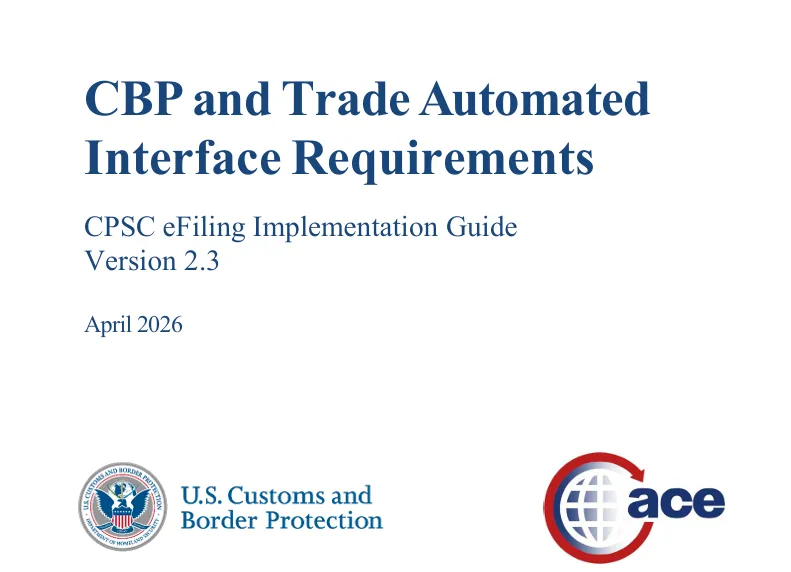
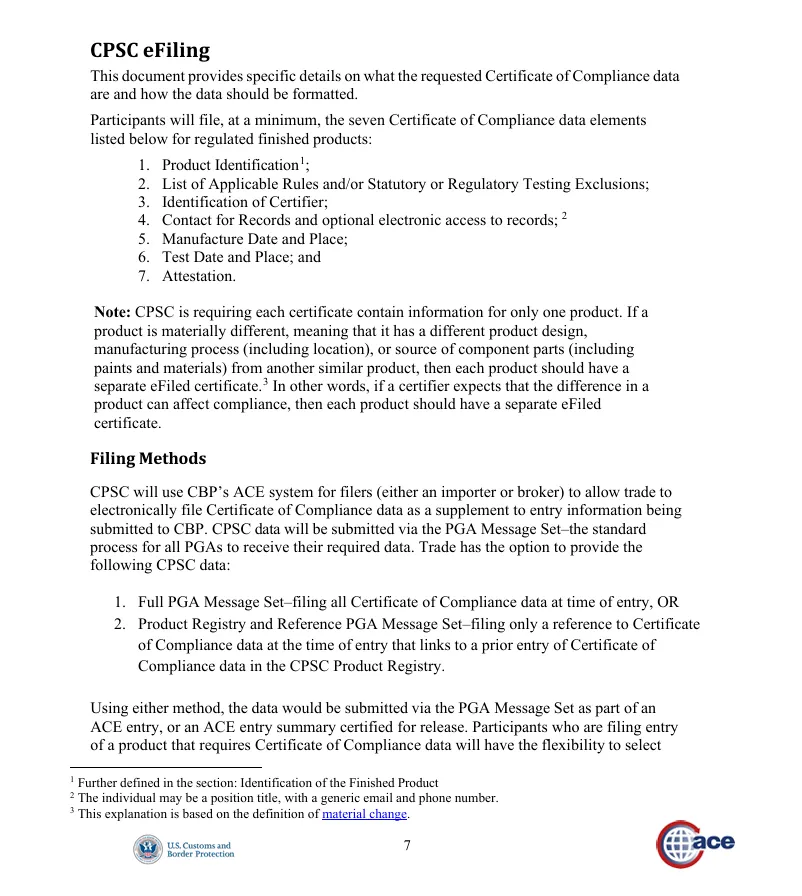
According to the guidance document, starting July 8, 2026, upon the arrival of all CPSC-regulated goods, importers must submit the following 7 pieces of information for each product through the U.S. Customs' ACE system:
Product identification information (product name, model, etc.)
Applicable safety rules and test exemptions
Identity of the certificate issuer (certifying party)
Contact person for compliance records and access permissions
Date and place of manufacture of the product
Date and place of compliance testing of the product
A declaration of authenticity and compliance
Note: The CPSC specifically mentions that each certificate corresponds to only one product. If products have "material differences" in design, manufacturing processes, or parts sourcing, separate certificates must be submitted.
Electronic Filing Frequently Asked Questions (FAQ)
My products are already being sold. Do I need to make a supplementary filing after the new rules take effect?
A: Newly arrived goods after July 8 require eFiling; existing inventory already in warehouses is not affected retroactively.
If my product is not on the list of 600 HTS codes, does it mean I don't need to file?
A: Not necessarily. The list is indicative rather than exclusive. As long as the product is regulated by any mandatory CPSC standard, it must be filed.
Who submits the eFiling?
A: The importer is the responsible party. Importers can authorize a customs broker or freight forwarder to submit on their behalf, but the legal responsibility still rests with the importer.
What happens if I don't submit the eFiling?
A: The CPSC and CBP have the right to detain and inspect the goods, or even refuse entry. Repeated violations may lead to higher-frequency inspections or being blacklisted.
There are currently only about 60 days left until the mandatory effective date of eFiling on July 8. It is highly recommended to confirm in advance whether your products are regulated by the CPSC and verify their HTS codes. If the products are regulated by the CPSC, you need to prepare the aforementioned 7 items of product compliance data in a timely manner.
HTS Code List Currently Published by the CPSC

Email:hello@jjrlab.com
Write your message here and send it to us
 What is an EU SDS (Safety Data Sheet)?
 What is the CA Prop 65 Warning Label?
 2026 Amazon TIC Mandatory Audit Catalog
 Australian Electrical EESS and RCM Compliance
 How to get Vietnam CR Certification
 What is a UN 38.3 Battery Test Report
 What is the UN38.3 Certification Test?
 What is a Lithium Ion Battery Certification
Leave us a message
24-hour online customer service at any time to respond, so that you worry!