



FCC Certification Requirements and Costs for Consumer Electronics
What is fcc Certification
The FCC is a mandatory market access system of the United States Federal Communications Commission. Any electronic product sold or imported in the United States, as long as it has internal digital circuits or wireless transmission functions, must first complete Equipment Authorization, otherwise it cannot be cleared through customs and put on shelves.
Two Types of fcc certification:
Path: sdoc (Supplier's Declaration of Conformity)
Applicable Products: Unintentional radiators: computers, monitors, power supplies, LED lights, home appliances, wired peripherals.
Characteristics: No fcc id, no official certificate issued, self-declaration by the responsible party.
Path: Certification
Applicable Products: Intentional radiators: Wi-Fi, Bluetooth, Zigbee, Cellular, UWB.
Characteristics: TCB audits and issues certificate, obtains FCC ID, entered into the FCC database.
Typical products often follow both paths in parallel: the wireless part of a smart speaker follows Certification, while the motherboard and power supply follow SDoC.
fcc testing Standards
The core framework is 47 CFR Part 15 (§15.107 limits for conducted, §15.109 for radiated, etc.) and 47 CFR Part 2 (authorization procedures and responsible party requirements). Measurement methods are based on ANSI C63.4 (unintentional radiators) and ANSI C63.10 (intentional radiators).
Class A and Class B: Class B is intended for residential consumer environments, with limits approximately 10 dB stricter than Class A. The vast majority of consumer electronic products belong to this category. Class A is used for industrial and commercial environments and must be accompanied by a Class A interference warning statement.
fcc testing Items
Unintentional Radiators (Part 15B):
Item: Conducted Emission (CE)
Range: 150 kHz–30 MHz
Description: Measure power line noise via LISN, take QP and AV values; pure battery equipment can be exempted.
Item: Radiated Emission (RE)
Range: From 30 MHz
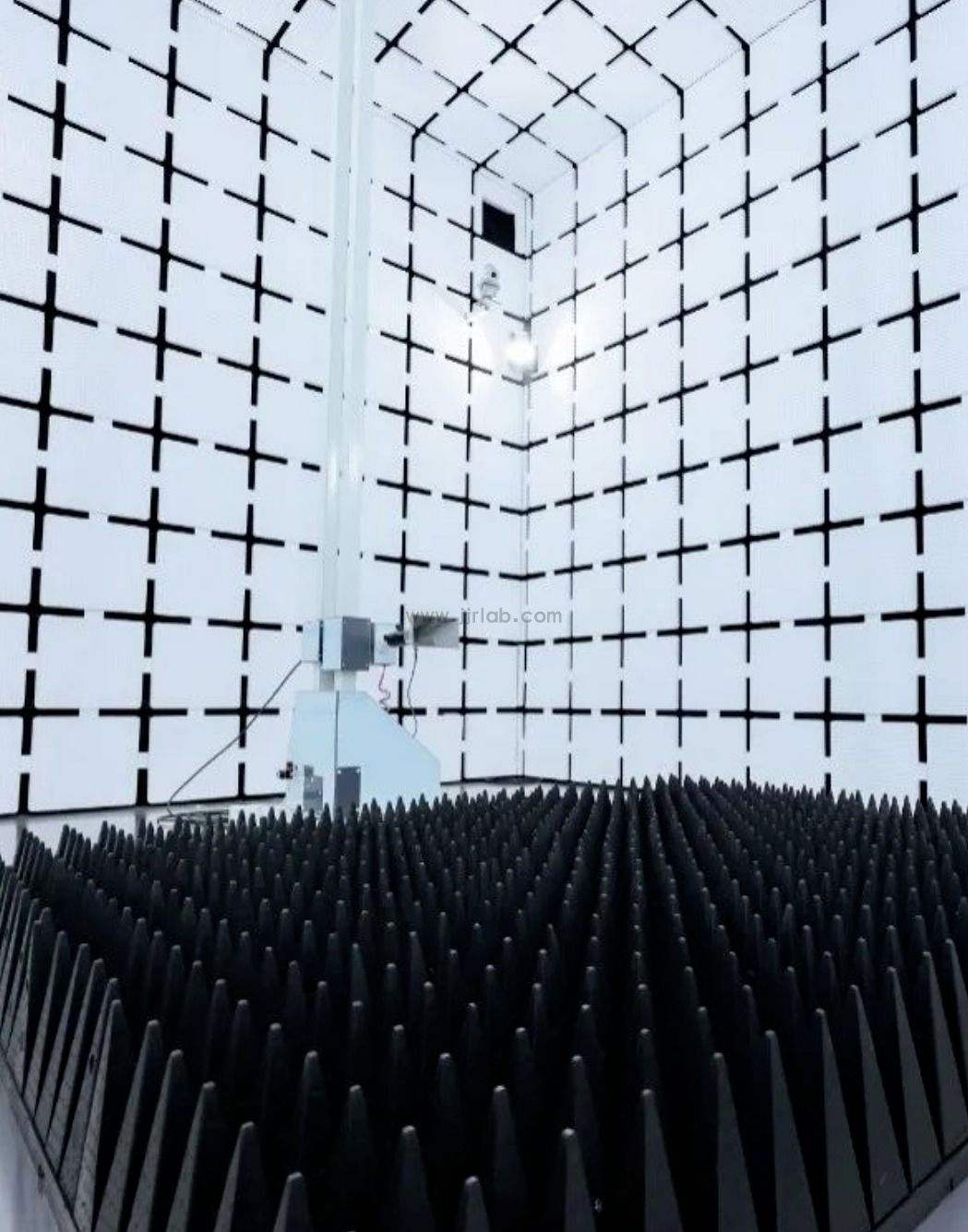
Description: Measured in a semi-anechoic chamber, Class B usually uses the 3-meter method.
Intentional Radiators (Part 15C/E) superimpose on the basis of CE and RE: output power, occupied bandwidth, frequency error and stability, spurious emissions, spectrum mask; frequency hopping systems measure hopping channels and duty cycle, 5 GHz Wi-Fi requires DFS and adaptivity testing, and products used close to the body require SAR evaluation.
FCC Certification Requirements for Consumer Electronics
Determine the Path: Clarify whether it belongs to an unintentional radiator, intentional radiator, or composite device.
Laboratory Qualifications: Certification must be tested in an FCC-recognized laboratory (A2LA, NVLAP, or MRA system, ISO/IEC 17025 accredited); although SDoC is not mandatory, the laboratory must retain facility records in accordance with §2.948.
US Responsible Party: The SDoC responsible party must be an entity within the United States, responsible for signing the declaration and retaining archives such as design drawings, change records, and test data.
Labels and Manuals: Include standard compliance statements, ensuring product and document information are consistent.
Retention and Changes: SDoC records are kept for 2 years from discontinuation of production, and Certification for 1 year; replacing the main chip, antenna, PCB layout, etc., requires re-evaluation.
FCC Certification Costs
The cost depends on product complexity, and there is no fixed price:
SDoC (No Wireless): Approximately $698–$1,750, cycle is 1–2 weeks.
FCC ID (Low complexity such as Bluetooth/Wi-Fi): Starting from approximately $2,680–$12,000.
Consumer electronic products with corresponding simple structures (chargers, small fans, USB accessories, single wired small home appliances) follow the SDoC tier; products with wireless functions or requiring special tests such as SAR and DFS will be higher. It is recommended to first determine the product category and path, and then obtain an accurate quotation.
Laboratory Selection Suggestions
When choosing a laboratory, qualifications come first: A2LA or NVLAP recognition, ISO/IEC 17025 qualification, so that the test data can be accepted by the TCB. Secondly, look at frequency band coverage, pre-testing and rectification capabilities, quotation transparency, and service network.
JJR Lab has obtained A2LA recognition and possesses CNAS (L1225) and CMA qualifications. Its testing capabilities cover 3-meter semi-anechoic chambers (up to 40 GHz) and fcc part 15C/E wireless items. It can undertake fcc sdoc and FCC ID businesses with complete qualifications.
Email:hello@jjrlab.com
Write your message here and send it to us
 FCC Certification Requirements and Costs for Consu
 EMC Testing Lab IEC 60601 Medical Electrical Safet
 What are the FCC Testing Requirements for Bluetoot
 Australia RCM Certification for Radio Devices
 RED Cybersecurity EN 18031 Standard
 Compliance Testing for EMC
 What is Amazon Toy Compliance?
 What is Cytotoxicity ISO 10993-5
Leave us a message
24-hour online customer service at any time to respond, so that you worry!