



IEC 60529 IP Rating Ingress Protection Standard
In modern life, we often see electronic devices marked with protection ratings such as "IP67" and "IP68", including smartphones, smart watches, outdoor lighting fixtures, etc. What exactly do these ratings represent? How are they defined? Today, we will conduct an in-depth interpretation of the iec 60529 standard to help everyone better understand the protection capabilities of electronic devices.
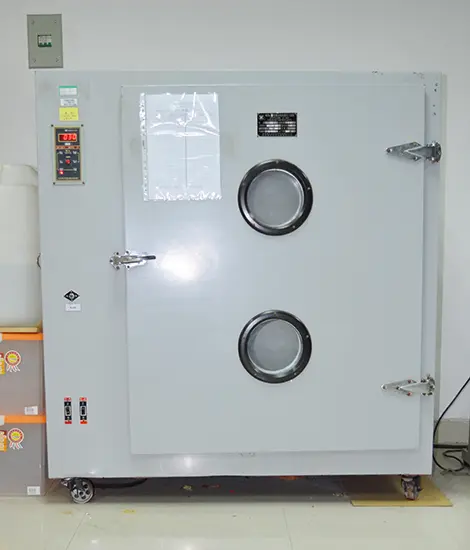
What is IEC 60529?
IEC 60529 is the Degrees of Protection Provided by Enclosures (IP Code) standard formulated by the International Electrotechnical Commission (IEC). It aims to quantify the protection capability of electrical equipment enclosures against solid foreign objects (e.g., dust, fingers, tools) and liquids (e.g., water) through standardized test methods. Its core values are:
Unified Language: The "IPXX" code system eliminates differences in understanding of protection performance among global manufacturers, testing institutions and consumers;
Risk Control: Through simulated extreme environment tests, product design defects are exposed in advance to reduce safety risks during use;
Market Access: It serves as a necessary technical basis for internationally recognized qualifications such as EU CE certification and China ccc certification.
For example, a smart watch marked "IP67" means its enclosure can completely block dust and remain undamaged after being immersed in 1 meter of water for 30 minutes. This intuitive code system allows consumers to quickly judge applicable product scenarios without professional knowledge.
Explanation of IP Code Breakdown
The IP code consists of "IP" followed by two digits. The first digit represents the dust protection rating (0–6), and the second digit represents the water protection rating (0–9). The higher the digit, the stronger the protection capability, while the cost and technical difficulty also increase exponentially.
Dust Protection Ratings
Rating | Protection Target | Typical Application Scenarios |
IP0X | No protection | Indoor equipment in dry environments |
IP2X | Protection against finger contact with internal parts | Switches and sockets for household appliances |
IP4X | Protection against intrusion of mosquitoes, flies and fine sand | Food processing equipment, data center cabinets |
IP6X | Dust-tight | Mine sensors, diving equipment |
Water Protection Ratings: From "No Splash" to "Deep-Sea Pressure Resistance"
Rating | Protection Target | Test Method |
IPX1 | Dripping water (vertical) | Simulating vertical falling raindrops |
IPX4 | Splashing water | 360° rotating water spray from oscillating tube |
IPX7 | Immersion (temporary) | Immersion in 1 meter of water for 30 minutes |
IPX8 | Immersion (continuous) | Continuous immersion at a depth specified by the manufacturer |
IPX9K | High-pressure and high-temperature water spray | Jet at 80°C and 100 bar pressure |
Industry Application Map: Which Fields Must Meet IP Requirements?
Industry | Typical Products | Minimum Protection Requirement |
Consumer Electronics | Smartphones, smart watches | IP54 (dust protection + splash protection) |
Home Appliances | Washing machines, air conditioners | IPX4 (splash protection) |
Industrial | Motors, sensors | IP65 (dust protection + water jet protection) |
Automotive | Vehicle cameras, battery packs | IP67 / IP6K9K (immersion protection + high-pressure cleaning protection) |
Medical | Surgical equipment, disinfection cabinets | IP54 (dust protection + disinfectant splash protection) |
Recommended Protection Ratings for Different Usage Scenarios
Daily use (e.g., mobile phones, earphones): IP54 or higher, to protect against rainwater and dust.
Outdoor sports (e.g., sports watches): IP68, suitable for swimming, diving and other scenarios.
Industrial environments (e.g., sensors, motors): IP67 / IP69K, dustproof, waterproof and resistant to high-pressure washing.
The IEC 60529 standard provides a clear reference for protection ratings, helping consumers and manufacturers better evaluate the durability of electronic devices. Next time you purchase electronic products, you may pay attention to their IP ratings and choose products that best suit your needs!
Email:hello@jjrlab.com
Write your message here and send it to us
 What is Recycling of WEEE
 What is PPWR Packaging Compliance
What is Extended Producer Responsibility
What is PPWR Packaging Compliance
What is Extended Producer Responsibility
 Children's Toy Compliance: Avoiding CPSC Recalls
 Export Electric Blanket Compliance: Preventing CPS
 What is LFGB Certification Meaning
 EU Food Contact Materials (FCM) EC 1935/2004 Stand
 LFGB Germany Food Contact Materials Official
Leave us a message
24-hour online customer service at any time to respond, so that you worry!