



Socket Japan PSE Certification
PSE Certification is Japan's mandatory safety certification, proving that electrical and electronic products comply with Japan's Electrical Appliances and Materials Safety Law (DENAN Law) or international IEC safety standards. Under Japan's DENTORL Law (Electrical Appliance and Material Control Law), 498 products must obtain safety certification to enter the Japanese market. Among them, 165 Class A products must bear a diamond-shaped pse mark, while 333 Class B products must bear a circular PSE mark.
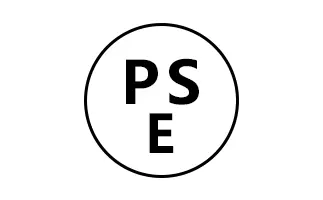
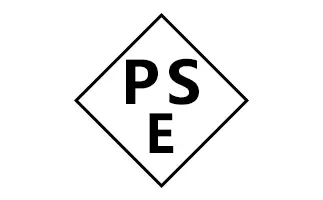
Sockets commonly used in daily life fall under the category of diamond-shaped PSE mark. Below, China JJR Laboratory introduces the differences between various types of Japanese standard sockets and the points to note when applying for pse certification.
Sockets with USB Ports
1. Product Name: DC Power Supply Units
2. Applicable Test Standards: Appendix Table 8 (1, 2(102)), Appendix Table 10, Chapter 5
3. Key Considerations for Sample Testing:
1) Power Cord and Plug: The power cord and plug must have pse certificates.
2) PCB Board Structure: The spatial distance (creepage distance and clearance) between charging components of different polarities must all exceed 2.5 mm.
3) Internal Wiring: High-temperature resistant wires must be used. During the temperature rise test, standard wires may exceed their temperature limits, leading to test failures.
4) Transformer Insulated Wire: For triple-insulated wire, each material layer must be individually listed in the component list. In Japanese standards, the material's temperature rating differs from UL standards and must meet Japanese requirements.
Standard Sockets
1. Multiple Sockets: Multiple Socket-Outlets
2. Extension Cord Sockets: Cord Extension Sets
3. Wall Sockets: Socket-Outlets
4. Applicable Test Standards: Appendix Table 4 (1, 6), Appendix Table 10, Chapter 5
5. Testing Items for Socket Products:
- Structural dimension inspection
- Insulation resistance
- Dielectric strength
- Temperature rise
- Grounding resistance
- Sectional capacity and normal operation
- Heat resistance test
- Terminal strength, etc.
Points to Note
For different socket product names, the type classification will differ. Certification bodies require product images and corresponding type classifications as a basis for evaluating certification fees.
- For DC power supply devices, testing is conducted at Japan JET Laboratory (China JJR serves as its testing agent), with a processing time of approximately 3-4 months.
- For general sockets, testing is carried out at both JET’s Tokyo and Osaka laboratories, with a processing time of approximately 3 months.
Email:hello@jjrlab.com
Write your message here and send it to us
 What is the ASTM F2167 Certification Test?
 What is the ASTM F2050 Certification Test?
 What is ASTM F1967 Certification Testing? How to g
 What is the ASTM F1917 Certification Test?
 How to get ASTM F1821 Certification
 What is the ASTM F1821 Testing Standard?
 Electronic Products Safety Testing Laboratory
 HAC Hearing Aid Compatibility Testing
Leave us a message
24-hour online customer service at any time to respond, so that you worry!