



What is KC Marking Certification?
The e-commerce sales in South Korea have shown rapid growth across various product categories, including home care, small appliances, and more. This phenomenon is mainly due to the increasing popularity of e-commerce platforms like Amazon, AliExpress, and Temu, which attract a large number of users with low prices and fast delivery. However, the South Korean market has strict safety standards for imported products. To expand into the South Korean market, it is essential to understand the country's qualification certifications and product requirements. Today, we introduce the KC mark certification and provide compliance guidance for related businesses.
What is kc certification?
KC Certification (Korea Certification), also known as KC Safety Certification or KC Mark Korean Certification, is a national unified certification standard implemented by the Korea National Standards Committee on January 1, 2009. It is a mandatory safety certification system for products entering South Korea.
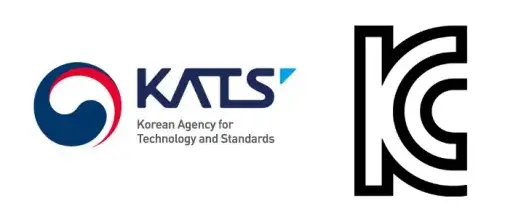
The KC mark and the corresponding kc certificate are similar to the European CE mark. If a product requiring certification is sold in South Korea without KC approval, it may be recalled, and additional economic penalties or sales bans may be imposed on the manufacturer, importer, and/or seller.
KC certification includes KC Safety Certification, kc emc certification, KC RF Certification, and energy efficiency MEPS/E-Standby requirements. These certifications are regulated by different competent authorities to ensure that products meet South Korea's safety, electromagnetic compatibility, radiofrequency, and energy efficiency standards.
What Products are Subject to KC Certification?
The KC Safety Certification system covers three main categories of products: electronic products, household products, and children's products.
- Electronic products: All electronic and electrical products, including wires and cables, electrical switches, household appliances, power tools, audio and video application equipment, lighting machinery, etc.
- Children's products: Such as toys, textiles for children and infants, children's seats, study supplies, children's bicycles, etc.
- Household products: General consumer goods for daily use, such as household appliances (e.g., refrigerators, dishwashers), audio and video equipment, eyeglass frames, fans, tents, motorcycle helmets, vehicles and accessories, etc.
Types of KC Certification
In the KC certification system, each product category has three different certification types, corresponding to the level of hazard from high to low:
- Safety Certification
- Self-Regulatory Safety Confirmation
- Supplier Declaration of Conformity
Products deemed to have potential hazards will require "Safety Certification," while products with possible hazards will need "Self-Regulatory Safety Confirmation."
1. Safety Certification
"Safety Certification" involves product testing and factory inspections to certify the product's safety. This is the most stringent and complex type of KC certification. It not only requires product testing but also production site audits, and periodic follow-up inspections to maintain the certification's validity.
2. Self-Regulatory Safety Confirmation
"Self-Regulatory Safety Confirmation" is verified through safety confirmation testing by recognized institutions to ensure it meets safety standards. This type requires product testing and submission of an application to complete the certification process. Factory audits are not required for this type of certification.
3. Supplier Declaration of Conformity
"Supplier Declaration of Conformity" (self-inspection) refers to self-confirmation, where the product is directly tested or tested by a third party to prove it meets safety standards. In this type, manufacturers need to ensure their products comply with Korean standards and can demonstrate compliance confirmation. Testing in South Korea is usually the simplest method to verify compliance. Since no certification application is required, there is no certification number.
Requirements for Displaying KC Certification Information
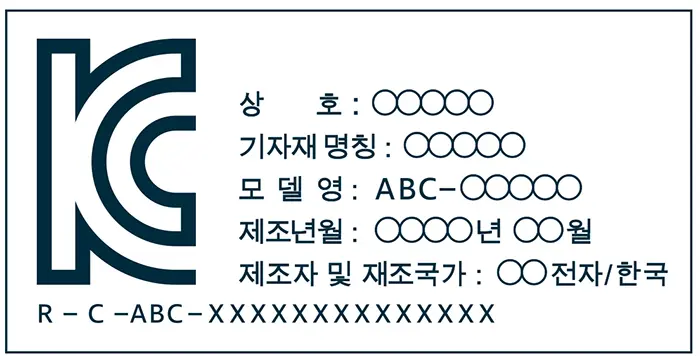
Once it is determined that the product requires a KC number and/or KC mark, AliExpress merchants must upload a photo as an auxiliary image on the product detail page. If the product has successfully passed South Korea's KC certification, the manufacturer or importer must add the KC mark on the product or packaging. Depending on the certification type, the KC mark is usually marked in blue or gold and accompanied by a certificate number.
The KC mark must meet the following requirements:
- The KC certification mark should vary according to the product size.
- It should be easily identifiable on the product or container and packaging, using methods like printing or engraving that are not easily removed.
- It should be adjacent to the KC certification number.
- Safety standard matters should be listed in Korean or English.
China JJR Laboratory provides KC certification testing services, and quotes are available upon request.
Email:hello@jjrlab.com
Write your message here and send it to us
 What is UL 1642 Compliance Certification?
 What Is Amazon's UL 60335 Standard
 How to get a UL 60335 Test Report
 What is UL 60335 Certification Compliance?
 What is EN 61000 Certification Compliance?
 How to get an EN 61000 Test Report?
 What is the Amazon EN 55035 Standard?
 What is EN 55035 Certification Compliance?
Leave us a message
24-hour online customer service at any time to respond, so that you worry!