



What is the EU ECE Certification (E-mark)?
According to the regulations of the Economic Commission for Europe (ECE) and the directives of the European Union, vehicles, motorcycles, and various components and systems must be certified to meet basic safety and environmental protection requirements in order to enter the European market. The E-Mark and e-Mark are European conformity marks issued by the transport departments, indicating that the product complies with relevant laws or directives. Vehicles and related products need to obtain E-Mark or e-Mark certification to be legally sold in Europe.
In Europe, the vehicle certification system includes the following two common parts:
European Union Certification (EC), also known as e-Mark:
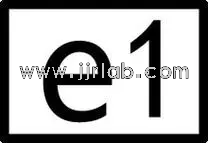
The e-Mark is a safety certification mark based on EU directives, which the European Commission requires member states to apply to motor vehicles, parts, and systems. Testing agencies must be technical service organizations from EU member states, and the issuing agencies are the government transport departments of EU member states. Products that obtain e-Mark certification are recognized by all EU member states. The e-Mark mark is a rectangular frame, applicable to automotive products in motor vehicles, whether in motion or stationary, such as car chargers, car lights/flashlights, car air pumps, car massage/heating cushions, car fans, car kettles, car refrigerators, car coffee machines, in-car TVs/audio systems, electric car jacks, car cleaning tools, car power tools, etc. Each EU member state has its own e-Mark certification number:
- e1 – Germany
- e2 – France
- e3 – Italy
- e4 – Netherlands
- e5 – Sweden
- e6 – Belgium
- e7 – Hungary
- e8 – Czech Republic
- e9 – Spain
- e11 – United Kingdom
- e12 – Austria
- e13 – Luxembourg
- e17 – Finland
- e18 – Denmark
- e19 – Romania
- e20 – Poland
- e21 – Portugal
- e23 – Greece
- e24 – Ireland
- e26 – Slovenia
- e27 – Slovakia
- e29 – Estonia
- e32 – Latvia
- e34 – Bulgaria
- e36 – Lithuania
- e49 – Cyprus
- e50 – Malta
Economic Commission for Europe Certification (ECE), also known as E-Mark:
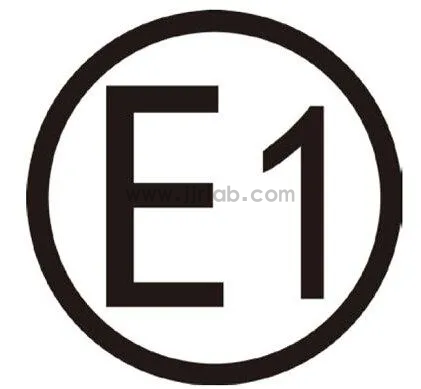
The E-Mark is issued by the Economic Commission for Europe (ECE). Currently, the ECE has 28 EU member states, including not only EU member states but also Eastern European, Southern European, and other non-European countries. The Ece regulations apply to all member states but are only recommendations and not mandatory standards. Member states can choose to adopt ECE regulations or continue using their own regulations. The E-Mark mark is a circular frame, indicating that these products must be used when the vehicle is stationary, such as windshields, seat belts, headlights, etc. Each EU member state has its own E-Mark certification number:
- E1 – Germany
- E2 – France
- E3 – Italy
- E4 – Netherlands
- E5 – Sweden
- E6 – Belgium
- E7 – Hungary
- E8 – Czech Republic
- E9 – Spain
- E10 – Yugoslavia
- E11 – United Kingdom
- E12 – Austria
- E13 – Luxembourg
- E14 – Switzerland
- E16 – Norway
- E17 – Finland
- E18 – Denmark
- E19 – Romania
- E20 – Poland
- E21 – Portugal
- E22 – Russian Federation
- E23 – Greece
- E24 – Ireland
- E25 – Croatia
- E26 – Slovenia
- E27 – Slovakia
- E28 – Belarus
- E29 – Estonia
- E31 – Bosnia and Herzegovina
- E32 – Latvia
- E34 – Bulgaria
- E37 – Turkey
- E40 – Macedonia
- E42 – European Community
- E43 – Japan
- E45 – Australia
- E46 – Ukraine
- E47 – South Africa
Information on Vehicle Tracking Systems and e-Mark/E-Mark:
The European Commission issued Directive "2004/104/EC" on November 13, 2004, followed by "2005/49/EC," "2005/83/EC," "2006/28/EC," and the newly adopted Directive "2009/19/EC" issued on March 12, 2009, concerning the electromagnetic compatibility (EMC) of motor vehicles and their electrical and electronic components. These directives form part of the European regulations for automotive type approval.
Directive "2004/104/EC" was adopted based on "2005/49/EC," "2005/83/EC," "2006/28/EC," and "2009/19/EC," replacing the previous automotive EMC Directive "95/54/EC," which was based on "72/245/EEC" and only dealt with electrical noise suppression of spark-ignition engines.
Under Directive 2009/19/EC, the scope of equipment covered includes all electrical equipment intended for installation in motor vehicles (including telecommunications equipment) considered as "electronic sub-assemblies (ESA)" or "aftermarket equipment," which must comply with the EMC requirements of the automotive directive. Therefore, e-Mark/E-Mark certification, obtained through rigorous EMC and other tests, indicates compliance for GPS vehicle tracking devices communicating over GSM (GPRS/Edge/3G) networks.
Email:hello@jjrlab.com
Write your message here and send it to us
 What is UL 1642 Compliance Certification?
 What Is Amazon's UL 60335 Standard
 How to get a UL 60335 Test Report
 What is UL 60335 Certification Compliance?
 What is EN 61000 Certification Compliance?
 How to get an EN 61000 Test Report?
 What is the Amazon EN 55035 Standard?
 What is EN 55035 Certification Compliance?
Leave us a message
24-hour online customer service at any time to respond, so that you worry!