



Wireless Device TELEC Certification Mark
What is telec certification?
Telec certification, also known as Japan Radio Law Certification or Mic certification, is often referred to as giteki certification (commonly labeled as giteki Certification on Amazon).
- TELEC (Telecom Engineering Center): The primary registered certification body for conformity assessment of Japanese radio equipment.
- MIC (Ministry of Internal Affairs and Communications): The government agency responsible for radio frequency equipment, developing regulatory standards, and designating TELEC as the certification issuing authority.
Nature: Telec certification is a mandatory certification for wireless products in Japan, similar to China's SRRC certification. It is required under the Radio Law to ensure that designated radio equipment complies with technical regulations.
Telec Certification Scope
Telec certification covers multiple aspects of wireless products, including:
1. Radio Performance: Ensuring radio transmission and reception comply with technical standards.
2. Electromagnetic Compatibility (EMC): Preventing interference with other electronic devices.
3. Safety: Ensuring the electrical safety of products to avoid harm to users.
Applicable Products
Telec certification applies to a variety of wireless products, including but not limited to:
- Bluetooth Products: Bluetooth earphones, speakers, etc.
- WiFi Products: Wireless routers, WiFi hotspot devices, etc.
- Wireless Microphones: Used for speeches and conferences.
- Pagers: Devices for sending and receiving wireless signals.
- ZigBee Devices: Low-power wireless communication equipment.
- Telemetry Devices: For remote data measurement and transmission.
- LTE, RFID Products: Such as RFID tags and readers.
- UWB Radio Systems: For short-range, high-speed data transmission.
- GSM Products: Such as mobile phones and modems.
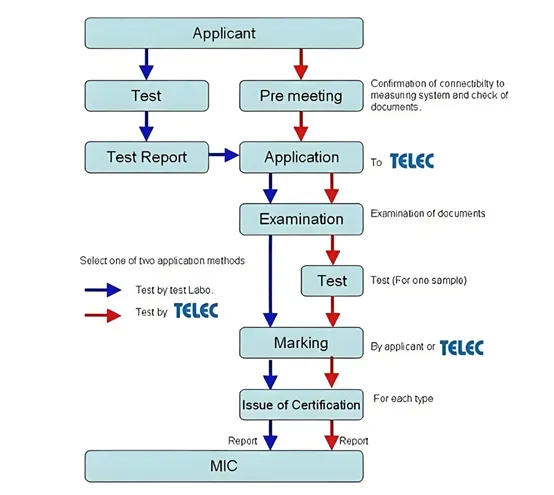
Telec Certification Process
The main certification process includes:
1. Application: Submission of certification requirements.
2. Testing: Technical testing of the product.
3. Document Review: Examination of technical documentation.
4. Certification: Issuance of the certification.
Required Documentation
The following documents are required for Telec certification:
1. Block Diagram
2. Schematic Diagram
3. Circuit Diagram
4. PCB Layout
5. BOM List (including crystal oscillators, ICs, chips, etc.)
6. Antenna Report (including antenna name, type, gain, measurement diagram, dimension drawing, etc.)
7. User Manual
8. Operating Instructions
9. Product Photos
10. Label and Location Diagram
11. ISO9001 Certificate
12. Telec Certification Application Form
Timeline and Sample Requirements
- Timeline: Approximately 4 weeks
- Samples: 1-2 product samples + 1 frequency-fixed sample (with lead wires)
Certification Mark
Products certified by Telec must display the certification mark, indicating compliance with Japanese radio technical regulations.

Importance of Telec Certification
1. Market Access: A legal requirement for entry into Japan's telecommunications market. Non-certified products cannot be sold or used legally.
2. Quality Assurance: Enhances product competitiveness and market reputation.
3. Regulatory Compliance: Ensures adherence to Japanese laws, avoiding legal liabilities and penalties.
4. Consumer Trust: Certification demonstrates product safety and performance reliability, gaining consumer confidence.
Telec certification is crucial for ensuring wireless device compliance with technical standards and protecting consumer rights. It is also a key factor for companies aiming to enter the Japanese market. Its stringent technical requirements promote healthy development of wireless technology and enhance competitiveness in the market.
More:CE Certification mark | UL Certification cost | RCM Certification | UN38.8 battery
Email:hello@jjrlab.com
Write your message here and send it to us
 What is the ASTM F2167 Certification Test?
 What is the ASTM F2050 Certification Test?
 What is ASTM F1967 Certification Testing? How to g
 What is the ASTM F1917 Certification Test?
 How to get ASTM F1821 Certification
 What is the ASTM F1821 Testing Standard?
 Electronic Products Safety Testing Laboratory
 HAC Hearing Aid Compatibility Testing
Leave us a message
24-hour online customer service at any time to respond, so that you worry!