



Australia New Zealand RCM Certification
What is rcm certification?
RCM (Regulatory Compliance mark) is a mandatory product compliance mark uniformly used in Australia and New Zealand. It replaced the previously used C-Tick (EMC mark) and A-Tick (telecommunications mark) separately, becoming the sole compliance identification in the Australia-New Zealand market since March 1, 2016.
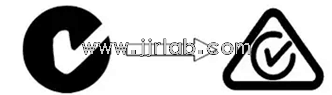
RCM certification is not a single "certificate," but a compliance declaration system proving your product meets the regulatory requirements in the following three core dimensions:
Important Reminder: RCM certification is mandatory. Products without the rcm mark cannot be sold in the Australia-New Zealand market. Violators may face fines of up to AUD 220,000, product recalls, and customs seizures.
Differences Between RCM, SAA, and C-Tick
Many exporters easily confuse these concepts. Here are the key distinctions:
Key Conclusion: SAA safety testing is only one step in the RCM certification process. After completing SAA testing, you still need to pass emc testing, wireless testing (if applicable), and complete registration in the EESS database before you can legally use the RCM mark.
Which Products Require RCM Certification?
Mandatory Certification Product Scope
The following product categories must obtain RCM certification before entering the Australia-New Zealand market:
Home Appliances: Air conditioners, refrigerators, washing machines, microwaves, vacuum cleaners
Power Supply Products: Chargers, adapters, power cords, sockets
Lighting Products: LED fixtures, tubes, driver power supplies, building cables
Information Technology Equipment: Computers, monitors, printers, routers
Wireless Communication Equipment: Mobile phones, tablets, Bluetooth devices, Wi-Fi modules, IoT devices
Audio and Video Equipment: TVs, audio systems, set-top boxes
Power Tools: Electric drills, chainsaws, electric gardening tools
Product Risk Level Classification
The EESS system classifies products into three risk levels, with certification requirements increasing progressively:
2025-2026 Important Update: Mobile phones and tablets have been included in New Zealand's Level 3 mandatory registration directory; LED tubes and building cables have also been newly added as Level 3 products.
Exempted Products
The following products do not require RCM certification:
Purely mechanical products (no electronic circuits)
Batteries (when sold separately, but products containing batteries require overall certification)
Certain medical devices and automotive parts (subject to specific regulations)
RCM Certification Process
Step 1: Product Assessment and Standard Identification
First, determine which risk level your product belongs to and the applicable AS/NZS standards. For example:
Mobile phone charger → AS/NZS 60950.1 or AS/NZS 62368.1 (Safety) + AS/NZS CISPR 32 (EMC)
Bluetooth speaker → AS/NZS 62368.1 + AS/NZS CISPR 32 + AS/NZS 4268 (RF)
JJR Laboratory provides professional product classification and standard identification services to help you quickly pinpoint the applicable standards and avoid detours.
Step 2: Appoint a Local Responsible Supplier in Australia/New Zealand
RCM certification requires a company registered in Australia or New Zealand to act as the responsible supplier, needing to provide:
Australia: ABN (Australian Business Number)
New Zealand: IRD (Inland Revenue Department) tax number
The responsibilities of the responsible supplier include:
Signing the Declaration of Conformity (DoC)
Maintaining technical documentation
Responding to market surveillance spot checks
Bearing product safety responsibility
Don't have a local company? You can meet this requirement by authorizing a local agent in Australia/New Zealand. JJR Laboratory can assist in connecting you with compliant local agent resources.
Step 3: Laboratory Testing
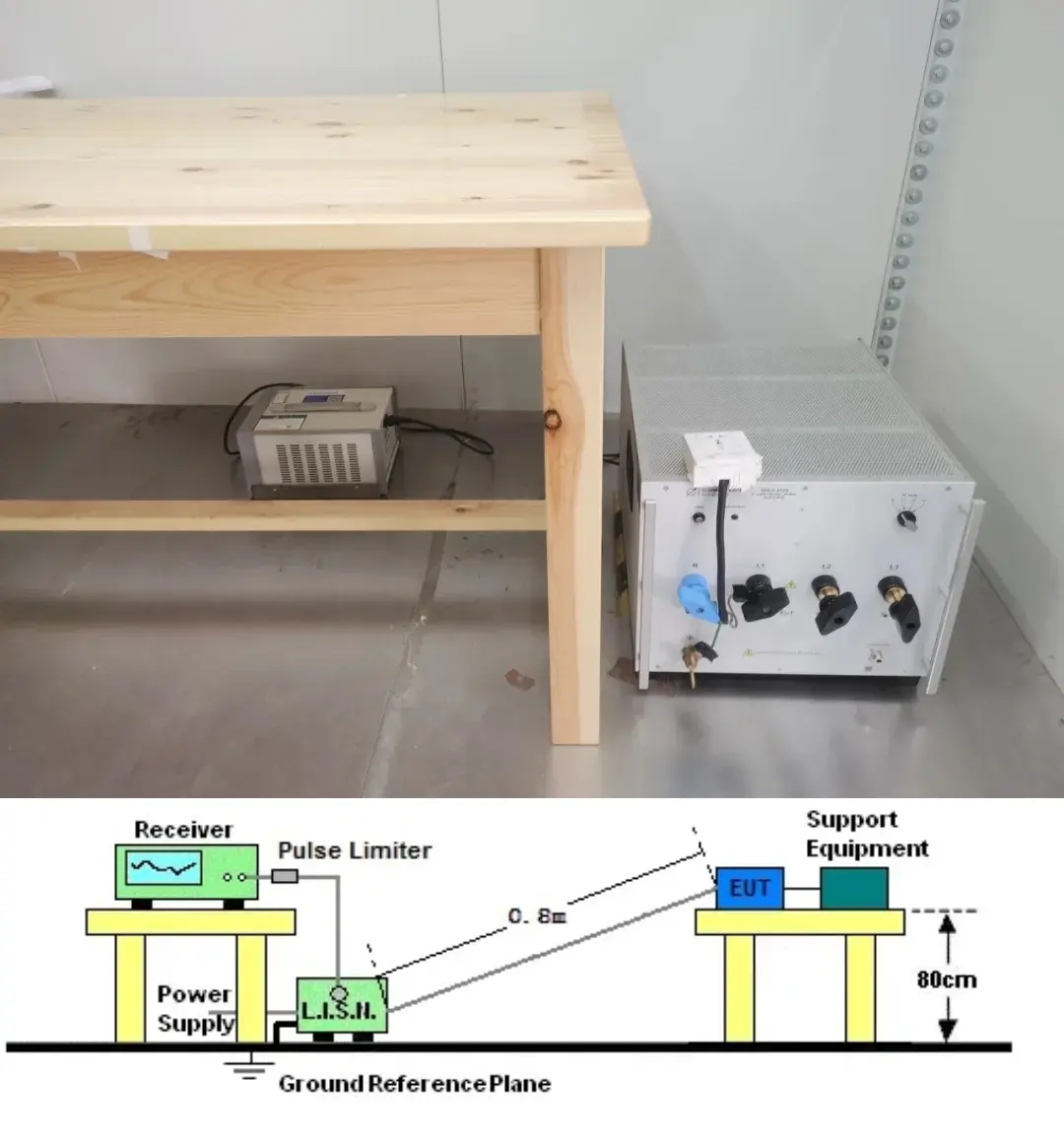
Depending on the product category, complete the following tests in a NATA (Australia) or ILAC mutually recognized laboratory:
Why choose JJR Laboratory?
JJR Laboratory is a leading service provider in the field of rcm compliance testing for Australia and New Zealand, holding CMA and CNAS qualifications, and is an ISO/IEC 17025 authorized laboratory. Costs are 40% lower than other institutions.
Step 4: Prepare Technical Documentation
A complete technical documentation package should include:
Product specifications (including model, technical parameters)
Circuit schematics and PCB layout diagrams
Bill of Materials (BOM) for critical components
Test reports (issued by NATA/ILAC recognized laboratories)
User manual (in English, including safety warnings)
Label design draft (including RCM mark and EESS registration number)
Draft Declaration of Conformity (DoC)
Step 5: Sign the Declaration of Conformity (DoC)
The responsible supplier formally signs the DoC, declaring that the product complies with all applicable regulations. The DoC must include:
Responsible supplier name and ABN/IRD
Product model and description
List of applicable AS/NZS standards
Signatory's name and date
Step 6: EESS Database Registration
Log into the EESS registration system, upload technical documents, and pay the registration fee:
Failure to pay the annual fee on time will result in automatic cancellation of the registration, and the product can no longer be sold.
Step 7: Affix the RCM Mark
After passing the EESS registration, you will obtain a unique EESS registration number. The requirements for affixing the RCM mark are as follows:
Location: Must be printed on the product body itself (cannot be printed only on the packaging)
Size: Height ≥ 3mm
Color: Any color, but must form a clear contrast with the background
Content: RCM Mark + EESS registration number
Permanence: The mark must be durable and not easily removable
Detailed Guidelines on RCM Mark Usage
Mark Style
The RCM mark consists of the three letters "RCM" with no fixed color requirements. Common practices:
Black or white (most universal)
Consistent with the brand color scheme (readability must be ensured)
Electronic Labels and QR Codes
For small products (like Bluetooth earphones, smartwatches), electronic labels or QR codes can be used, but must meet:
QR code size ≥ 10mm × 10mm
Scanning the code must directly display EESS registration information
A prompt such as "Scan for RCM info" must be marked on the product body
Regulatory Differences Between Australia and New Zealand
Although RCM is a uniform mark for Australia and New Zealand, there are differences in specific implementation between the two countries:
JJR Laboratory has local teams in both Sydney and Auckland and can provide customized compliance solutions tailored to the differences in your target markets.
RCM Certification Cycle (Note: Section numbered strictly as per original text)
Wireless products require additional RF testing (+1-2 weeks), and smart products require additional cybersecurity assessment (+2-3 weeks).
Get an accurate quote from JJR Laboratory: Provide the product name, model, and functional description, and we will provide a detailed testing plan and cost breakdown within 1 working day.
RCM Certification Common Errors and Pitfall Avoidance Guide
Error 1: Using a personal agent as the responsible supplier
Consequence: EESS registration review fails, unable to obtain RCM qualification.
Correct approach: Entrust a legal entity registered in Australia/New Zealand as the responsible supplier. JJR Laboratory can assist in connecting with compliant agents.
Error 2: Test report is based on outdated standards
Consequence: The report is rejected by ACMA, requiring re-testing and delaying time to market.
Correct approach: Confirm the latest version of the applicable standards. JJR Laboratory will verify the latest standard requirements for you before testing.
Error 3: RCM is only printed on the packaging, not on the product body
Consequence: Fails customs inspection, product is detained or returned.
Correct approach: Ensure the RCM mark is permanently marked on the product body.
Error 4: Mixing the same agent for both Australia and New Zealand
Consequence: New Zealand registration fails, unable to enter the New Zealand market.
Correct approach: Appoint compliant responsible suppliers separately for Australia and New Zealand.
Error 5: Failure to pay EESS annual fees on time
Consequence: Registration is automatically cancelled, and the product can no longer be sold.
Correct approach: Set up an annual fee payment reminder, or entrust JJR Laboratory to provide annual fee hosting services.
RCM Certification Frequently Asked Questions (FAQ)
Can CE certification be used in Australia?
A: No. CE is a European Union mark and is not recognized in the Australia-New Zealand market. However, if you already have a CE test report, some test data might be applicable for RCM certification (standard correspondence needs to be confirmed). JJR Laboratory can help you assess the reusability of existing reports.
How long is the validity period of RCM certification?
A: RCM certification itself does not have a fixed validity period, but EESS registration requires an annual fee (AUD 75/product). If the product design or applicable standards change, it needs to be re-evaluated and registered.
Can I apply for RCM without an Australian company?
A: Yes. You need to appoint a company registered in Australia or New Zealand as the responsible supplier. JJR Laboratory can assist you in finding a compliant local agent.
What is the difference between RCM and SAA?
A: SAA only covers electrical safety testing, while RCM is a complete compliance system, including safety, EMC, wireless (if applicable), and EESS registration. SAA is a part of RCM, but does not equal RCM.
Do I need RCM to sell on Amazon Australia?
A: Yes. Amazon Australia requires that all electrical and electronic products must provide RCM compliance proof, otherwise they will be delisted.
Are JJR Laboratory's test reports recognized by ACMA?
A: Yes. JJR Laboratory holds dual accreditation from NATA and ILAC, and its test reports can be directly used for ACMA and EESS registration without secondary review.
Email:hello@jjrlab.com
Write your message here and send it to us
 Biokompatibilität ISO 10993
 How to get EU UFI Registration?
 What is Italian DM 21/03/73 Certification?
 How to get SOR/2011-17 Compliance Certification
 What is DGCCRF Certification Testing
 Bow and Arrow Children's Toys CPC Certification
 POPs Testing Service Consultation
 EU PPWR New Packaging Compliance
Leave us a message
24-hour online customer service at any time to respond, so that you worry!