



FCC Test Laboratory
What is an fcc test laboratory?
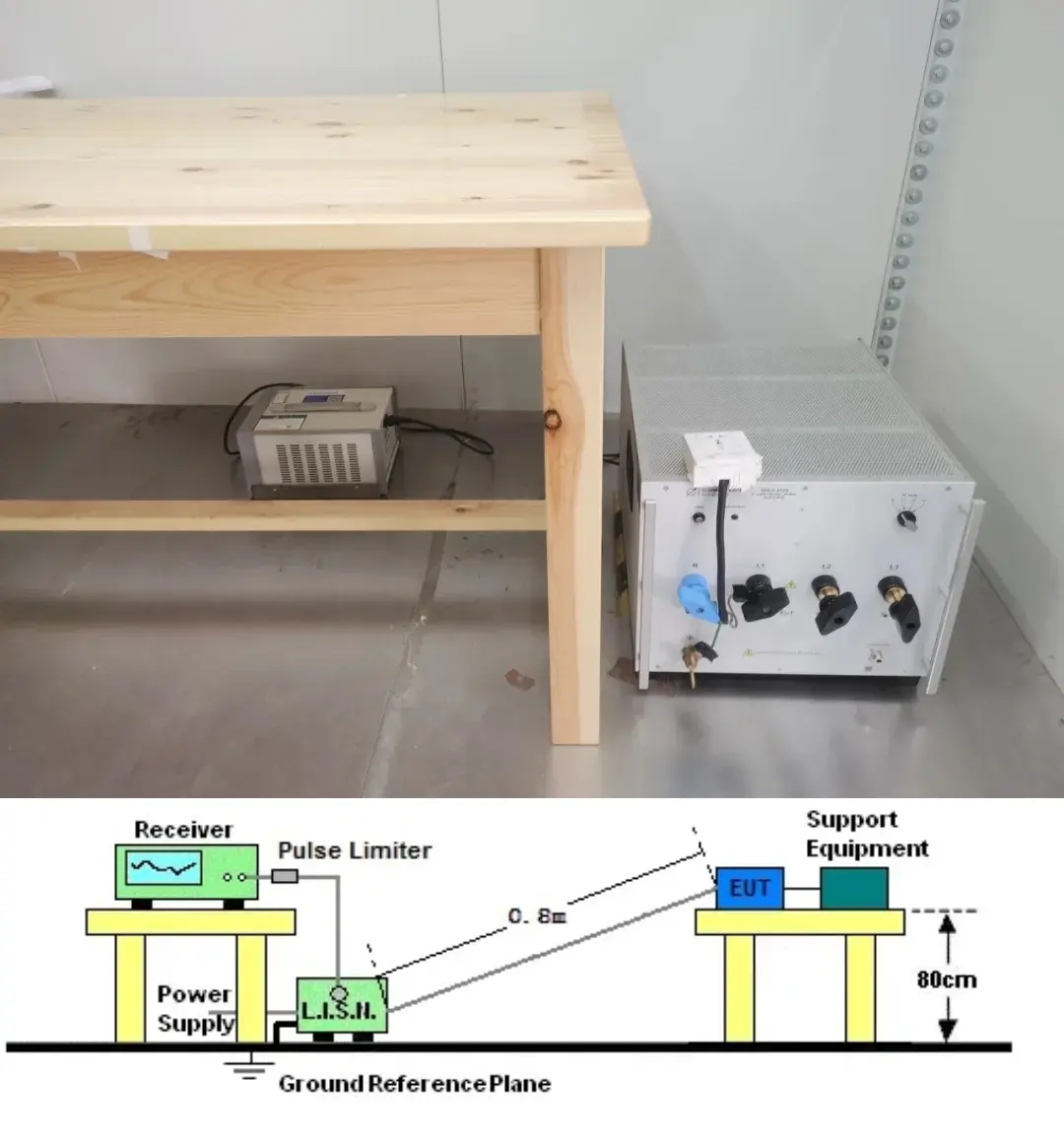
An fcc test Laboratory is a third-party organization accredited by the U.S. Federal Communications Commission (FCC) responsible for verifying the electromagnetic compatibility (EMC) of electronic products. The laboratory must be equipped with facilities such as shielded rooms, spectrum analyzers, and antenna towers, and must pass evaluations by accreditation bodies such as A2LA.
JJR Laboratory is equipped with Full-Anechoic Chambers (FAC) and Semi-Anechoic Chambers (SAC), covering a testing range from 9kHz to 40GHz, providing one-stop services for wireless products from pre-testing to formal certification.
Why is fcc certification required?
Two Major Types of FCC Certification
Effective November 2, 2017, the FCC merged the original DoC and Verification procedures into sdoc. The current system is divided into two categories:
Note: Some e-commerce platforms may require both the FCC ID certificate and the SDoC report for wireless products.
JJR Laboratory can complete SDoC test reports and collaborates with multiple TCB organizations to accelerate the FCC ID certification process.
FCC Test Item List
JJR Laboratory is equipped with Rohde & Schwarz and Keysight equipment to ensure precise and traceable data.
Certification Process and Lead Time
Pre-testing (3-5 days) → Troubleshooting/Rectification → Formal Testing (5-7 days) → Report Preparation (3 days) → TCB Review (7-14 days) → Certification Granted
Total Lead Time: Approx. 2-4 weeks for SDoC, 4-8 weeks for FCC ID (including rectification time).
Fee Description
JJR Laboratory offers pre-testing packages; identifying issues early can reduce formal certification costs by 30% to 50%.
Common Failure Reasons and Rectification
FCC Labeling Requirements
Certified products must be labeled with:
FCC ID (for Certification equipment) or SDoC Declaration of Conformity
Label Location: On the product body or specified in the user manual
Font Height: ≥ 1.5mm (standard requirement)
JJR Laboratory provides label template reviews to avoid customs clearance delays caused by labeling issues.
FCC vs. Other Certifications
JJR Laboratory supports one-stop joint testing for FCC+CE+IC, saving on redundant testing costs.
Industry Case Studies
Case 1: TWS Bluetooth Earbuds
Challenge: 2.4GHz radiated band-edge exceeded limits.
JJR Solution: Optimized PCB antenna matching and added ferrite beads.
Result: Passed on the first try, lead time shortened to 3 weeks.
Case 2: Industrial WiFi Router
Challenge: 5.8GHz DFS testing was complex.
JJR Solution: Completed DFS parameter calibration during the pre-testing phase.
Result: Passed TCB review at once with no rectification needed.
Case 3: Smart Home Gateway
Challenge: Interference from multi-band coexistence.
JJR Solution: Time-division testing + spectrum isolation analysis.
Result: Simultaneously obtained FCC, CE, and IC certificates.
Frequently Asked Questions (FAQ)
Can I sell products in the U.S. without FCC certification?
No. E-commerce platforms like Amazon will delist the products, and Customs may seize the goods.
How long is the FCC certification valid?
There is no fixed expiration date; however, a re-evaluation is required if the product design changes.
Can I use reports from other laboratories?
Reports must be issued by an FCC-recognized laboratory; JJR holds full qualifications.
What if the test fails?
JJR provides free technical consultation to assist with rectifications until the product passes.
What is the difference between FCC ID and SDoC?
ID is for wireless products (intentional radiators), while SDoC is for standard electronic products (unintentional radiators).
Do "Verification" and "DoC" still exist?
No. After November 2017, they were merged into SDoC and are no longer used separately.
Email:hello@jjrlab.com
Write your message here and send it to us
 Biokompatibilität ISO 10993
 How to get EU UFI Registration?
 What is Italian DM 21/03/73 Certification?
 How to get SOR/2011-17 Compliance Certification
 What is DGCCRF Certification Testing
 Bow and Arrow Children's Toys CPC Certification
 POPs Testing Service Consultation
 EU PPWR New Packaging Compliance
Leave us a message
24-hour online customer service at any time to respond, so that you worry!