



Battery UL1642 Test Report
ul1642 is a safety standard for lithium-ion cells released in October 1985 by Underwriters Laboratories Inc. (UL), which is a leading American safety testing laboratory. The standard has been revised six times, and the current version is the 6th edition.
UL1642 is the most widely recognized international standard for assessing the safety and reliability of lithium-ion cells under various failure conditions (such as changes in environmental temperature, unintended external shocks, air transportation, etc.).
UL1642 Test Items and Samples
1.1. Room Temperature Short Circuit Test (or 55°C Test)
Reference Standard: UL1642 (6th Edition), Section 10.
Test Equipment: Data acquisition system, thermocouple, current meter, battery cell under test.
Test Process:
1. Prepare 5 fully charged cells.
2. Attach the thermocouple to the battery to collect temperature data.
3. Mount the battery in the fixture and clamp the crocodile clips to the positive and negative terminals of the battery. Place the battery in the fume hood. The total resistance of the circuit should not exceed 0.1Ω.
4. During the test, collect voltage, current, and temperature data. Start the short circuit test and monitor the entire process.
Test End Condition: Continue discharging until an explosion or fire occurs, or until the voltage drops to the cutoff value, and the battery surface temperature returns to ambient temperature.
Judgment Criteria: The battery should not explode or catch fire, and the surface temperature should not exceed 150°C.
Overcharge Test
Reference Standard: UL1642 (6th Edition), Section 11.
Test Equipment: Arbin charge/discharge tester, thermocouple, high-temperature insulating tape, thermal insulation cotton, battery cell under test.
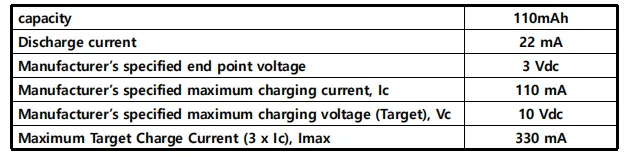
Test Process:
1. Discharge 5 fully charged cells with a constant current of 0.2C until reaching the nominal voltage.
2. Attach the thermocouple to the battery sidewall. Start the Arbin charge/discharge tester.
3. Call the appropriate program on the Arbin tester as per the test requirements. The program is as follows:
a. Perform an overcharge test with a constant current of 3 times the maximum rated current.
b. Once the voltage reaches the manufacturer’s maximum voltage, continue charging under constant voltage.
Test End Condition: The test continues for 7 hours or until the manufacturer’s declared termination state is reached or an explosion or fire occurs.
Judgment Criteria: The battery should not explode or catch fire.
Crush Test
Reference Standard: UL1642 (6th Edition), Section 13.
Test Equipment: Agilent data acquisition system, blade, thermocouple, high-temperature insulating tape, hydraulic press.
Email:hello@jjrlab.com
Write your message here and send it to us
 What is the ASTM F2167 Certification Test?
 What is the ASTM F2050 Certification Test?
 What is ASTM F1967 Certification Testing? How to g
 What is the ASTM F1917 Certification Test?
 How to get ASTM F1821 Certification
 What is the ASTM F1821 Testing Standard?
 Electronic Products Safety Testing Laboratory
 HAC Hearing Aid Compatibility Testing
Leave us a message
24-hour online customer service at any time to respond, so that you worry!