



CE-ROHS Certification on the TEMU Platform
How to Obtain CE-ROHS certification for the TEMU Platform? Currently, exporting electronic products to Europe or listing them on European TEMU or Amazon platforms requires CE-RoHS certification. CE-ROHS certification ensures that electrical and electronic equipment complies with EU regulations by not containing harmful substances or maintaining harmful substance levels below specified thresholds.
What is ROHS Certification?
CE-ROHS certification is based on the EU’s RoHS Directive, officially titled “DIRECTIVE 2011/65/EU OF THE EUROPEAN PARLIAMENT AND OF THE COUNCIL,” or “Restriction of Hazardous Substances in Electrical and Electronic Equipment.”
Purpose: It aims to limit the use of hazardous substances in electronic and electrical equipment to protect human health and the environment.
Origins and Evolution: RoHS certification originated in the EU, first issued in 2003, and officially implemented on July 1, 2006. The latest versions include RoHS 2.0 (2011/65/EU) and RoHS 3.0 (2015/863/EU).
Which Products Require CE-ROHS Certification?
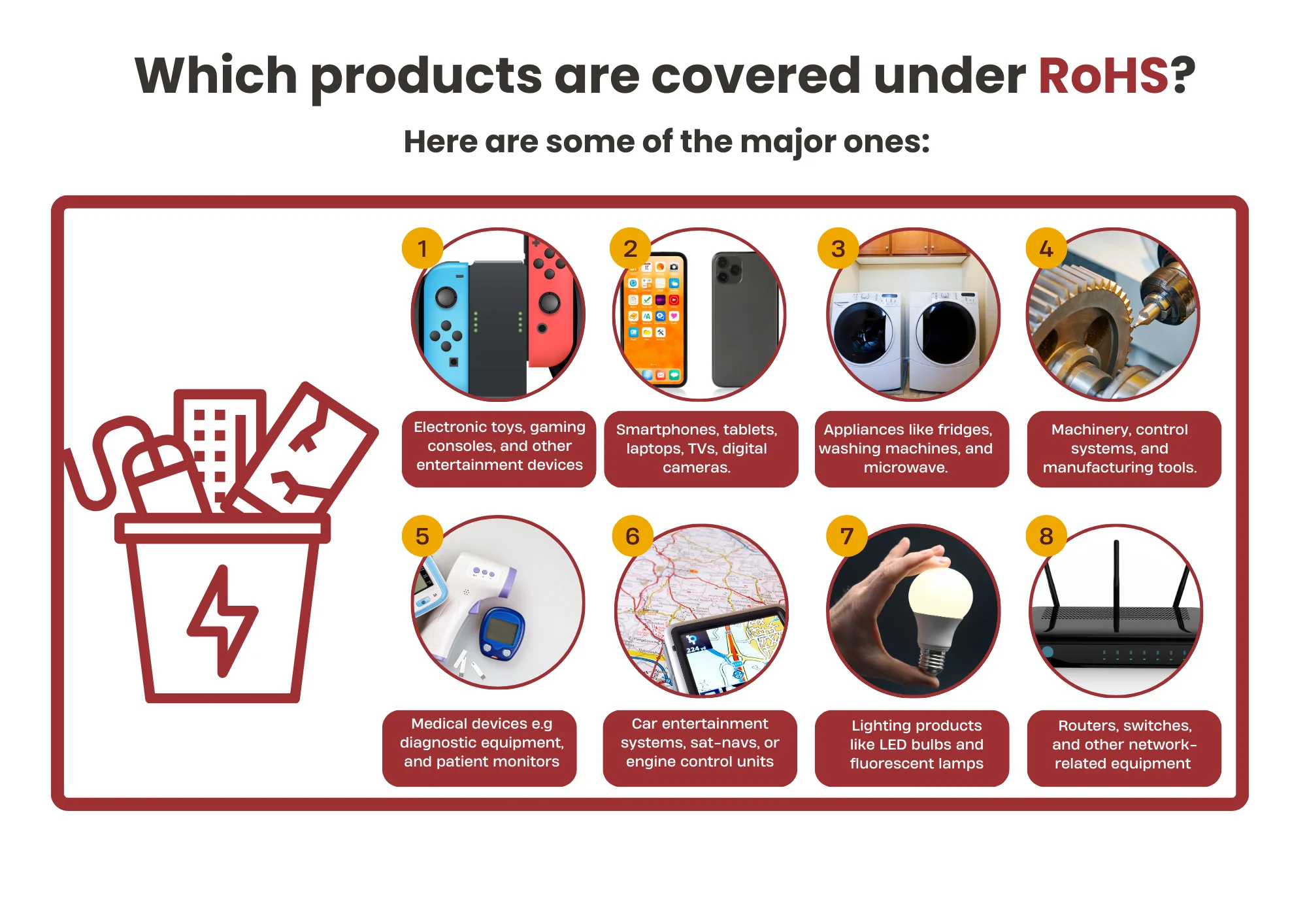
Scope: CE-ROHS certification applies to electronic and electrical products operating under AC 1000V or DC 1500V.
Requirements: Manufacturers, importers, and distributors must ensure their products comply with all RoHS Directive requirements to legally sell in the EU market. This involves ensuring harmful substance levels are below the specified thresholds.
Testing Items and Process
Testing Items: CE-ROHS certification includes tests for the following ten substances:
- Lead (Pb)
- Mercury (Hg)
- Cadmium (Cd)
- Hexavalent chromium (Cr6+)
- Polybrominated diphenyl ethers (PBDEs)
- Polybrominated biphenyls (PBBs)
- Dibutyl phthalate (DBP)
- Benzyl butyl phthalate (BBP)
- Diisobutyl phthalate (DIBP)
- BIS(2-ethylhexyl) phthalate (DEHP)
Process: Typically includes sending samples, filling out application forms, conducting tests, and issuing test reports.
Importance and Applications
Legal Requirement: CE-ROHS certification is mandatory for electronic and electrical products exported to the EU. Products without CE-ROHS certification cannot enter the EU market.
Environmental Image: CE-ROHS certification helps companies comply with legal requirements while enhancing their environmental image, building consumer trust, and loyalty.
Market Access: On cross-border e-commerce platforms like TEMU, CE-ROHS certification is a prerequisite for selling electronic products in Europe.
In summary, CE-ROHS certification is a mandatory EU mark for electronic and electrical products aimed at protecting human health and the environment. For manufacturers and exporters, obtaining CE-ROHS certification is essential for entering the EU market and enhancing product competitiveness.
About ROHS Exemptions
ROHS exemptions allow specific products or applications to contain restricted hazardous substances under certain conditions. These exemptions are based on technical, feasibility, health, and safety considerations. In some cases, products or applications cannot fully comply with ROHS requirements but can still be legally sold under specific exemption conditions.
ROHS exemptions are not unconditional. They require meeting certain criteria, such as:
- Technical Challenges: Due to technical limitations, some products or applications may not completely avoid using hazardous substances.
- Lack of Viable Alternatives: Currently, no feasible substitutes may exist to replace the original hazardous substances.
- Application Criticality: Certain hazardous substances may be indispensable for specific applications, as their absence could impair functionality or degrade performance.
Email:hello@jjrlab.com
Write your message here and send it to us
 What is UL 1642 Compliance Certification?
 What Is Amazon's UL 60335 Standard
 How to get a UL 60335 Test Report
 What is UL 60335 Certification Compliance?
 What is EN 61000 Certification Compliance?
 How to get an EN 61000 Test Report?
 What is the Amazon EN 55035 Standard?
 What is EN 55035 Certification Compliance?
Leave us a message
24-hour online customer service at any time to respond, so that you worry!