



Electromagnetic Compatibility and Interference Testing
In modern life, smartphones, computers, smart home devices, automotive electronics, medical equipment… almost all electronic products rely on the electromagnetic environment. But have you ever wondered whether these devices "quarrel with each other" when operating simultaneously? Could electromagnetic waves emitted by one device interfere with another, causing signal loss, screen flickering, or even functional failure? This is exactly the core problem that Electromagnetic Compatibility (EMC) aims to solve.

what is emc Electromagnetic Compatibility Testing?
EMC stands for Electromagnetic Compatibility. It measures the ability of an electronic device or system to function properly in an electromagnetic environment without generating intolerable electromagnetic interference.
Simply put, emc testing mainly consists of two core parts:
EMI (Electromagnetic Interference): Electromagnetic Emission Test
It detects whether the electromagnetic disturbance generated by the device itself exceeds the limits, including Radiated Emission (propagated through space) and Conducted Emission (propagated through power lines and signal lines).
EMS (Electromagnetic Susceptibility): Electromagnetic Immunity/Susceptibility Test
It evaluates the device’s tolerance to external electromagnetic interference to ensure no malfunctions, crashes, or damage.
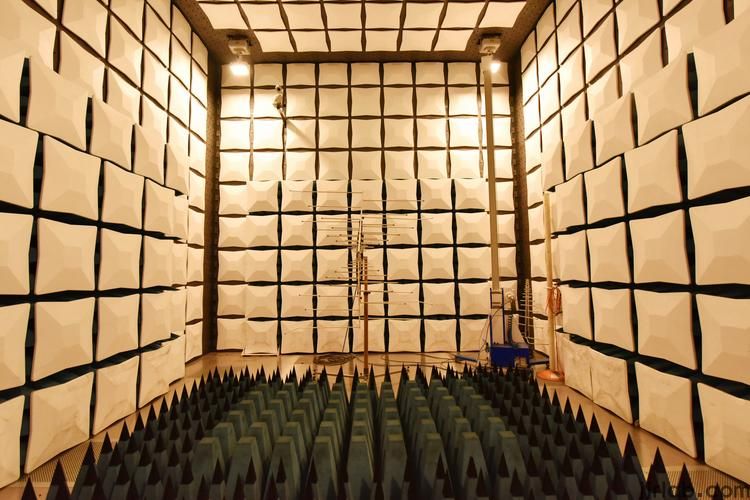
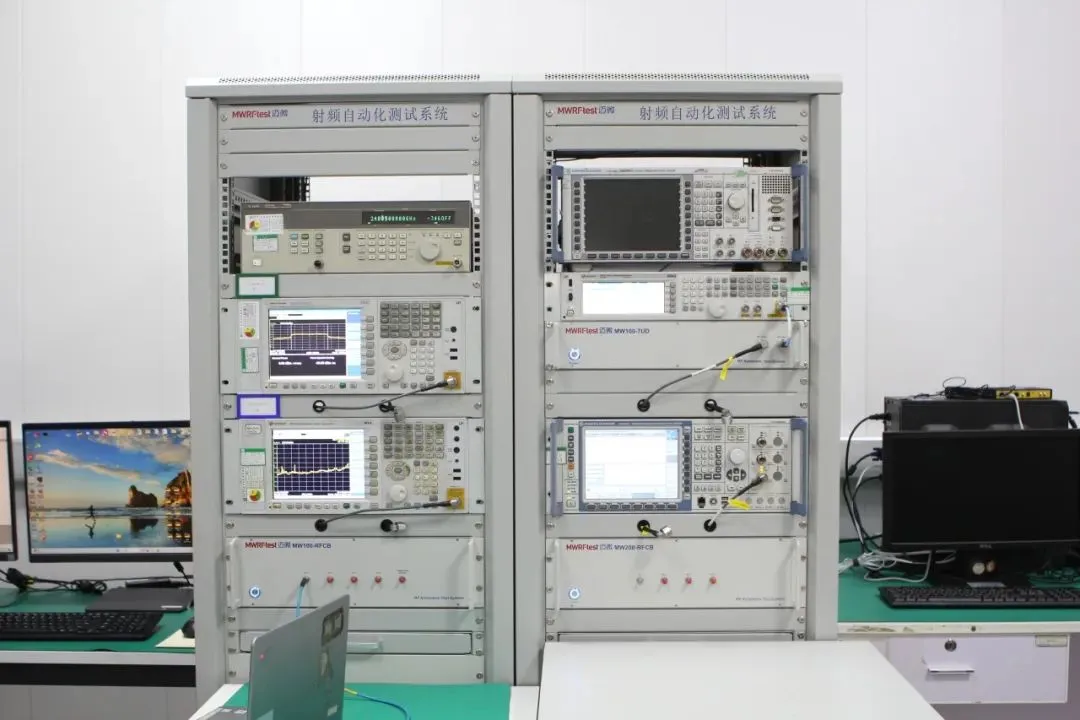
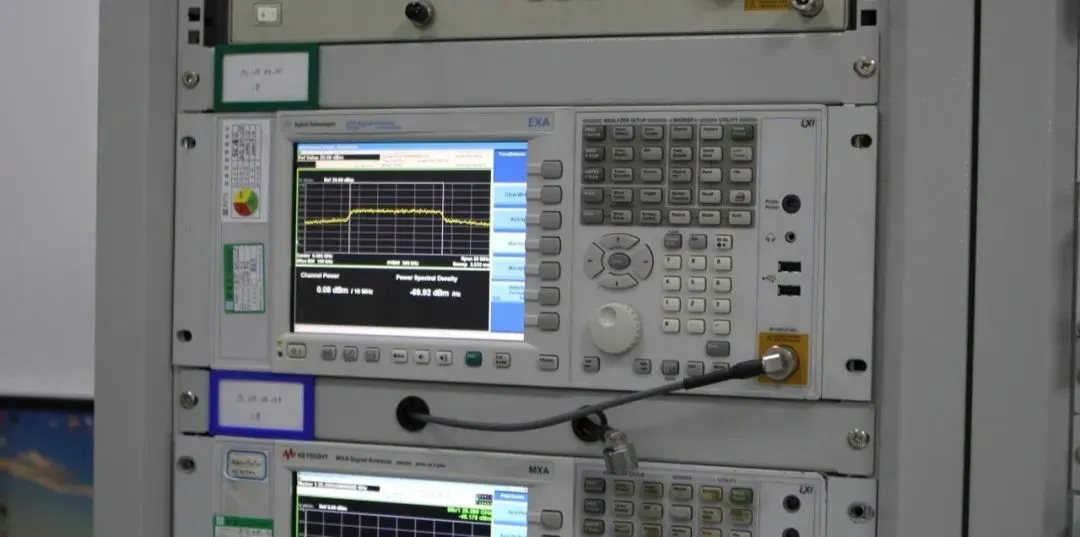
emc testing uses professional equipment and anechoic chambers in laboratories to simulate real electromagnetic environments and conduct a comprehensive "physical examination" of products.
Emission Tests
Evaluate the device’s ability to radiate or conduct electromagnetic energy outward, ensuring it complies with standard limits to avoid interfering with other devices.
1.1 Radiated Emission (RE)
• Test Content: Measure the electromagnetic field strength radiated by the device through space.
• Frequency Range: Typically 30 MHz to 6 GHz (adjusted according to standards).
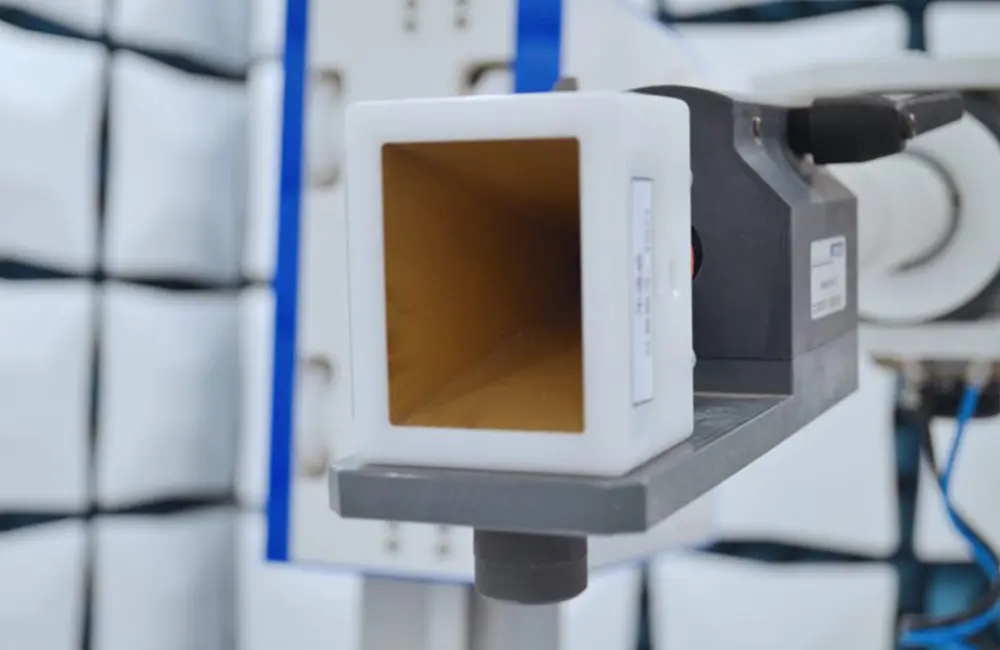
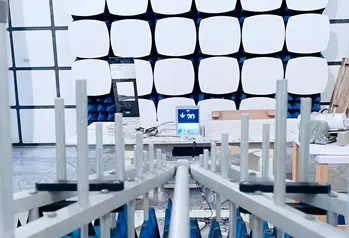
• Test Method: In an anechoic chamber, use an antenna to receive electromagnetic waves radiated by the device and analyze the frequency spectrum.
• Typical Limits:
Medical devices (e.g., Class III devices): According to CISPR 11 or GB 4824, Class A (non-household) has more relaxed limits, while Class B (household) is stricter.
Example: Within 30 MHz–1 GHz, the field strength limit for Class B devices may be 30 dBμV/m (10 m distance).
• Application Scenario: Prevent wireless communication devices (e.g., mobile phones, Wi-Fi) from interfering with medical monitoring equipment.
1.2 Conducted Emission (CE)
• Test Content: Measure electromagnetic interference conducted by the device through power lines and signal lines.
• Frequency Range: Typically 150 kHz to 30 MHz.
• Test Method: Use a Line Impedance Stabilization Network (LISN) and receiver to analyze interference voltage/current on power lines.
• Typical Limits:
Medical devices: According to CISPR 32 or GB/T 6113.102, limits are related to device category.
Example: Within 150 kHz–500 kHz, the limit may be 66 dBμV (quasi-peak).
• Application Scenario: Avoid equipment interfering with other devices on the same power grid via power lines (e.g., a monitor affecting adjacent surgical equipment).
Immunity Tests
Evaluate the device’s ability to resist external electromagnetic interference and ensure normal operation in harsh environments.
2.1 Electrostatic Discharge (ESD)
• Test Content: Simulate discharge from charged human bodies or objects to the device.
• Test Levels:
Contact discharge: ±4 kV (general equipment), ±6 kV (critical medical equipment).
Air discharge: ±8 kV (for non-directly accessible gaps).
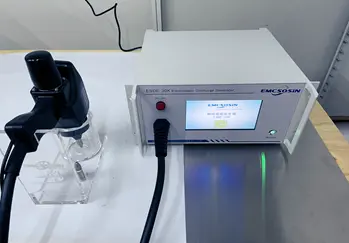
• Test Method: Use an ESD simulator to discharge on the device enclosure, interfaces, etc.
• Judgment Criteria: No functional loss, data errors, or performance degradation after discharge.
• Application Scenario: Prevent monitor blackouts or data loss caused by static electricity in operating rooms.
2.2 Radiated RF Immunity
• Test Content: Simulate the impact of radio frequency fields from wireless communication devices (e.g., mobile phones, base stations).
• Frequency Range: Typically 80 MHz to 6 GHz.
• Test Levels:
Life-support equipment: 10 V/m (field strength).
General medical equipment: 3 V/m or 5 V/m.
• Test Method: In an anechoic chamber, use a signal generator and antenna to generate RF fields and observe device response.
• Judgment Criteria: No malfunctions, display abnormalities, or performance degradation.
• Application Scenario: Prevent ECG monitors from failing to alarm due to nearby mobile phone interference.
2.3 Electrical Fast Transient (EFT)
• Test Content: Simulate transient pulse interference caused by switching operations in the power grid.
• Test Levels:
Power lines: ±2 kV (5 kHz repetition rate).
Signal lines: ±1 kV (adjusted according to standards).
• Test Method: Apply pulses to power lines and signal lines using a burst generator.
• Judgment Criteria: No restart, data errors, or functional abnormalities.
• Application Scenario: Prevent false alarms of monitors caused by pulse interference during MRI startup/shutdown.
2.4 Surge Immunity
• Test Content: Simulate transient overvoltage caused by lightning strikes or power grid faults.
• Test Levels:
Power lines: 1.2/50 μs (voltage wave) ±1 kV (line-to-ground), ±2 kV (line-to-line).
Signal lines: Adjusted according to standards.
• Test Method: Apply impulses to power lines using a surge generator.
• Judgment Criteria: No damage, performance degradation, or safety risks.
• Application Scenario: Prevent power module damage of ventilators caused by lightning strikes, leading to treatment interruption.
2.5 Voltage Dips/Interruptions
• Test Content: Simulate sudden voltage drops or interruptions in the power grid.
• Test Levels:
Voltage dip: 40% Ut (rated voltage), duration 10 ms.
Short interruption: 100% Ut, duration 50 ms.
• Test Method: Use a programmable power supply to simulate voltage changes.
• Judgment Criteria: The device can automatically recover or operate as preset (e.g., alarm, backup power switchover).
• Application Scenario: Ensure safe shutdown or backup power activation if surgical equipment stops due to power grid faults.
2.6 Power Frequency Magnetic Field Immunity
• Test Content: Simulate power frequency magnetic fields generated by distribution rooms, transformers, etc.
• Test Levels:
General equipment: 3 A/m (magnetic field strength).
Critical medical equipment: 10 A/m.
• Test Method: Use a magnetic field generator to produce a uniform magnetic field and observe device performance.
• Judgment Criteria: No significant changes in performance indicators (e.g., sensor accuracy, display stability).
• Application Scenario: Prevent power frequency magnetic fields from interfering with pacemaker detectors or MRI systems.
Test Standards and Compliance Requirements
Overview of Common EMC Test Items
Test Category | Item Name | Chinese Abbr. | Main Purpose | Typical Standards |
EMI | Radiated Emission | RE | Detect space radiated interference | CISPR 32 / en55032 |
EMI | Conducted Emission | CE | Detect power line conducted interference | CISPR 16 / EN55032 |
EMI | Harmonic Current | Harmonic | Prevent power grid pollution | iec 61000-3-2 |
EMI | Voltage Fluctuation and Flicker | Flicker | Prevent impacts such as light flickering | IEC 61000-3-3 |
EMS | ESD Immunity | ESD | Simulate human electrostatic contact | IEC 61000-4-2 |
EMS | EFT/Burst | EFT/Burst | Simulate switching transients | IEC 61000-4-4 |
EMS | Surge Immunity | Surge | Simulate lightning or grid switching | IEC 61000-4-5 |
EMS | Radiated RF Immunity | RS | Simulate radio environment | IEC 61000-4-3 |
EMS | Conducted RF Immunity | CS | Simulate cable coupling interference | IEC 61000-4-6 |
Compliance Key Points
• Product Classification: Determine test limits according to usage location (Class A/Class B) and equipment type (Group 1/Group 2).
• Basic Performance: Define performance related to clinical functions (e.g., sensor accuracy, alarm reliability) as the judgment basis for immunity tests.
• Test Reports: emc reports must be consistent with electrical safety reports to ensure the representativeness of tested samples.
Test Process and Precautions
• Pre-compliance Test: Conduct preliminary tests in the laboratory to identify problems and optimize design.
• Formal Test: Complete full-item testing in a certified laboratory (e.g., CNAS-accredited laboratory).
• Rectification and Retest: Improve design for non-conforming items (e.g., adding filter circuits, optimizing grounding) and retest.
• Certificate Acquisition: Obtain certifications such as CE, fcc, or NMPA after passing tests.
Precautions
• The test environment must meet requirements for no external interference sources and electromagnetic shielding.
• The device must operate under typical working conditions (e.g., maximum load, all interfaces connected).
• During immunity tests, record changes in device performance (e.g., display fluctuations, alarm triggers).
Email:hello@jjrlab.com
Write your message here and send it to us
 What is EN 61000 Certification Compliance?
 How to get an EN 61000 Test Report?
 What is the Amazon EN 55035 Standard?
 What is EN 55035 Certification Compliance?
 How to get the EN 55035 Test Report?
 What is the Amazon EN 301 489 Standard?
 How to get an EN 301 489 Test Report?
 What is EN 301 489 Compliance Certification?
Leave us a message
24-hour online customer service at any time to respond, so that you worry!