



Fan EN IEC 60335-2-80:2024+A1:2024 Compliance
The EN iec 60335-2-80 standard is formulated by the International Electrotechnical Commission (IEC) to specify safety performance requirements for electric fans for household and similar applications. It covers various types of household fans, including ceiling fans, duct fans, partition fans, pedestal fans and table fans, and applies to single-phase electrical appliances with a rated voltage not exceeding 250V.
The newly released version EN IEC 60335-2-80:2024+A1:2024 has further strengthened and supplemented the original standard. It aims to ensure that electric fans on the market meet basic safety performance and better protect consumers from potential risks.
Fan Safety Requirements of EN IEC 60335-2-80:2024+A1:2024
1. Electrical Safety
Electrical safety is the top priority for electric fan safety. This standard sets more stringent electrical safety requirements, including:
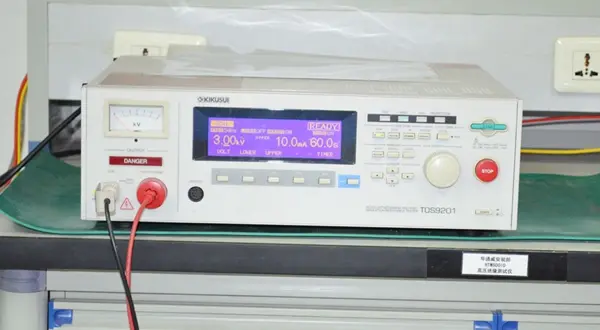
• Voltage Withstand Test: Verify the electrical insulation performance of fans to prevent high-voltage breakdown of circuits and avoid electric shock or short-circuit accidents.
• Earthing Continuity Test: Ensure the normal operation of the earthing system for Class I fan equipment to prevent electric shock caused by current leakage.
• Leakage Current Test: Guarantee fan housings are free from live electricity to protect users from electric hazards.
• Short Circuit & Overload Test: Ensure protective devices can cut off power supplies rapidly under short-circuit or overload conditions to prevent electrical fires.
2. Mechanical Safety
Mechanical safety is equally essential. The standard specifies detailed safety requirements for fan mechanical structures and moving parts:
• Blade Protection Test: Fan blades must be equipped with protective guards of sufficient strength to prevent accidental contact by children or foreign objects.
• Stability Test: Pedestal fans shall pass a 15° tilt test to avoid accidental tipping.
• Component Firmness Inspection: Prevent loosening or falling off of key components to eliminate potential mechanical hazards.
3. Thermal Safety and Fire Resistance
Prolonged operation of electric fans may lead to overheating and trigger fire risks. Strict requirements for thermal safety and fire resistance are defined as follows:
• Temperature Rise Test: Monitor the temperature of key components such as motors, control circuits and wiring terminals during long-term operation, to ensure temperatures stay within material allowable limits.
• Flame Resistance Test: Adopt needle flame tests and other methods to prevent combustion of fan housings and wires caused by short circuits or overloads.
4. Environmental Protection and Hazardous Substance Restriction
With growing environmental awareness, the standard highlights environmental protection. In compliance with the RoHS Directive, it restricts the use of hazardous substances to ensure electric fan products are eco-friendly.
Email:hello@jjrlab.com
Write your message here and send it to us
 What is EN 61000 Certification Compliance?
 How to get an EN 61000 Test Report?
 What is the Amazon EN 55035 Standard?
 What is EN 55035 Certification Compliance?
 How to get the EN 55035 Test Report?
 What is the Amazon EN 301 489 Standard?
 How to get an EN 301 489 Test Report?
 What is EN 301 489 Compliance Certification?
Leave us a message
24-hour online customer service at any time to respond, so that you worry!