



Guide to Applying for Australian RCM Certification
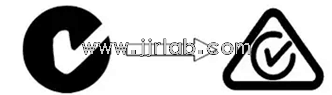
Australian rcm certification (Regulatory Compliance Mark) is a mandatory conformity marking for electrical, electronic, and telecommunications equipment to enter the Australian market, covering Safety, Electromagnetic Compatibility (EMC), and Radio Frequency (RF) requirements. Below is a complete application process and analysis of key points.
Scope of Application for RCM Certification
1. Mandatory RCM Certification Products
① Electrical and electronic products: Household appliances (refrigerators, washing machines), IT equipment (computers, chargers), lighting fixtures
② Telecommunications equipment: Mobile phones, routers, Bluetooth/Wi-Fi devices
③ Radio frequency equipment: Walkie-talkies, drones, Internet of Things (IoT) devices
2. Voluntary Certification (for some products)
Some low-voltage equipment can apply for certification on a voluntary basis, but most electrical and electronic products require mandatory RCM Certification.
Regulatory Requirements for RCM Certification
Regulatory Type | Applicable Standards | Regulatory Authority |
Electrical Safety | AS/NZS 60335 (household appliances), AS/NZS 60950 (IT equipment) | State Electrical Safety Authorities (e.g., NSW Fair Trading) |
Electromagnetic Compatibility (EMC) | AS/NZS CISPR 32, AS/NZS 61000 | ACMA (Australian Communications and Media Authority) |
Radio Frequency (RF) | AS/NZS 4268 (short-range devices) | ACMA |
Notes:
① Some products need to meet Safety + EMC + RF requirements simultaneously (e.g., smart home devices with Wi-Fi function).
② Medical devices, industrial machinery, etc., may involve additional certifications (e.g., TGA, WorkSafe).
RCM Certification Application Process
1. Confirm the Product Compliance Path
① Safety only (sdoc): e.g., ordinary household appliances (must comply with AS/NZS standards).
② Safety + EMC: e.g., power adapters, LED drivers.
③ Safety + EMC + RF: e.g., Bluetooth headsets, 4G modules.
2. Select a Certification Body (if applicable)
① Safety certification: Testing must be conducted by an Australian accredited laboratory (e.g., SAI Global, TUV Rheinland).
② EMC/RF certification: IEC/CISPR reports are acceptable (but Australian difference testing is required).
3. Product Testing
(1) Safety Testing
Test Standards (Examples):
① Household appliances: AS/NZS 60335 (equivalent to iec 60335)
② IT equipment: AS/NZS 62368 (equivalent to IEC 62368)
Key Test Items:
① Withstand voltage test, insulation test, temperature rise test
② Mechanical strength, fire resistance performance
(2) emc testing
Test Standards:
① Conducted/radiated disturbance: AS/NZS CISPR 32
② Immunity to interference: AS/NZS 61000-4 series
Test Items:
① Radiated emission (30MHz~6GHz)
② Electrostatic discharge (ESD), surge immunity
(3) radio frequency testing (if applicable)
Test Standards:
① Short-range devices: AS/NZS 4268
② Cellular devices: ACMA Radiocommunications Standards
Test Items:
① Frequency range, transmit power, spectrum mask
4. Register the rcm mark
Steps:
1. Register a supplier code in the ERAC (Electrical Regulatory Authorities Council) database (an Australian local company is required).
2. Upload test reports to the ACMA EMC database (this step is only required for EMC/RF products).
3. Sign the Declaration of Conformity (DoC) and affix the RCM Mark.
5. Affix the RCM Mark
Mark Requirements:
① Must include the RCM Mark + supplier code (e.g., N12345).
② Can be printed or labeled (minimum height ≥ 3mm).
Documents Required for RCM Certification
Document Type | Requirements |
Test Reports | Safety (AS/NZS), EMC (CISPR), RF (if applicable) |
Declaration of Conformity (DoC) | Must include product model, standards, and manufacturer information |
Supplier Registration Certificate | Supplier code generated from the ERAC database |
User Manual (English) | Must include safety warnings and conformity statements |
Australian Local Representative Information | Overseas enterprises must appoint a local agent |
rcm certification costs and Cycle
Item | Estimated Cost | Cycle |
Safety Testing (SDoC) | USD 2,500–3,200 | 4–6 weeks |
EMC Testing | USD 2,000–2,500 | 3–4 weeks |
RF Testing (if applicable) | USD 3,500–4,400 | 5–8 weeks |
ERAC Registration Fee | Approximately USD 250–400 | 1–2 weeks |
Total Cost (Safety + EMC) | USD 4,700–6,000 | 6–10 weeks |
Frequently Asked Questions
1. Is CB Report transferable to RCM Certification?
The safety part is acceptable, but supplementary Australian difference testing is required (e.g., plugs must comply with AS/NZS 3112).
2. Is an Australian local representative required?
A supplier code must be registered by an Australian company; overseas enterprises need to engage a local agent.
3. What is the difference between RCM and C-Tick marks?
RCM has replaced the C-Tick mark (mandatory use of RCM has been enforced since 2016).
4. What is the validity period of the certificate?
There is no fixed validity period, but products must continuously comply with the standards (subject to market random inspections).
Summary
① RCM Certification = Safety (AS/NZS) + EMC (CISPR) + RF (if applicable) + Database Registration
② Supplier code registration must be completed by an Australian local company; testing can be conducted at JJR Laboratories in China (provided the laboratory is accredited).
③ The cost starts from approximately USD 2,200, with a cycle of 6–10 weeks (depending on product complexity).
Email:hello@jjrlab.com
Write your message here and send it to us
 How to get an EN 301 893 test report?
 What is EN 301 893 Certification Compliance
 What is the CSA 62368-1 Standard?
 Canadian Pacifier Compliance SOR/2016-184
 US Agent for FCC & EC REP for CE: Compliance R
 What is Recycling of WEEE
 What is PPWR Packaging Compliance
What is Extended Producer Responsibility
What is PPWR Packaging Compliance
What is Extended Producer Responsibility
Leave us a message
24-hour online customer service at any time to respond, so that you worry!