



Hearing Aid Compatibility (HAC) Testing
Hearing aid users often complain about hearing a "clicking" noise when someone nearby is on a phone call, which indicates that the mobile phone and the hearing aid may be incompatible. In response to this situation, in September 2006, the U.S. fcc mandated an HAC (Hearing Aid Compatibility) certification program for mobile phone manufacturers. Its reference standard is ANSI C63.19 (American National Standard Methods of Measurement of Compatibility between Wireless Communications Devices and Hearing Aids). According to the standard's definition, consumers can judge the compatibility of a specific hearing aid model with a mobile phone based on the hearing aid's immunity level and the corresponding phone's signal emission level.
The HAC testing program requires the limit value of the tested mobile phone to be at least M3 (test results are classified from M1 to M4). The specific definition of the limits will be explained in detail later in the text. In addition to HAC, T-coil (audio testing) also requires the limit value to be within the T3 range (test results are classified from T1 to T4).
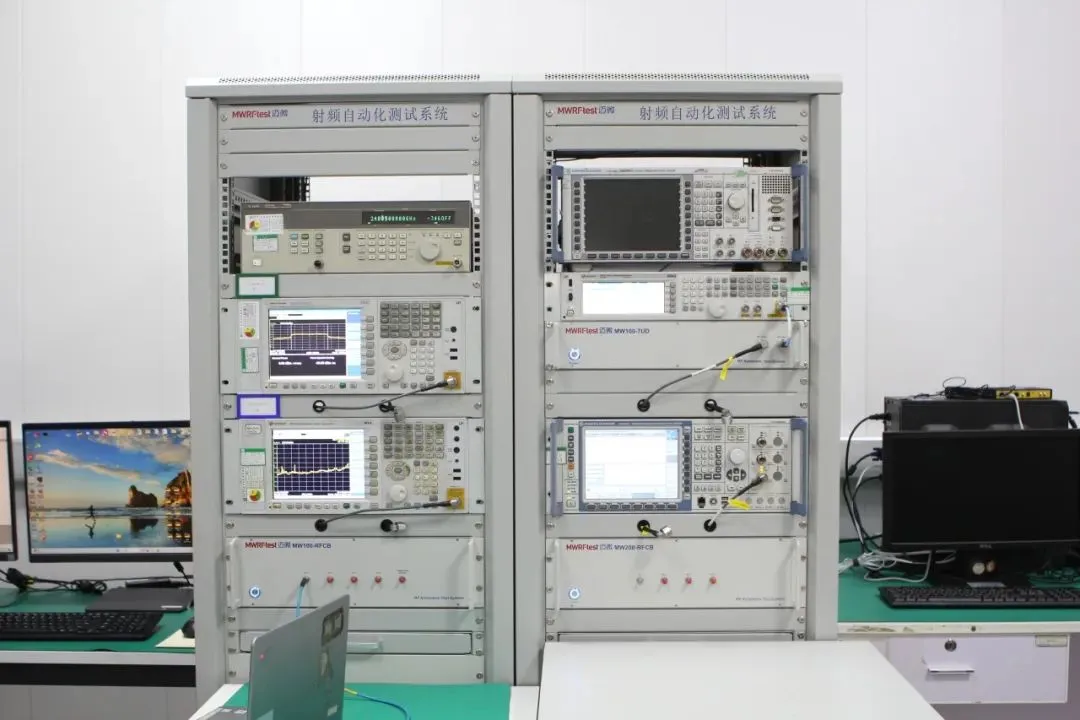
JJR LAB's HAC test system can fulfill the standard requirements for RF testing and electromagnetic signal parameters in the acoustic frequency band according to the HAC standard. The test scope includes two parts: Wireless Communications Devices (WD) and Hearing Aids (HA), covering communication products with frequencies between 800~950MHz and 1.6~2GHz. Cordless phones, mobile phones, and Personal Communications Service (PCS) devices operating at these frequencies can all undergo HAC certification.
Simple Test Flow for Electric and Magnetic Fields
(Near-Field Radiation Test Flow for Wireless Communication Devices):
Confirm the probe and test instruments are working normally and positioned properly
WD Configuration: Configure the WD to operate in a transmitting state
Initialize the field strength probe for area scanning
Determine the exclusion area, set isolation, rescan other areas, and record the maximum reading
Complete scanning for both electric and magnetic fields
Confirm and record the classification
If necessary, rescan the electric and magnetic fields
The Main Measuring Instruments Used Include:
Near-field electric field probe;
Near-field magnetic field probe;
Probe positioning device;
Support system for Wireless Communications Devices (WD);
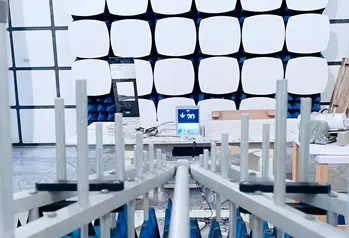
RF shielded room and other auxiliary equipment.
In near-field testing, the near-field probe uses an electric field probe or a magnetic field probe within a 5cm * 5cm area to scan and measure the maximum field strength of the area, respectively. Over multiple pulse periods, by measuring the peak value, the average field strength of the Device Under Test (DUT) can be calculated based on the average measurement value and the known duty cycle of the wireless communication device. The distance between the closest point of the probe and the reference plane of the wireless communication device must be exactly 1.0cm.
Before Conducting Near-Field Radiation Tests, Wireless Communication Devices Must Perform the Following Steps:
Under the wireless communication device's modulation mode, calibrate the peak readings of the electric and magnetic field probes;
Check and verify the repeatability and accuracy of the probe positioning system;
Ensure that the reflected interference of the DUT is more than 20dB lower than the desired signal. This can be achieved by repeating the measurements on the same wireless communication device at multiple positions and orientations. The reading difference caused by reflections must not exceed ±0.8dB.
Once the probe and test instruments are confirmed to be operating normally and the wireless communication device is in transmit mode, the field strength probe can be initialized for area scanning. The system will automatically record the maximum reading (V/m or A/m), and the results will be classified according to the following table.
Table 1: Limit Requirements
The electric and magnetic field testing of HAC (Hearing Aid Compatibility) for wireless communication devices has been briefly introduced above. In this section, we will briefly introduce the magnetic field strength measurement (T-coil) requirements for wireless devices in the audio frequency band during HAC testing.
HAC testing is based on the ANSI-C63-19 standard, and the Chinese national standard is YD/T 1643-2007. In the measurement of the magnetic field strength of wireless communication devices in the audio frequency band, we need to test and evaluate three metrics:
The first metric: The magnetic field density of the intentional signal (system signal) at the center frequency of the audio frequency band.
The second metric: The frequency response of the intentional signal across the entire audio frequency band.
The third metric: The difference between the magnetic field strengths of the intentional signal (system signal) and the unintentional signal (interference signal).
(Figure 1: T-COIL Magnetic Field Test Setup)
T-Coil Test and Measurement Instruments Include the Following Equipment:
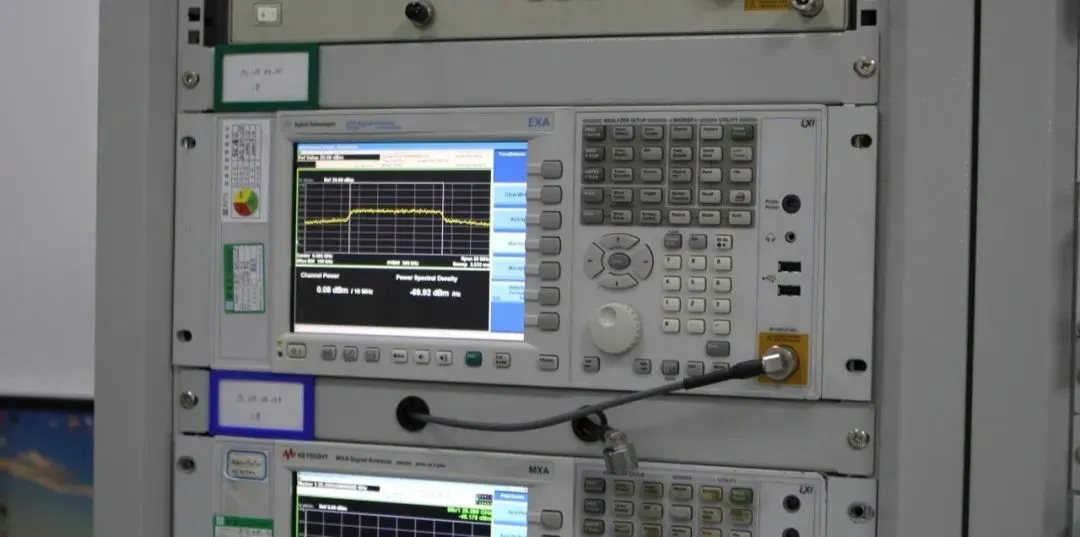
Base station simulator / RF communication tester supporting audio input or output
Probe coil assembly
True RMS voltmeter
1/3 octave band-pass filter
Power supply
Helmholtz calibration coil
The HAC Test Method: Control the wireless communication device to be in a call mode, requiring the base station simulator to provide a simulated audio signal to the wireless communication device. The base station simulator controls the wireless communication device to operate at its maximum transmission power state. This is primarily to accurately account for the potential impact its baseband portion might have on the earpiece coil under the maximum power mode. It should be noted that an RF cable link must be used for the connection during the measurement, rather than a wireless link. This is mainly to shield the measurement results from the impact of RF transmission signals during the measurement process.
The entire test process is completed by the following multi-stage procedures. First, measure the magnetic field strength of the audio frequency band useful for the hearing aid's T-coil. The second step is to measure the unintentional signal magnetic field component to determine the impact from the wireless communication device's display and battery current paths on the intentional signal in the audio frequency band. The following is the general test flow:
Audio Frequency Band Magnetic Signal Test Flow for Wireless Communication Devices:
1. Confirm the calibration of the measuring instruments
2. Set up and verify the test configuration to determine the reference value
Measure the intentional audio frequency band signal
Measure the unintentional audio frequency band signal
1. Signal quality
2. Magnetic field strength
3. Frequency response
Determine and record the classification information
The purpose of HAC certification is to prevent the electromagnetic field formed around the antenna of digital mobile phones during communication from affecting the hearing aids used by people with disabilities. JJR LAB's HAC testing laboratory is a domestic third-party laboratory providing HAC testing and certification. It fully complies with the test requirements of the US standard ANSI-C63-19 and the national standard YD/T 1643-2007. It has completed a large amount of HAC testing and pre-research work for domestic mobile phone enterprises, ensuring that their communication products comply with various countries' protection requirements for people with disabilities.
Email:hello@jjrlab.com
Write your message here and send it to us
 What is EN 61000 Certification Compliance?
 How to get an EN 61000 Test Report?
 What is the Amazon EN 55035 Standard?
 What is EN 55035 Certification Compliance?
 How to get the EN 55035 Test Report?
 What is the Amazon EN 301 489 Standard?
 How to get an EN 301 489 Test Report?
 What is EN 301 489 Compliance Certification?
Leave us a message
24-hour online customer service at any time to respond, so that you worry!