



How to Obtain a CE Mark?
What is the ce mark for Household Appliances?
Information and Procedures Required for Applying for the CE Mark for Small Household Appliances
The CE Mark is a mandatory certification system implemented by the European Union (EU) to ensure consumer safety and environmental protection. CE stands for European Community, and it is a directive within the EU that mandates all electronic products sold in the European market must comply with the relevant requirements for the CE Mark. The scope of the CE Mark covers various electronic and electrical products, including small household appliances.
The exact meaning of the EU CE Mark is: the CE Mark is a safety conformity mark, not a quality conformity mark. It is regarded as a passport for manufacturers to access and enter the European market. Products affixed with the "CE" mark can be sold in all EU member states without having to meet the requirements of each individual member state, thus enabling the free circulation of goods within the EU member states.
Directives Related to the CE Mark
In recent years, the use of the CE Mark has become increasingly widespread on goods sold in the European Economic Area (EEA, including EU member states and EFTA member states, excluding Switzerland). Products bearing the CE Mark indicate that they meet a series of requirements specified in European directives concerning safety, health, environmental protection, and consumer protection.
Necessity of the CE Mark for Small Household Appliances
Small household appliances refer to portable electrical products used in daily household life, such as electric kettles, rice cookers, electric irons, hair dryers, etc. During use, these products may pose safety risks such as electromagnetic radiation, electric shock, and fire hazards. Therefore, the CE Mark is required to ensure that they comply with EU safety and environmental protection requirements.
CE Mark Requirements for Household Appliances (Involving the Following Standards)
1. EN 60335-1: Household and Similar Electrical Appliances - Safety - Part 1: General Requirements
This standard specifies the general safety requirements for household appliances, including physical, mechanical, electrical, thermal, and chemical performance requirements. For different types of household appliances, there are also other relevant specific part standards.
2. EN 55014-1: Electromagnetic Compatibility - Requirements for Household Appliances, Electric Tools and Similar Apparatus - Part 1: Emission
This standard specifies the electromagnetic compatibility (EMC) requirements for household appliances, including limits on electromagnetic radiation and conducted interference.
3. EN 55014-2: Electromagnetic Compatibility - Requirements for Household Appliances, Electric Tools and Similar Apparatus - Part 2: Immunity - Product Family Standard
This standard specifies the EMC requirements for household appliances, including limits on conducted interference.
4. en 61000-3-2: Electromagnetic Compatibility (EMC) - Part 3-2: Limits - Limits for Harmonic Current Emissions (Equipment Input Current ≤ 16 A per Phase)
This standard specifies the requirements for power factor and harmonic limits of household appliances to ensure that the power quality of electrical equipment complies with EU standards.
3. EN 61000-3-3: Electromagnetic Compatibility (EMC) - Part 3-3: Limits - Limitation of Voltage Changes, Voltage Fluctuations and Flicker in Public Low-Voltage Supply Systems, for Equipment with Rated Current ≤ 16 A per Phase and Not Subject to Conditional Connection
This standard specifies the requirements for voltage fluctuation and variation limits of household appliances to ensure the stability and reliability of electrical equipment.
4. EN 62233: Assessment of Exposure of the General Public to Low-Frequency Electromagnetic Fields
This standard specifies the requirements for evaluating the impact of low-frequency electromagnetic fields generated by household appliances on the human body.
The above standards are the main ones required for the CE Mark of household appliances. However, the specific certification standards shall be determined according to the characteristics and uses of different products. For example, the EN 60335-1 standard applies to all types of household appliances, including but not limited to dryers, blenders, vacuum cleaners, stoves, ovens, dishwashers, electric kettles, etc.
Classification of Small Household Appliances by Function (Four Categories)
1. Kitchen Small Appliances
Mainly including yogurt makers, egg cookers, electric lunch boxes, soybean milk machines, electric kettles, electric pressure cookers, bean sprout machines, induction cookers, rice cookers, electric baking pans, pancake makers, disinfection cabinets, juicers, electric hot pots, microwave ovens, multi-functional food processors, etc.
4. Home Appliances
Mainly including electric fans, audio equipment, vacuum cleaners, electric heaters, humidifiers, air purifiers, water dispensers, water purifiers, electric clothes dryers, etc.
5. Personal Care Small Appliances
Mainly including hair dryers, electric shavers, electric irons, electric toothbrushes, electronic beauty instruments, electronic massagers, etc.
6. Personal Digital Products
Mainly including MP3 players, MP4 players, electronic dictionaries, handheld learning devices, game consoles, digital cameras, digital video cameras, etc.
How to Get a CE Mark?
1. Determine Product Classification
First of all, it is necessary to determine the classification of small household appliances. According to EU directives, small household appliances are mainly divided into two categories: low voltage directive (LVD) and High Voltage Directive (HVD).
① Low-voltage products refer to those with an input voltage between AC 50 V – 1000 V or DC 90 V – 1300 V, such as electric kettles and electric irons.
② High-voltage products refer to those with an input voltage above AC 1000 V or DC 1500 V, such as rice cookers and hair dryers.
③ Different types of products need to meet different certification requirements.
4. Prepare Technical Documentation
In accordance with the requirements for the CE Mark, technical documentation needs to be prepared, including product manuals, circuit diagrams, structural drawings, bill of materials, manufacturer's Declaration of Conformity, etc. These documents need to be translated into English and submitted to an EU-authorized notified body for evaluation.
5. Conduct Type Testing
The EU-authorized notified body will conduct type testing on the product to verify its safety performance and quality. The testing content mainly includes tests on the product's structure, electrical performance, safety protection, environmental adaptability, etc. Qualified samples will be sent to the EU notified body for subsequent evaluation.
1. Obtain ce certificate
If the product passes the evaluation, the notified body will issue a CE certificate, allowing the product to be sold and used in the EU market. The validity period of the CE certificate is five years, and renewal is required upon expiration. Meanwhile, the notified body also requires enterprises to submit an annual report to it every year to prove the compliance of the products.
What Information Needs to Be Prepared for CE certification?
2. Product user manual
3. Safety design documents (including key structural drawings, i.e., design drawings reflecting creepage distances, clearances, number of insulation layers, and thickness)
4. Product technical specifications (or enterprise standards)
1. Product electrical schematic diagrams
2. Product circuit diagrams
1. Copies of certificates for the whole machine or components
2. Other required information
For more knowledge about CE certification, please pay attention to the CE section, where detailed introductions will be provided.
What Standards Must Household Appliances Comply with to Apply for the CE Mark?
Household appliances applying for the CE Mark must comply with the ce-lvd safety standards and CE-EMC electromagnetic compatibility standards.
① Household appliance CE-LVD safety standard: EN 60335-1, with the latest standard number EN 60335-1:2012/A15 by 2023. In addition, each type of product has a specific subdivision standard, such as EN...
② Household appliance CE-EMC electromagnetic compatibility standards: EN 55014-1, EN 55014-2, EN 61000-3-2, EN 61000-3-3
What Are the CE-lvd testing Items for Household Appliances?
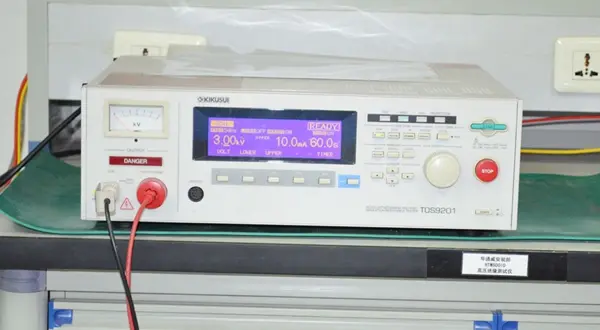
Mainly including: power measurement, temperature rise test, overload test, leakage current test, high and low temperature test, needle flame test, stability test, ball pressure test, grounding resistance test, power cord tensile test, glow wire test, motor locked-rotor test, etc.
What Are the CE-emc testing Items for Household Appliances?
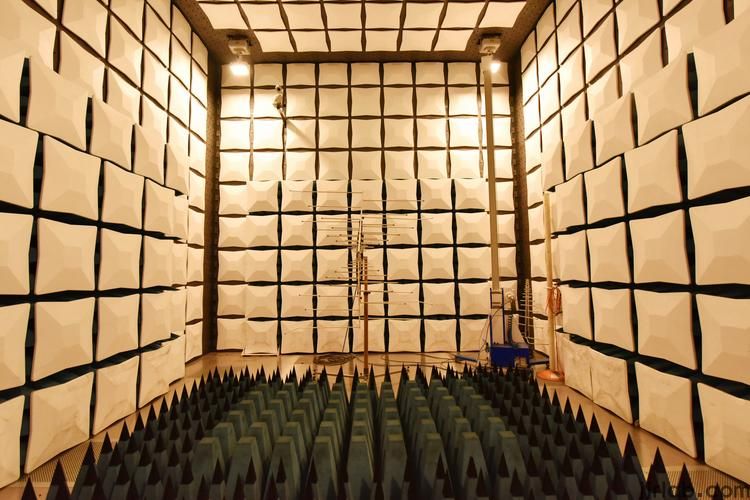
Mainly including: radiated emission, conducted emission, magnetic field radiation, power radiation, voltage flicker, harmonics, electrostatic discharge (ESD), radiated immunity, electrical fast transient/burst (EFT/B), surge/lightning strike, voltage dips/interruptions.
Email:hello@jjrlab.com
Write your message here and send it to us
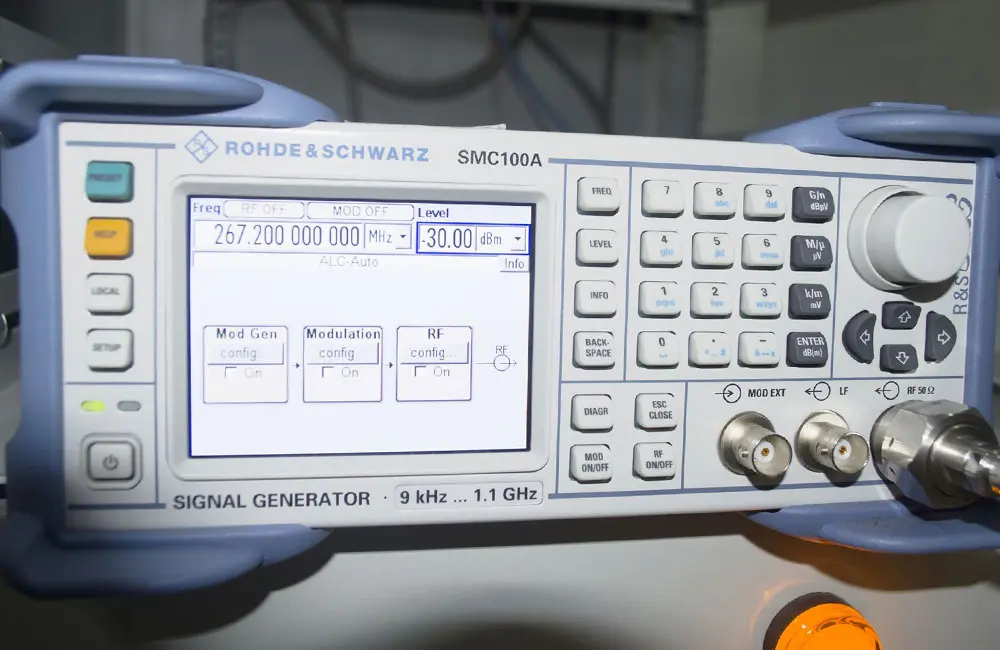
 How to get an EN 301 893 test report?
 What is EN 301 893 Certification Compliance
 What is the CSA 62368-1 Standard?
 Canadian Pacifier Compliance SOR/2016-184
 US Agent for FCC & EC REP for CE: Compliance R
 What is Recycling of WEEE
 What is PPWR Packaging Compliance
What is Extended Producer Responsibility
What is PPWR Packaging Compliance
What is Extended Producer Responsibility
Leave us a message
24-hour online customer service at any time to respond, so that you worry!