



Introduction to UL 60745-1 Test Items
The term "UL 60745-1 Test Report" is a common yet not entirely accurate expression. More precisely, products are tested and evaluated in accordance with the UL 60745-1 standard to demonstrate compliance with ANSI/UL 60745-1, a nationally recognized standard in the United States.
This standard is highly aligned with the international standard IEC 60745-1 and specifically applies to the safety requirements of hand-held, portable electric tools and garden tools.
A complete test report complying with UL 60745-1 includes extremely detailed test items, designed to evaluate the safety performance of tools under all foreseeable conditions. Below are the classifications and specific contents of its core test items:
Electrical Tests
This is the most core section, primarily intended to prevent hazards such as electric shock and fire.
1. Power Input and Current Test: Verify whether the input power and current of the tool under normal and overload conditions meet the specified requirements to prevent circuit overload.
2. Heating Test: Operate the tool under normal and abnormal operating conditions, measure the temperature rise of key components such as the motor, housing, and handle, and ensure that high temperatures do not cause scalds, insulation damage, or fire.
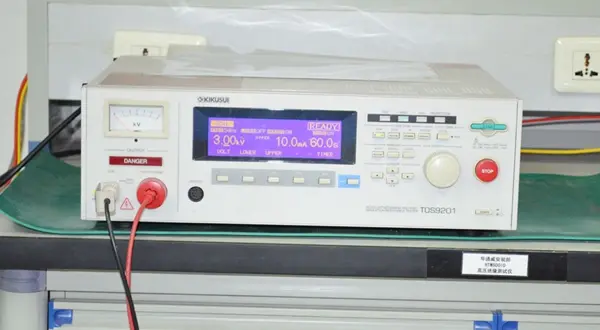
3. Withstand Voltage Test: Apply high voltage between live parts and accessible metal parts to verify the strength of the insulation system and ensure no breakdown risk.
4. Leakage Current Test: Measure the current flowing through the insulation to easily accessible metal parts during normal operation, which must be controlled within safe limits.
3. Insulation Resistance After Humidity Treatment: After subjecting the tool to a high-humidity environment, measure the insulation resistance between its different polarities to ensure good insulation performance in humid conditions.
4. Abnormal Operation Test: Simulate fault conditions such as rotor lock and motor overload to evaluate the safety performance of the tool, e.g., whether it may cause fire, electric shock, or mechanical hazards.
1. Component Failure Test: Evaluate whether the tool remains safe if key components such as electronic speed regulators and capacitors fail.
Mechanical Tests
Evaluate the mechanical structural strength, stability, and safety of the tool.
4. Mechanical Hazard Assessment: Check whether the protective covers of moving parts (e.g., drill bits, saw blades) are effective to prevent user contact.
5. Structural Inspection: Conduct a detailed inspection of the internal and external structure of the tool, including clearance, creepage distance, wire fixation, and reliability of grounding connections.
6. Housing Impact Test: Strike the tool housing with a specified impact hammer to verify that it has sufficient mechanical strength and will not crack to expose dangerous components.
1. Drop Test: Simulate the tool falling from working height onto a hard surface, and check whether it can still operate safely without causing hazards.
2. Handle Force Test: Apply force to the tool handle to ensure that its connection is firm and will not loosen or fall off.
3. Stability Test: Mainly for portable tools to ensure that they are not prone to tipping over during use.
Fire and Heat Resistance Tests
Evaluate the ability of materials to resist flame and thermal deformation.
4. Ball Pressure Test: Apply a steel ball to external parts made of non-metallic materials and heat them to test their resistance to thermal deformation.
5. Glow Wire Test: Use a glow wire to simulate heat sources that may be generated under overheating or fault conditions, and test the flame-retardant properties of non-metallic materials.
1. Needle Flame Test: Use a small flame to simulate small flames generated under fault conditions, and test whether the material can prevent flame spread.
2. Poor Connection Test: Simulate overheating caused by loose electrical connections to evaluate the fire risk.
3. Tracking Resistance Test: For tools working in polluted environments, evaluate whether conductive paths (tracking) are likely to form on the surface of insulating materials under the action of electric field and electrolyte.
Other Important Tests and Evaluations
4. Label Durability Test: Check whether safety warning labels, electrical parameter labels, etc., are firm, not easy to fall off, and the text is clear and durable.
1. Screw and Connection Test: Evaluate the reliability of screws and nuts used for electrical connection and mechanical fixation.
2. Protection Against Electric Shock: Use standard test probes such as test fingers to check whether the tool can prevent accidental contact with live parts during normal use and when the cover is opened for maintenance.
1. Battery System Test: If the tool is battery-powered, additional safety tests on the battery pack and charger are required (this part may involve other standards such as UL 2595).
A complete UL 60745-1 test report involves far more than a few simple items; it is a comprehensive and systematic safety engineering evaluation. It covers electrical, mechanical, thermal, fire protection, and other aspects to ensure that the tool can provide the highest level of safety protection for users under normal use, foreseeable misuse, and single fault conditions.
Email:hello@jjrlab.com
Write your message here and send it to us
 How to get an EN 301 893 test report?
 What is EN 301 893 Certification Compliance
 What is the CSA 62368-1 Standard?
 Canadian Pacifier Compliance SOR/2016-184
 US Agent for FCC & EC REP for CE: Compliance R
 What is Recycling of WEEE
 What is PPWR Packaging Compliance
What is Extended Producer Responsibility
What is PPWR Packaging Compliance
What is Extended Producer Responsibility
Leave us a message
24-hour online customer service at any time to respond, so that you worry!