



What is RCM Certification in New Zealand?
Introduction to rcm mark
The Regulatory Compliance mark (RCM) is a registered mark indicating that the supplier declares the product's compliance with the safety and other requirements specified by the electrical safety laws/regulations of various states in Australia and New Zealand, as well as the electromagnetic compatibility requirements stipulated by the Australian Radiocommunications Act and the New Zealand Radiocommunications Act. Only products that meet the requirements of both electrical safety regulations and EMC regulations can use the RCM mark.
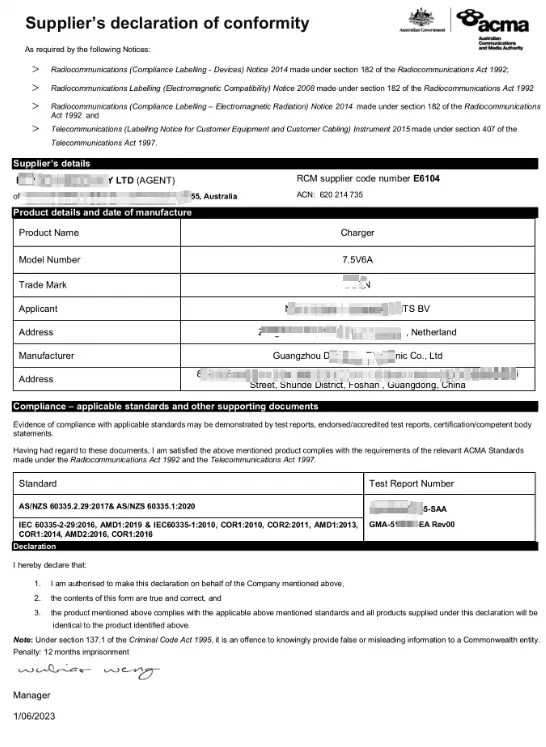
The owner of the RCM mark is the federal government, and both the electrical safety statutory authority and the EMC statutory authority accept the RCM mark as a supplier's declaration of conformity. Once approved for use of the RCM mark in any one state, the statutory authorities of other states can accept it, thereby achieving approval for interstate use at one time.
Suppliers need to apply for and register before using the RCM mark. Once registered, suppliers can use the RCM mark on all products that meet applicable legal and regulatory requirements. If products bearing the RCM mark are found not to comply with the legal/regulatory requirements for use, penalties will be imposed on the supplier according to the provisions of the Australian Trademarks Act.
RCM = Safety + EMC + Importer Declaration
1. Safety (Product Safety Certification):
Product safety certification consists of two parts: electrical products are divided into regulated electrical (Prescribed Product) and non-regulated products (Non-prescribed product).
1) Regulated electrical products are classified according to AS/NZS 4417.2 and include electrical heating equipment, refrigeration equipment, power tools, components, etc. Among them, the three certifying authorities of Queensland, New South Wales, and Victoria are the most active in the certification process. Regulated electrical appliances must obtain a Certificate of Approval issued by the regulatory authority (Certificate of Approval), and the certificate number must be marked (the certificate number must be stamped). The first letter of the certificate number indicates which state or region issued the certificate.
2) Non-regulated electrical appliances may be sold without certification, but manufacturers must ensure that the electrical safety of the products complies with Australian standard AS/NZS3820:1998 (Essential Safety Requirements for Low Voltage Electrical Equipment); the regulatory authority will issue a Certificate of Suitability for products that meet the standard requirements. Electrical products with a Certificate of Suitability can be marked with a certificate number, and the last letter of the certificate indicates which state or region issued the certificate.
saa approvals is an Australian government-approved certification body recognized by JAS-ANZ. It certifies products entering Australia and New Zealand for sale under the NSW REAS and QLD RECS (RCM) certification systems and is currently one of the largest certification bodies in Australia and New Zealand. According to the law, all electrical products must comply with the requirements of AS/NZS 3820 standard (similar to the European low voltage directive). This regulation stipulates that all products must meet the requirements of relevant Australian product safety standards, divided into three classes: LEVEL 1, 2, and 3. AS/NZS 4417.2 standard stipulates that certification is mandatory for Class 3 products, while Classes 2 and 1 products are not mandatory but must comply with RCM requirements.
According to the latest Australian regulations, the following products have been added to the mandatory certification catalog for Class 3:
1. Building cables
2. LED tubes
Starting from June 1, 2018:
1. Self-ballasted LED lamps
2. Night lights
3. Beauty (nail curing) lamps
4. Wall-mounted electronic switches
5. Hot water bags
6. Photovoltaic system DC isolation switches
7. Electric blankets/bed warmers/electric bed covers
Common Australian Standards for LED Products
- For LED bulbs (became Class 3 products starting June 2018):
1. AS/NZS 62560:2017
2. emc testing only requires compliance with CISPR 15 standard
- For LED T8/T5 tubes and conversion sockets (mandatory certification or Class 3 products):
1. AS/NZS 60598.1:2013; AS/NZS 60598.2.1:2014+A1
2. emc testing only requires compliance with CISPR 15 standard
- For LED portable lighting fixtures (mandatory certification or Class 3 products):
1. AS/NZS 60598.1; AS/NZS 60598.2.4
2. If the driver is separate from the lighting fixture, the driver must be certified separately
3. EMC testing only requires compliance with CISPR 15 standard
Email:hello@jjrlab.com
Write your message here and send it to us
 How to get a UL 60335 Test Report
 What is UL 60335 Certification Compliance?
 What is EN 61000 Certification Compliance?
 How to get an EN 61000 Test Report?
 What is the Amazon EN 55035 Standard?
 What is EN 55035 Certification Compliance?
 How to get the EN 55035 Test Report?
 What is the Amazon EN 301 489 Standard?
Leave us a message
24-hour online customer service at any time to respond, so that you worry!