



Toy Safety Testing Australia
Unlike the EU market, Australia adopts the independent as/nzs iso 8124 series standards rather than directly adopting EN 71. Many exporters fail compliance because they mistakenly believe EN 71 reports are universal in Australia—ACCC officials will explicitly reject testing documents that do not cite AS/NZS standards.
AS/NZS iso 8124 Series Standards
AS/NZS ISO 8124-1:2023 Physical and Mechanical Properties
Scope: Mechanical and physical safety for all toys.
Core Tests: Small parts, sharp edges/points, cord lengths, projectile kinetic energy, abuse testing (tension, torque, drop).
September 2024 Update: Stricter small parts limits for toys intended for children under 36 months; enhanced abuse testing conditions.
Common Failure Cause: Accessible small parts generated after tension/torque testing.
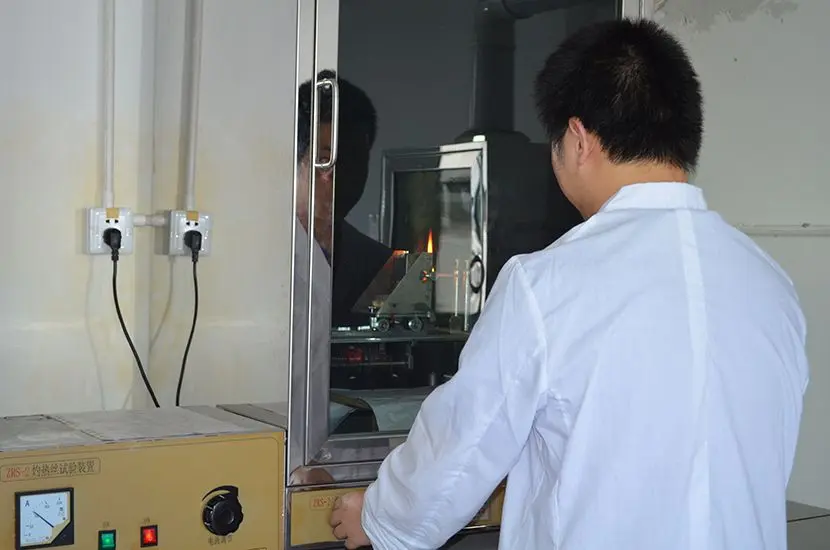
AS/NZS ISO 8124-2 Flammability
Core Requirement: Surface flame spread rate ≤ 30mm/s.
High-Risk Products: Plush toys, textile fabric toys, dress-up costumes.
Testing Points: Material burning rate, after-flame time after flame removal.
AS/NZS ISO 8124-3 Migration of Certain Elements
Key Limits:
Lead (Pb): ≤ 90 mg/kg
Cadmium (Cd): ≤ 75 mg/kg
Barium (Ba): ≤ 1000 mg/kg (Note: Different from EU limits)
Mercury (Hg), Chromium (Cr), Selenium (Se), Antimony (Sb), and Arsenic (As) all have specific limits.
Important Tip: The difference in Barium limits is one of the primary reasons the ACCC rejects EN 71 reports.
AS/NZS 62115 Electric Toy Safety
Scope: Toys with batteries or power connections.
Core Tests: Battery anti-swallowing design, temperature rise limits, insulation resistance, short-circuit protection.
Common Failure Cause: Battery compartments easily opened by children, lack of short-circuit protection devices.
Other Key Standards
2020 Magnet Toy Safety Standard: Toys containing magnets must pass flux density testing to prevent intestinal perforation risks.
AS/NZS ISO 8124-9 Organic Compounds: Requirements for limits on specific chemical substances.
Testing Requirements by Toy Type
Australia Market Toy Compliance Process
Step 1: Product Classification and Standard Confirmation
Determine the toy's applicable age group, material composition, and functional characteristics to match the corresponding AS/NZS standard combination.
Step 2: Select an ISO 17025 Accredited Laboratory
The laboratory must hold ISO 17025 accreditation.
Test reports must explicitly cite AS/NZS standard numbers.
Platforms like Amazon Australia require reports from accredited labs; JJR LAB provides compliance services—inquiries are welcome.
Step 3: Sample Preparation and Testing
Sample Quantity: 3–5 complete samples + additional material samples.
Lead Time: Standard testing takes 5–7 working days.
Cost Tip: More colors = more testing fees; reducing SKU colors can save $325+ USD per product.
Step 4: Obtain Test Report
The report must include:
Complete product description and photos.
Testing methods (citing AS/NZS standards).
Detailed results for each test.
Compliance conclusion.
Step 5: Prepare Declaration of Conformity (DoC)
The manufacturer or importer must sign a Declaration of Conformity confirming the product meets all applicable standards.
Step 6: Labeling and Document Retention
Labels must include age warnings and small parts warnings (if applicable).
Technical files must be kept for at least 5 years for inspection.
Amazon Australia Special Compliance Requirements
When selling toys on Amazon Australia, take extra note of:
Test reports must be issued by an ISO 17025 accredited laboratory (JJR LAB).
The platform regularly audits compliance documents.
Non-compliant listings will be removed immediately.
Clear product safety images and warning labels must be provided.
Testing Costs and Budget Planning
Cost-Saving Suggestions:
Unify materials to reduce color variants.
Choose a service provider offering "Testing + Consultation" packages.
Plan ahead to avoid expedited fees.
Common Non-Compliance Issues and Solutions
Are There Additional Requirements in Different Australian States?
Australian Toy Safety Standards are uniformly set by the Federal Government. The ACCC enforces mandatory standards nationwide; there are no additional variations between states/territories. However, note:
Biosecurity quarantine at the point of import is handled by the Department of Agriculture, Water and the Environment (DAWE); wooden toys require quarantine certificates.
Some states have environmental recycling logo requirements for packaging materials.
Frequently Asked Questions (FAQ)
What is the difference between AU toy testing and EU EN 71?
The core differences lie in the heavy metal limits of AS/NZS ISO 8124-3 (specifically Barium limits) and the abuse conditions for physical testing. EN 71 reports cannot be used directly in Australia; products must be retested or undergo gap testing according to AS/NZS standards.
Can I export to Australia without AS/NZS reports?
No. The ACCC mandates toy safety standards. Products without valid test reports will be detained at customs and cannot be sold through legitimate channels.
How long is a test report valid?
Usually 1–2 years. If product design, materials, or the supply chain changes, retesting and a report update are required.
Do small-scale importers need to test every batch?
If the product design remains unchanged and the supplier is stable, a valid test report plus a Supplier Declaration of Conformity can be used, provided the document chain is complete.
Email:hello@jjrlab.com
Write your message here and send it to us
 How to get SOR/2011-17 Compliance Certification
 What is DGCCRF Certification Testing
 Bow and Arrow Children's Toys CPC Certification
 POPs Testing Service Consultation
 EU PPWR New Packaging Compliance
How to Obtain an MSDS/SDS Report
EU PPWR New Packaging Compliance
How to Obtain an MSDS/SDS Report
 CPSIA Testing Service Consulting
 Food Contact Materials Testing Services
Leave us a message
24-hour online customer service at any time to respond, so that you worry!