



UL Standards for Electrical Equipment
Overview of UL Standards and Scope
UL standards are a series of safety standards established and published by Underwriters Laboratories (UL), a global safety certification company based in the United States. These standards are widely recognized and adopted across numerous countries and regions. In many cases, UL certification is considered an essential requirement for product safety and market access.
In the U.S. market, many electronic and electrical products must be ul certified before they can be legally sold or used. UL standards cover a wide range of industries, including electronics, electrical appliances, building materials, industrial equipment, and consumer goods. These standards assess not only electrical safety but also mechanical performance, chemical properties, environmental impact, and product compliance and reliability.
UL Standards and Amazon
For sellers on Amazon, if their products fall under categories requiring UL compliance, they must provide testing reports or certificates issued by UL-authorized laboratories. Failure to do so may result in product delisting, removal of selling privileges, or even legal liabilities due to safety concerns.
While UL compliance is technically voluntary in the United States, product safety remains a legal obligation for manufacturers, importers, and sellers—including those operating on platforms like Amazon. Non-compliant products can lead to serious consequences such as recalls, sales bans, hefty fines, and lawsuits.
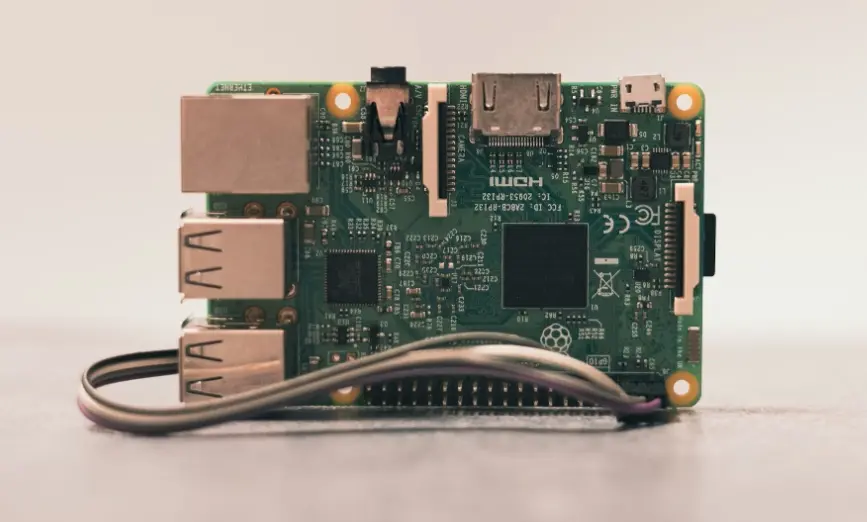
UL Electrical Safety Standards
UL offers numerous electrical safety standards for different types of devices and equipment. Here are several commonly referenced ones:
1. UL 60335 Series
• General safety standards for household and similar electrical appliances.
• Examples:
– UL 60335-1: General requirements
– UL 60335-2-3: Electric irons
– UL 60335-2-8: Electric shavers and hair clippers
2. ul 62368-1
• Safety standard for audio/video, information, and communication technology equipment.
• Covers devices such as hubs, computers, adapters, speakers, and headphones.
3. UL 2089
• Applies to vehicle battery chargers, including car chargers or devices with car charging heads.
4. ul 1310
• Covers power supplies and battery chargers.
5. ul 2743
• Safety standard for portable power banks, including emergency and jump-start power sources.
Common Electrical Safety Tests in UL Standards:
- Electrical Insulation Test: Ensures proper insulation to prevent electric shock.
- Dielectric Withstand (Hi-Pot) Test: Evaluates insulation strength using high voltage.
- Grounding Protection Test: Assesses grounding to prevent shock during leakage.
- Overload Protection: Verifies protective mechanisms under excessive current.
- Short Circuit Protection: Tests ability to disconnect power in a short circuit.
- Leakage Current Protection: Ensures disconnection of power in the event of leakage.
UL Flammability Standards
UL also provides standards related to flammability, particularly important for evaluating how materials behave under heat or flame:
1. UL 94 – Flammability of plastic materials used in devices and appliances.Defines ratings such as V-0, V-1, V-2, HB, 5VA, 5VB.
2. UL 746A – Short-term thermal and mechanical property evaluation of polymeric materials.
3. UL 1693 – Flammability testing for non-metallic materials in electrical/electronic equipment.
4. UL 2043 – Flame spread testing for thermoplastic ducts and fittings used in air-handling spaces.
5. UL 1975 – Flame resistance testing for wire and cable assemblies.
6. UL 1995 – Thermal endurance and flammability testing of non-metallic materials in HVAC equipment.
These standards are critical for fire safety, especially in high-risk environments.
UL Performance Standards
1. UL S8001 – Performance testing for flashlights, including output, beam distance, run time, and battery life.
2. UL 316 – Performance testing for video surveillance systems, covering image quality, resolution, storage, and playback.
3. UL 2596 – Tests the thermal and mechanical properties of battery enclosure materials under extreme conditions.
4. UL 2802 – Image quality testing standard for digital cameras and imaging devices, including resolution, color accuracy, and dynamic range.
Amazon UL Compliance: Required Standards by Component
Below are Amazon’s key component compliance requirements for UL-related products:
1. Built-in Lead-Acid Battery: UL 1989
2. Built-in Lithium-Ion Battery: UL 1642
3. Metal Enclosure: Corrosion-resistant, meets Table 7.1/7.2
4. Plastic Enclosure:
• Minimum flame rating V1
• Certified for 90°C
• HAI rating C3
5. Input Power Cord:
• Type G, SO, SJO, SJEO, SJTO, STO, etc.
• Minimum 6 feet (1.8 meters)
6. External Solar Panel: UL 1741 or UL 62109
7. Vehicle Cigarette Lighter Adapter: UL 2089
8. External Power Adapter: UL 1310 or UL 60950-1
9. Vehicle Jump Starter Cable: UL 758 or UL 1839
10. Output Connectors: UL 1977 or UL 1839
11. Battery Insulation Materials: UL HB or UL 1839
12. AC Output Socket: UL 498 (120Vac, 15A, NEMA 1-15R)
13. DC Output/USB Connectors: UL 1977
14. Tire Inflator: UL 1450
15. Switches: UL 1054 or UL 61058-1
16. DC-to-AC Inverter Circuit: UL 1012
17. Control Relays: UL 508
18. Rubber Components: Minimum V-2 flame rating
19. PCB (Printed Circuit Board): Minimum V-1 flame rating
UL Standards for Lithium Battery Products
UL has established several essential standards for lithium battery cells and packs:
1. UL 1642 – Safety standard for lithium battery cells
• Covers both primary and rechargeable cells
• Tests include:
– Room temp short circuit
– 55°C short circuit
– Overcharge
– Crush
– Impact
– Mechanical shock
– Vibration
– Thermal test
– Temperature cycling
– Altitude simulation
– Projectile test
2. ul 2054 – Safety standard for lithium battery packs
• Applies to battery packs used as power sources in devices
• UL 2054 requires each cell to comply with UL 1642
• Tests include:
– Short circuit (20°C and 55°C)
– Abnormal charge
– Forced discharge
– Component temperature rise
– Construction and assembly
– Drop test
– Mold stress relief
– Enclosure flammability
– Overcharge
– Crush and impact
3. UL 2595 – Covers battery-powered devices with removable or built-in packs (≤75V DC)
• Requires lithium-ion cells to comply with UL 62133 or CAN/CSA E62133
4. un38.3 – Not a UL standard but widely accepted for lithium battery transport
• Mandatory for international shipping
• Includes altitude simulation, thermal test, vibration, shock, short circuit, overcharge, forced discharge
ul testing Types: Listing vs. Recognition
UL offers two primary types of certification services:
1. Listing (UL Listed)
• A comprehensive evaluation showing full compliance with UL standards
• Products receive the official UL Listed mark
• Involves design review, testing, and factory inspection
• Commonly used for end products sold directly to consumers
2. Recognition (UL Recognized)
• Applies mainly to components used within a larger product
• Evaluated based on manufacturer data and partial testing
• Components bear the UL Recognized Component mark
• Often used for internal parts like shrink-wrapped battery packs
Email:hello@jjrlab.com
Write your message here and send it to us
 What is UL 1642 Compliance Certification?
 What Is Amazon's UL 60335 Standard
 How to get a UL 60335 Test Report
 What is UL 60335 Certification Compliance?
 What is EN 61000 Certification Compliance?
 How to get an EN 61000 Test Report?
 What is the Amazon EN 55035 Standard?
 What is EN 55035 Certification Compliance?
Leave us a message
24-hour online customer service at any time to respond, so that you worry!