



What is the E-cigarette UL 8139 Test Report
UL 8139 Standard for E-cigarettes (full name: UL 8139 Electrical Systems of Electronic Cigarettes) is a safety standard for electrical and electronic systems formulated by UL LLC of the United States. It is one of the crucial mandatory safety certifications for accessing the North American market.
The core objective of this standard is to evaluate the electrical, fire, and explosion risks of e-cigarettes (including devices, chargers, adapters, batteries, etc.) under normal use, foreseeable misuse, and fault conditions.
Main Test Item Categories and Specific Test Contents Covered in the UL 8139 Report
I. Electrical Safety Testing
This serves as the foundation of the standard, ensuring that the product features a safe electrical design.
1. Input Testing: Verify the rated input voltage and current of the device.
2. Normal Temperature Rise Testing: Operate the product continuously at maximum power and rated voltage, monitor the temperature of key components such as the housing, battery, and circuit board, ensuring that the temperature does not exceed the limit value.
3. Short-Circuit and Abnormality Testing
① Short-circuit testing of output ports
② Short-circuit testing of charging ports
③ Simulate the failure of individual components (e.g., MOSFET, resistor, capacitor) to evaluate their safety performance
④ Battery reverse connection testing (if applicable)
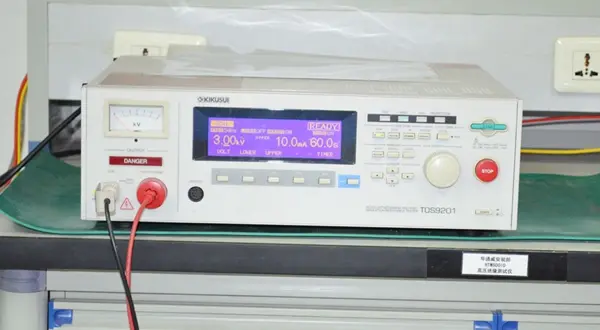
4. Dielectric Withstand Testing (Dielectric Strength Testing): Apply high voltage (e.g., 1500V AC) between the primary circuit and accessible components to check for breakdown or excessive leakage current, ensuring good insulation performance.
5. Insulation Resistance testing: Measure the insulation resistance between live parts and accessible metal parts.
6. Ground Continuity Testing (if the product has grounding requirements).
II. Battery Safety Testing
As the core risk point of e-cigarettes, this part of testing is extremely rigorous.
1. Battery Overcharge Testing: Charge the battery with current/voltage exceeding the limit value to evaluate the effectiveness of its protection circuit and the inherent safety of the battery itself (no ignition or explosion shall occur).
2. Battery Overdischarge Testing: Discharge the battery to a level far below the cut-off voltage, and inspect the response of the protection circuit and the battery.
3. External Short-Circuit Testing: Directly short-circuit the battery output terminals to test whether the protective devices (e.g., fuse, PCB protection) can activate promptly.
4. Forced Discharge Testing: Evaluate the risk when the battery is forced to undergo reverse charging after being fully depleted.
5. Unbalanced Charging Testing (for multi-cell battery packs): Simulate the extreme condition of unbalanced charging among individual battery cells.
III. Structural Safety Assessment
1. Critical Component Review: Key components such as batteries, battery cells, chargers, PCBs, MOSFETs, and connectors are required to possess corresponding UL certifications (e.g., battery cells must comply with ul 1642; battery packs must comply with ul 2054 or ul 62133).
2. Internal Structure Inspection: Check the PCB layout, electrical clearance and creepage distance, insulation material rating, solder joint quality, and the firmness of mechanical fixation.
3. Housing Stress Testing: Evaluate the mechanical strength and flame retardant rating of the housing (typically requiring a rating of V-1 or higher).
4. Battery Compartment Design Inspection: Examine the battery installation method to prevent reverse polarity connection and short-circuit, and ensure good contact performance.
IV. Fire Protection and Housing Testing
1. Housing Flame Retardancy Testing: Conduct glow wire testing or horizontal/vertical burning testing on non-metallic housing materials, requiring them to prevent the spread of flame.
2. Flame Testing Under Fault Conditions: When simulating internal faults (e.g., PCB short-circuit), the generated flame shall not ignite the housing or cause flame ejection.
V. Environmental and Mechanical Safety Testing
1. Drop Testing: After the device is dropped multiple times from a specified height (usually 1 meter) onto a hard surface, no hazards shall be generated (e.g., battery detachment, short-circuit, ignition).
2. Crush Testing (for the battery part): Simulate the safety performance of the battery when subjected to external extrusion.
3. Stress Relief Testing: Apply tensile force to the power cord or charging cable to ensure that it will not cause loosening of internal connections or potential hazards.
VI. Label and Instruction Manual Review
1. Permanent Marking: Check whether the electrical parameters (voltage, power, input/output), warning statements, manufacturer information, etc., on the product are clear and durable.
2. Instruction Manual Content: Must include safe operation instructions, charging guidelines, and warning information (e.g., use specified chargers only, avoid high-temperature environments, etc.).
Summary Key Points
1. Systematic Evaluation: UL 8139 is not a single test, but an engineering evaluation of the entire electrical system of e-cigarettes.
2. Risk Focus: All tests are centered around preventing three major risks: electric shock, fire, and explosion.
3. Standard Compliance: Tests strictly follow the specific clauses and methods specified in the UL 8139 standard document.
4. Report and Listing: After passing all tests and evaluations, UL will issue a test report and list the product in the UL Online Certification Directory (as a UL Recognized Component or UL Listed product). This qualification is a mandatory requirement for many distributors and e-commerce platforms (e.g., Amazon).
Email:hello@jjrlab.com
Write your message here and send it to us
 How to get an EN 301 893 test report?
 What is EN 301 893 Certification Compliance
 What is the CSA 62368-1 Standard?
 Canadian Pacifier Compliance SOR/2016-184
 US Agent for FCC & EC REP for CE: Compliance R
 What is Recycling of WEEE
 What is PPWR Packaging Compliance
What is Extended Producer Responsibility
What is PPWR Packaging Compliance
What is Extended Producer Responsibility
Leave us a message
24-hour online customer service at any time to respond, so that you worry!