



What is UL 2849 Compliance Certification for Electric Bicycles?
Entering the U.S. market requires electric bicycles to meet strict regulatory standards, particularly the UL 2849 safety standard. This standard covers product safety, Battery Management System (BMS), software evaluation, and functional safety requirements. Additionally, it sets safety standards for controllers, motors, and chargers.
Previously, we discussed UL 2272 for electric balance scooters and the differences between UL 2849 and UL 2272. Today, let’s explore UL 2849 in detail.
Scope of UL 2849
UL 2849 applies to:
- Electric bicycles, electric motorcycles, electric scooters, and other high-speed electric vehicles
- Electric-assist bicycles and electric unicycles
Components of an Electric Bicycle Requiring UL certification
Corresponding UL Standards for Key Components
- Complete vehicle – UL 2849
- Lithium battery – UL 2271
- Battery cells – UL 2580
- Connectors – UL 2238 / UL 1977
- Motor – UL 1004-1 or random testing
- Controller – UL 2849
Note: Since motor protection functions rely on the controller's protection circuits, motors are typically certified together with controllers. The controller’s protection mechanisms can be hardware-based or software-based, and different protection functions require different safety evaluation methods.
UL 2849 Testing Requirements
Electrical Testing
1. Input Test: Measures the input voltage, current, and other parameters to ensure safe and normal operation.
2. Insulation Resistance Test: Measures insulation resistance between components and the ground to prevent electric shocks and short circuits.
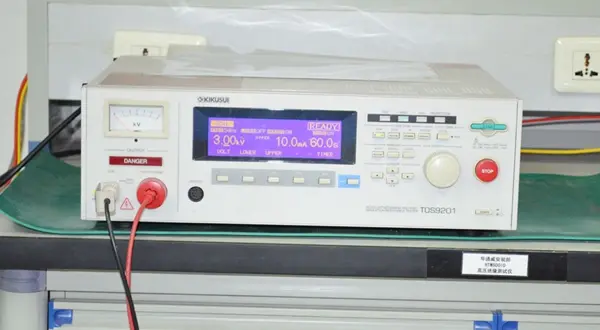
3. Dielectric Strength Test: Applies a voltage higher than the normal operating voltage to check the insulation’s robustness.
4. Overcharge Test: Charges the battery beyond 110% of its rated voltage to ensure no fire, explosion, smoke, or leakage occurs.
5. Component Failure Test: Simulates failures like short circuits or open circuits to assess system safety and reliability.
6. Short Circuit Test: Directly short-circuits the battery or electrical lines to test short-circuit current and protective mechanisms.
7. Unbalanced Charging Test: Simulates uneven battery cell charging to check the BMS balancing function and system stability.
Mechanical Testing
1. Vibration Test: Simulates real-world vibrations; components must remain intact and operational.
2. Impact Test: Applies impact forces to check durability against collisions or bumps.
3. Crush Test: Applies pressure to test battery integrity under crushing conditions.
4. Drop Test: Drops the bicycle or components from a specific height to assess structural integrity.
5. Motor Rotor Lock & Overload Test: Tests motor protection against stalling or overloading.
Environmental Testing
1. Temperature Test: Ensures the temperature rise in key components is within safety limits.
2. Humidity Test: Assesses performance in high-humidity environments to prevent insulation failures.
3. Waterproof Test: Conducts IPX4 or higher waterproofing tests to ensure safe operation in wet conditions.
4. Label Durability Test: Checks the resistance of safety labels to wiping, scratching, and immersion.
Functional Safety & Software Evaluation
1. Controller Functional Safety Evaluation: Tests functions like speed control, brake cut-off, and assist start to ensure safe riding.
2. Battery Management System (BMS) Testing: Evaluates charge/discharge management, overcharge/over-discharge protection, and thermal monitoring.
3. Software Evaluation: Assesses software stability, reliability, and security to prevent system failures.
UL 2849 ComplianCE certification Process
1. Application Submission – The applicant submits an application to the testing laboratory.
2. Document Preparation – The applicant provides an application form, product manual, and technical documents.
3. Test Plan & Quotation – The lab determines test standards and provides a quote.
4. Confirmation & Sample Submission – The applicant agrees to the quote and submits samples to the JJR Laboratory in China.
5. Payment of Fees – The applicant pays the certification fee.
6. Testing Begins – The lab conducts the required tests.
7. Failure & Modifications (if needed) – If the product fails testing, the applicant can modify it and resubmit.
8. Certification Issuance – Once tests are passed, a ul test report is issued.
Email:hello@jjrlab.com
Write your message here and send it to us
 EMC Testing Lab IEC 60601 Medical Electrical Safet
 What are the FCC Testing Requirements for Bluetoot
 Australia RCM Certification for Radio Devices
 RED Cybersecurity EN 18031 Standard
 Compliance Testing for EMC
 What is Amazon Toy Compliance?
 What is Cytotoxicity ISO 10993-5
 What is Hemocompatibility Testing ISO 10993?
Leave us a message
24-hour online customer service at any time to respond, so that you worry!