



Wireless Device EMC Certification
emi test Items
1. Conduction Disturbance Test - Key Parameters to Consider
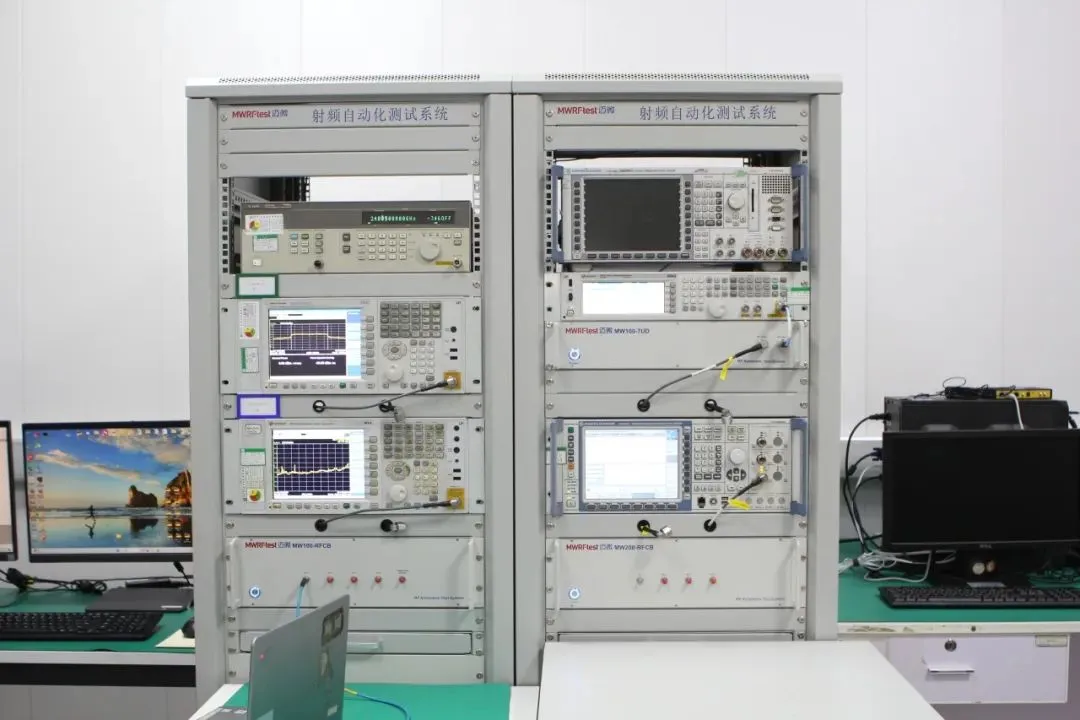
Measurement Receiver
Measurement LISN
Measurement ISN (For testing network ports and telephone ports)
Test Product Operating Voltage: AC 0~265V Max
Test Product Operating Current: Rated current 16A single-phase; three-phase equipment can also be tested
Test Frequency: 9kHz–30MHz
Remarks: All products connected to the mains power (including those indirectly connected to the mains power) must be tested. On-site testing provides rectification components and technical guidance.
2. Power Radiation Disturbance - Key Parameters to Consider
Measurement Receiver
Power Absorbing Clamp: 30–1000MHz
Test Frequency: 30MHz–300MHz
Test Products: Small household appliances and audio-visual products
Remarks: On-site testing provides rectification components and technical guidance.
3. Magnetic Field Radiation Disturbance - Key Parameters to Consider
Measurement Receiver
Test Frequency: 9kHz–30MHz
Test Products: Lighting fixtures, induction cookers
Remarks: On-site testing provides rectification components and technical guidance.
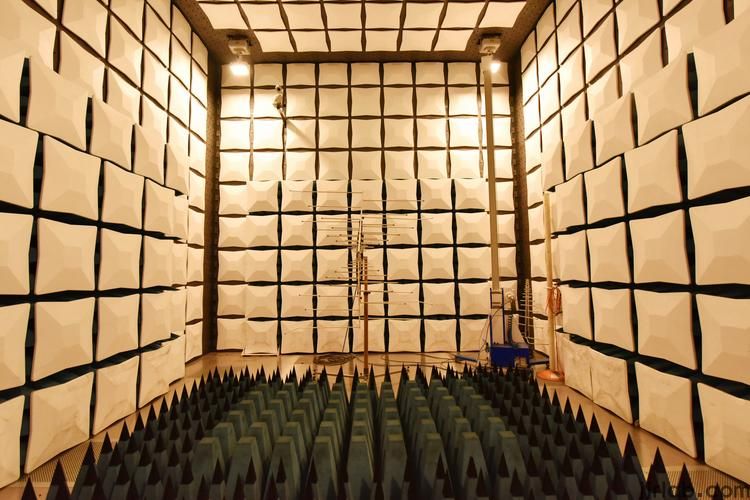
4. Space Radiation Disturbance (966) - Key Parameters to Consider
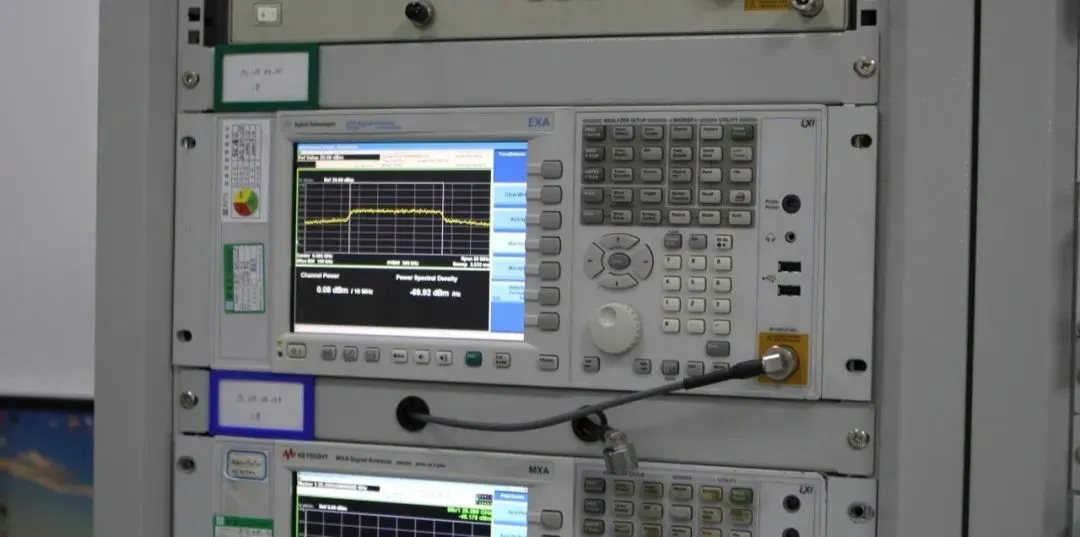
Measurement Receiver: 9k–7G
Measurement Spectrum Analyzer: 9k–26.5G
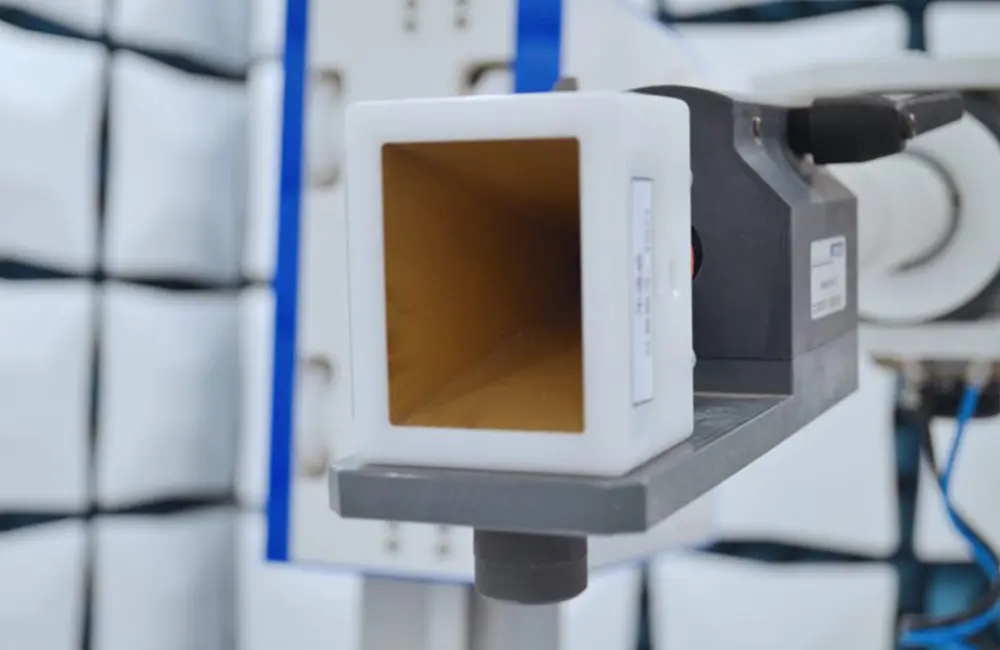
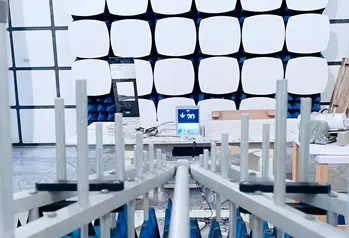
Measurement Antenna: Biconical log-periodic antenna, Horn antenna
Loop antenna, Biconical antenna, Log-periodic antenna
Test Frequency: 9kHz–18000MHz
Remarks: Equipped with FM, AM, PAL, NTSC, DVB, DVB-2 digital TV signal generators (supporting global formats).
Test Product Operating Voltage: Three-phase AC 380V max and Single-phase AC 90~260V
Test Product Operating Current: Three-phase 30A max
Test Product Operating Power Frequency: 50Hz/60Hz
Test Products: IT products, medical, audio, lighting fixtures (30–300MHz), toys, wireless, network products, etc.
Remarks: On-site testing provides rectification components and technical guidance.
5. Harmonic Current - Key Parameters to Consider (en61000-3-2)
(Tests the interference generated when the product's power supply operates on a 50Hz power grid; looks at multi-frequencies of the 50Hz grid, testing up to the 40th harmonic frequency)
Test Voltage: AC 220–240V
Test Conditions: Input power $\ge$ 75W (exempt from testing if less than 75W, except for lighting fixtures), current $\le$ 16A
Product Classification:
CLASS A: Includes balanced three-phase equipment, household appliances (equipment not belonging to Class D), tools (excluding portable tools), incandescent lamp dimmers, audio equipment, etc.
CLASS B: Portable tools
CLASS C: Lighting equipment (25W boundary; lighting products do not pass easily)
CLASS D: The following equipment with power less than 600W: personal computers, monitors, televisions
Remarks: On-site testing provides rectification components and technical guidance.
6. Voltage Fluctuations and Flicker - Key Parameters to Consider (EN61000-3-3)
(Tests the interference generated when the product's power supply operates on a 50Hz power grid; considers voltage interference)
Test Products: Products with an input voltage of AC 220–240V.
Test Parameters: $P_{st}$, $P_{lt}$, $d_c$, $d_{max}$
Remarks: (High-power products containing automatic control high-power switches do not pass easily). On-site testing provides rectification components and technical guidance.
EMS Test Items
1. Electrostatic Discharge (ESD) Test (iec61000-4-2) - Key Parameters to Consider
(Mainly required by European countries)
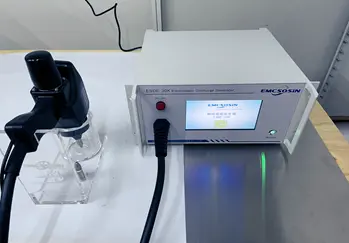
Electrostatic Generator Range: $\pm$0.2kV–$\pm$30kV (includes air discharge and contact discharge)
Test Points: With the product in normal operation, electrostatic interference signals must be applied to any location that can be touched by human hands.
Remarks: On-site testing provides rectification components and technical guidance.
2. Radiated Immunity Test (IEC61000-4-3) - Key Parameters to Consider
(Mainly required by European countries)
Test Frequency Band: 80MHz–2500MHz
Modulation: 80% amplitude modulation (AM) with a 1kHz or 2Hz sine wave
3. Electrical Fast Transient / Burst (EFT/B) Test (IEC61000-4-4) - Key Parameters to Consider
(Mainly required by European countries)
Test Interference Voltage: 0.2kV–4.4kV
Product Operating Voltage: AC 80~230V
Product Operating Current: Maximum input current 16A max
Interference Pulse Waveform: 5/50ns
Burst: 15ms pulse train (5kHz or 100kHz), with a cycle period of 300ms
Remarks: On-site testing provides rectification components and technical guidance. However, many product types fail easily due to the wide interference frequency and high voltage.
4. Lightning Surge Test (IEC61000-4-5) - Key Parameters to Consider
(Mainly required by European countries)
Product Operating Voltage: AC 80~230V
Product Operating Current: Maximum input current 16A max
Maximum Test Voltage: 0.2kV–6kV
Open-Circuit Voltage Waveform: 1.2/50$\mu$s
Short-Circuit Current Waveform: 8/20$\mu$s, once per minute
Remarks: On-site testing provides rectification components and technical guidance. Generally, products without protective components and outdoor products do not pass easily.
5. Conducted Immunity Test (IEC61000-4-6) - Key Parameters to Consider
(Mainly required by European countries)
Product Operating Voltage: AC 80~230V
Product Operating Current: Maximum input current 16A max
Carrier Frequency: 0.15–230MHz
Modulation Signal: AM 80%, 1kHz
Modulation Voltage: 1V, 3V, 10V
Remarks: On-site testing provides rectification components and technical guidance. Generally, products that operate using frequencies within the test band (including the modulation signal frequency) do not pass easily.
6. Power Frequency Magnetic Field Test (IEC61000-4-8) - Key Parameters to Consider
(Mainly required by European countries)
Magnetic Field Strength at Coil Center: 100 A/m
7. Voltage Dips and Interruptions Test (IEC61000-4-11) - Key Parameters to Consider
(Mainly required by European countries)
Test Voltage: Can only test products with an AC 220–240V input
Remarks: Most general products can pass this test successfully.
Email:hello@jjrlab.com
Write your message here and send it to us
 What is EN 61000 Certification Compliance?
 How to get an EN 61000 Test Report?
 What is the Amazon EN 55035 Standard?
 What is EN 55035 Certification Compliance?
 How to get the EN 55035 Test Report?
 What is the Amazon EN 301 489 Standard?
 How to get an EN 301 489 Test Report?
 What is EN 301 489 Compliance Certification?
Leave us a message
24-hour online customer service at any time to respond, so that you worry!