



Bluetooth Headphones Exported to Australia Certifications
As the largest consumer electronics market in the Southern Hemisphere, Australia has a regulatory system for wireless communication products that is both rigorous and unique. For Bluetooth Headphones/Earbuds—a type of composite product integrating wireless radio frequency, audio processing, and battery power supply—the compliance requirements go far beyond simple electrical safety. Manufacturers from Europe, the United States, Japan, South Korea, China, and other countries must complete the mandatory rcm certification and meet a series of technical standards formulated by the Australian Communications and Media Authority (ACMA) to successfully enter the Australian market.
Mandatory Certification: rcm mark
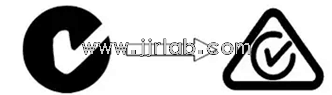
In the Australian and New Zealand markets, the Regulatory Compliance mark (RCM) is uniformly applied to all electrical and electronic products as well as wireless devices. It has replaced the earlier C-Tick (for electromagnetic compatibility) and A-Tick (for communications) marks, becoming the sole regulatory compliance label.
For Bluetooth headphones, RCM certification is not a single test but a comprehensive compliance system covering safety + electromagnetic compatibility + wireless radio frequency + ergonomics. Only after a product passes all relevant standard tests and is registered in the national database by a local Authorised Supplier can it be marked with the rcm logo for sale.
Four Core Testing Dimensions for Bluetooth Headphones
Under Australian regulations, Bluetooth headphones must comply with the following four categories of technical standards:
1. Radio Frequency (RF) Testing: AS/NZS 4268
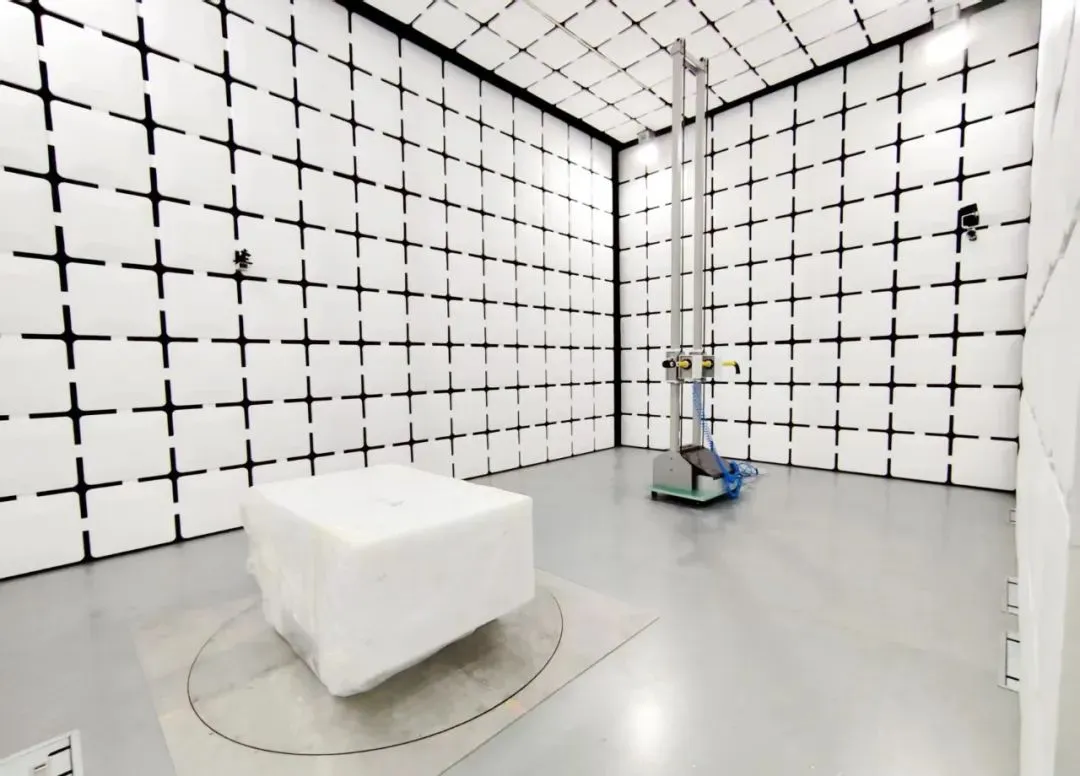
This is a mandatory standard for Short Range Devices. Bluetooth headphones operate in the 2.4GHz frequency band, and tests must be conducted on indicators such as frequency error, occupied bandwidth, Effective Isotropic Radiated Power (EIRP), and spurious emissions to ensure no interference with other wireless services.
2. Electromagnetic Compatibility (EMC): as/nzs cispr 32
This test assesses electromagnetic radiation interference of headphones during charging and playback. As Bluetooth headphones are generally classified as multimedia devices, CISPR 32 is the current universal standard, replacing the older CISPR 22 and CISPR 13.
3. Electrical Safety: AS/NZS 62368.1
Although Bluetooth headphones are typically powered by low-voltage (5V USB) sources, under Australia’s Electrical Equipment Safety System (EESS), the safety of their built-in lithium batteries and the design of charging circuits must comply with the AS/NZS 62368.1 standard to prevent risks of overheating, explosion, or chemical leakage.
4. Specific Absorption Rate (SAR) for Human Electromagnetic Exposure: AS/NZS 2772.2
This requirement is often overlooked in exports to Australia. Since Bluetooth headphones (especially TWS in-ear models) are worn in close contact with the human head, they fall under high-risk scenarios for radiation exposure. A SAR assessment must be conducted to verify that the amount of radio frequency energy absorbed by the human body is within safe limits.
Important Note: The "Australian Representative" System
The key difference between RCM certification and CE certification lies in the registration entity: the applicant for RCM certification must be a local entity in Australia or New Zealand.
Factories or exporters from Europe, the United States, Japan, South Korea, China, and other regions cannot directly apply for registration with ACMA. The compliant process is as follows:
5. A Chinese laboratory (e.g., JJR) completes the testing and issues a test report in accordance with AS/NZS standards;
6. Submit the test report to a local Australian importer or authorised representative;
7. The Australian representative submits a declaration and completes registration in the ACMA database;
2. Affix the RCM mark on the product label.
Special Reminder
For TWS headphones with a charging case, if the charging case has the function of directly connecting to mains power (240V), the charging case is classified as Level 3 Equipment (high-risk device) under the EESS. It must additionally obtain a Certificate of Approval issued by an Australian certification body. This is also the most common factor causing customs clearance delays or obstacles.
Email:hello@jjrlab.com
Write your message here and send it to us
 RoHS Compliance Testing Services
 Amazon Toy Seller Exporting to Europe Compliance
US Jewelry Compliance Guide
Amazon Toy Seller Exporting to Europe Compliance
US Jewelry Compliance Guide
 FCC Certification Requirements and Costs for Consu
 EMC Testing Lab IEC 60601 Medical Electrical Safet
 What are the FCC Testing Requirements for Bluetoot
 Australia RCM Certification for Radio Devices
 RED Cybersecurity EN 18031 Standard
Leave us a message
24-hour online customer service at any time to respond, so that you worry!