



What Certifications for Exporting Monitors to Europe?
As a core peripheral for office and entertainment purposes, monitors/displays have long been a key category in China-Europe electronic trade. However, the EU market imposes extremely stringent access standards on electronic products, covering multiple dimensions including electrical safety, electromagnetic compatibility, environmental protection, and energy efficiency. For manufacturers in Europe, the United States, Japan, South Korea, and China, the ability to successfully obtain CE certification and comply with relevant eco-design regulations directly determines whether products can pass customs and be legally sold in the European market.

Mandatory Market Access: CE Certification
The ce marking serves as the "passport" for monitors to enter the EU market. As complex electronic and electrical equipment, monitors cannot meet the requirements of a single directive for CE certification; instead, they must comply with the following four core directives simultaneously:
1. low voltage directive (LVD 2014/35/EU)
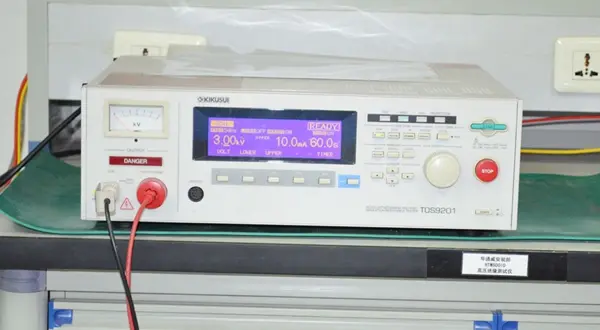
This is the core directive related to electrical safety. Monitors contain high-voltage circuits (especially those with built-in power boards) and must be tested in accordance with the EN 62368-1 standard. Key test items include protection against electric shock, insulation resistance, electrical clearance and creepage distance, and flame retardancy of materials, ensuring that products will not cause electric shock or fire hazards to users under fault conditions.
2. Electromagnetic Compatibility Directive (EMC 2014/30/EU)
Monitors should neither interfere with other devices nor lack anti-interference capability.
① EMI (Electromagnetic Interference Emission): Tested in accordance with the en 55032 standard, covering radiated disturbance and conducted disturbance to prevent electromagnetic waves generated by monitors from affecting wireless communications.
② EMS (Electromagnetic Susceptibility): Tested in accordance with the EN 55035 standard, evaluating immunity to electrostatic discharge (ESD), lightning surges, and other items.
3. RoHS Directive (2011/65/EU)
This directive restricts the content of 10 hazardous substances in products, including lead, mercury, cadmium, hexavalent chromium, polybrominated biphenyls (PBB), and polybrominated diphenyl ethers (PBDE). Monitor screen panels, plastic casings, and internal PCBs must all meet the specified limit requirements.
4. ErP Eco-Design Directive (2009/125/EC)
This has emerged as the most strictly regulated area in recent years. In accordance with EU Regulation (EU) 2019/2021, monitors must satisfy specific energy efficiency requirements, including the Energy Efficiency Index (EEI) under operating conditions and power consumption during shutdown/standby modes.
EPREL Energy Label Registration
In addition to passing traditional CE certification tests, monitors exported to Europe are now subject to mandatory registration in the EPREL (European Product Database for Energy Labelling).
① New Version of Energy Label: Products must be affixed with the updated energy label (graded from A to G) featuring a QR code.
② Database Entry: Manufacturers are required to input technical parameters into the EPREL database before placing products on the market. Consumers can scan the QR code on the label to access detailed energy efficiency information about the product.
③ Mandatory Standby Function: Regulations enforce that monitors must be equipped with an automatic standby function, with standby power consumption generally required to be below 0.5W.
Voluntary Certifications: Value-Added Factors to Enhance Market Competitiveness
While CE certification suffices for customs clearance, the following voluntary certifications often serve as a "stepping stone" to win the favor of large European buyers (such as government and corporate purchasers):
1. gs certification (Geprüfte Sicherheit)
This is a German safety certification. Although voluntary, the gs mark holds far greater credibility among consumers in German-speaking regions compared to the self-declared CE mark. It imposes more detailed requirements for ergonomics (in line with the ISO 9241 series standards), such as flicker-free screens and blue light control.
2. TCO Certification
Originating in Sweden, this is a global sustainability certification. Beyond electronic safety, TCO certification covers corporate social responsibility (CSR), hazardous substance management, and design for recyclability, making it a standard requirement for high-end commercial monitors.
Technical Tips
For monitors equipped with external power adapters, the adapters themselves must independently obtain CE certification. It is recommended that complete machine manufacturers verify whether suppliers can provide full ce certificates (covering LVD and EMC) and rohs reports when procuring power supplies, to avoid the risk of the entire machine being detained due to non-compliance of accessories.
Email:hello@jjrlab.com
Write your message here and send it to us
 RoHS Compliance Testing Services
 Amazon Toy Seller Exporting to Europe Compliance
US Jewelry Compliance Guide
Amazon Toy Seller Exporting to Europe Compliance
US Jewelry Compliance Guide
 FCC Certification Requirements and Costs for Consu
 EMC Testing Lab IEC 60601 Medical Electrical Safet
 What are the FCC Testing Requirements for Bluetoot
 Australia RCM Certification for Radio Devices
 RED Cybersecurity EN 18031 Standard
Leave us a message
24-hour online customer service at any time to respond, so that you worry!