



Certifications Required for Bluetooth Earphones
To sell Bluetooth earphones globally, several certifications are necessary, including Bluetooth compatibility, CE, FCC, RoHS, and REACH environmental and safety certifications, electromagnetic compatibility, and functional performance testing. Manufacturers should consult with certification bodies or professionals to ensure compliance with regulations in different regions.
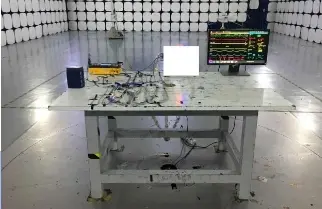
1. Bluetooth Qualification (bqb): If the product has Bluetooth functionality and intends to use the Bluetooth logo, it must pass the Bluetooth Qualification (BQB) certification by the Bluetooth Special Interest Group (SIG) to prove its compatibility with Bluetooth standards.
2. CE Certification: For the European market, Bluetooth earphones need to obtain CE certification, which covers the Radio Equipment Directive (RED), as well as related safety (LVD) and electromagnetic compatibility (EMC) requirements.
3. FCC Certification: For the U.S. market, Bluetooth earphones must pass the certification of the Federal Communications Commission (FCC) to ensure compliance with U.S. electromagnetic compatibility and radio frequency device regulations, typically requiring an fcc id.
4. RoHS and REACH Certifications: These are environmental certifications to ensure the product is free of hazardous substances, in compliance with the European Restriction of Hazardous Substances (RoHS) Directive and the Registration, Evaluation, Authorization, and Restriction of Chemicals (REACH) regulations.
5. Safety Certification: Such as UL certification, to ensure the product is safe for users during use.
6. Electromagnetic Compatibility (EMC) Certification: Ensures that the product can operate normally in an electromagnetic environment without causing interference to other devices. Besides the EMC requirements under CE, this also includes specific national/regional certifications such as China's ccc certification.
7. PSE and TELEC Certifications: For the Japanese market, Bluetooth earphones need to obtain PSE (Electrical Appliance and Material Safety Law) certification to ensure product safety and telec certification to prove compliance with Japan's radio equipment regulations.
8. Functional Performance Testing: This includes audio quality testing, transmission distance testing, battery life testing (such as standby time and playback time), which, although not formal certifications, are crucial for product quality.
The specific requirements and procedures for each certification may vary and evolve with regulatory updates. Therefore, manufacturers should consult certification bodies or professionals for detailed information on the latest certification requirements and guidance before planning to export products.
If you need assistance with obtaining relevant certifications, feel free to contact China JJR Laboratory for a quotation.
Email:hello@jjrlab.com
Write your message here and send it to us
 ISO 10993 Biocompatibility Standards
 Medical TPV ISO 10993 Biocompatibility Testing
 FDA Requirements for Biocompatibility under ISO 10
 Amazon Spain WEEE Compliance Deadline: September 3
 What is the ASTM F2264 Certification Test?
 What is ASTM F2194 Certification Testing?
 What is the ASTM F2167 Certification Test?
 What is the ASTM F2050 Certification Test?
Leave us a message
24-hour online customer service at any time to respond, so that you worry!