



Environmental Testing for Electronic Products
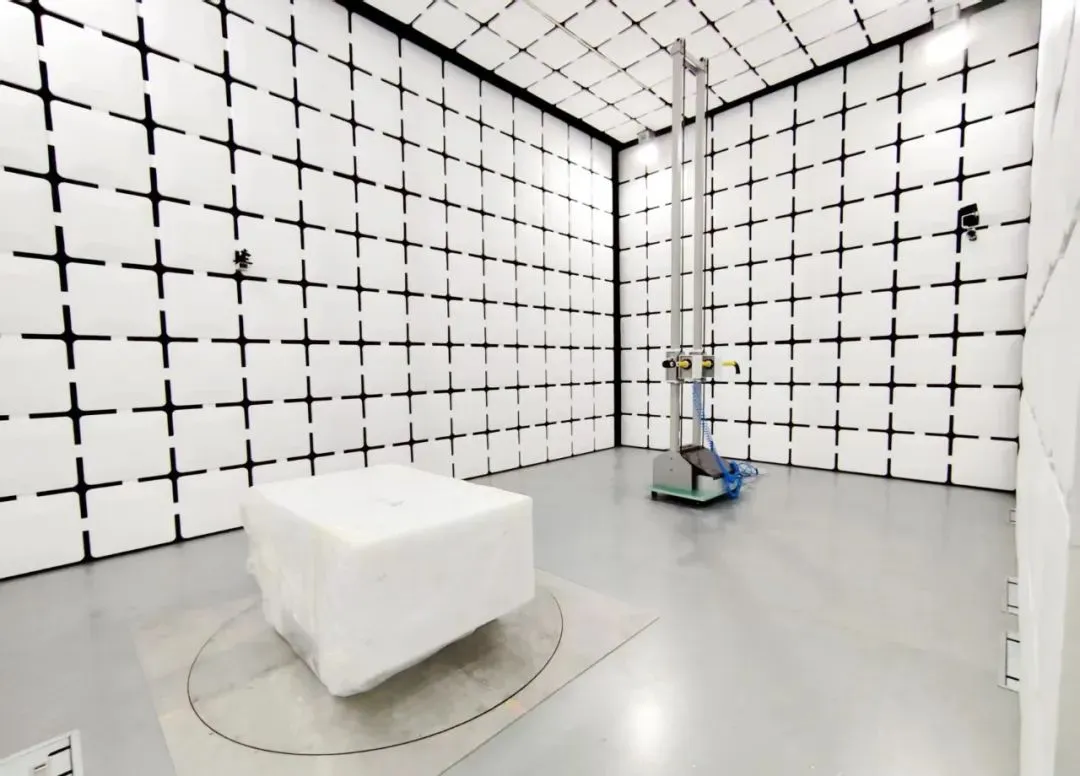
The IEC 60068-2 series standards for electronic product environmental testing cover test methods for nearly all natural and artificial environmental factors. They serve as the core basis for product reliability verification and market access. Today, we will systematically break down the classification of test methods and other key content of the IEC 60068-2 series standards!
What are the IEC 60068-2 Series Standards?
IEC 60068 is a series of Environmental Testing standards developed by the International Electrotechnical Commission (IEC). Among them, Part 2 (IEC 60068-2) is the core "test method section", which together with Part 1 (General Requirements and Guidelines) forms the fundamental framework for environmental testing. Instead of directly specifying product qualification criteria, it defines how to scientifically simulate environmental stresses, providing unified and repeatable test methods for enterprises worldwide.
Core Coverage Scope
It encompasses four major categories: climatic environment, mechanical environment, corrosive environment, and special environment. It can simulate almost all environmental stresses that products may encounter throughout their entire life cycle from production, transportation to usage. The standards are applicable to all electrical and electronic fields such as consumer electronics, automotive electronics, industrial equipment, and aerospace.
Key Reminder
The IEC 60068-2 series standards are method standards, not product standards. Enterprises need to combine industry specifications for their own products (e.g., ISO 16750 for the automotive industry, iec 62133 for consumer electronics) to apply the test methods and severity levels of this series to specific product verification.
Test Methods of the IEC 60068-2 Series
The IEC 60068-2 series includes dozens of sub-standards (e.g., IEC 60068-2-1, IEC 60068-2-6, etc.). According to the "type of environmental stress", they can be clearly divided into three categories, each containing key test methods and applicable scenarios, as detailed below:
1. Climatic Environmental Testing: Simulating Natural Climatic Stresses such as Temperature, Humidity, and Radiation
Core Purpose: Verify the product's resistance to climatic factors like temperature, humidity, and solar radiation. It is the most commonly used test category.
Test Method (Sub-standard) | Core Content | Applicable Scenarios |
IEC 60068-2-1<br>(Low-temperature Test) | Simulates low-temperature environments to assess the functional stability of products under low temperatures (e.g., battery capacity, circuit conductivity) | Products used in cold northern regions (e.g., outdoor monitoring devices, vehicle-mounted electronics) |
IEC 60068-2-2<br>(High-temperature Test) | Simulates high-temperature environments to verify the product's resistance to high-temperature aging and heat dissipation performance | Products used in tropical regions and high-temperature workshops (e.g., industrial controllers, photovoltaic modules) |
IEC 60068-2-14<br>(Temperature Change Test) | Includes rapid and slow temperature changes to simulate temperature shock between day and night or across seasons | Products used outdoors with large day-night temperature differences (e.g., communication base stations, smart home devices) |
IEC 60068-2-30<br>(Cyclic Damp Heat Test) | 12h+12h temperature and humidity cycle, simulating plum rain seasons and high-humidity coastal environments | Products used in humid southern regions and coastal areas (e.g., household appliances, marine electronics) |
IEC 60068-2-5<br>(Solar Radiation Test) | Simulates solar spectral radiation to assess the aging resistance of product coatings and plastic parts | Products exposed to long-term outdoor sunlight (e.g., automotive exterior parts, outdoor lighting fixtures) |
2. Mechanical Environmental Testing: Simulating Mechanical Stresses such as Vibration and Shock
Core Purpose: Verify the product's ability to withstand mechanical stresses such as vibration, shock, and collision during transportation, installation, and usage, with a focus on assessing structural integrity.
Test Method (Sub-standard) | Core Content | Applicable Scenarios |
IEC 60068-2-6<br>(Sinusoidal Vibration Test) | Single-frequency or swept-frequency vibration to simulate resonance risks caused by rotating machinery (e.g., motors) | Electronic components close to motors, parts in vehicle engine compartments |
IEC 60068-2-27<br>(Shock Test) | Pulse shocks such as half-sine wave and square wave to assess structural shock resistance. Severity is defined by "peak acceleration + pulse duration" | Products prone to collision during transportation (e.g., portable electronics, packaged items) |
IEC 60068-2-64<br>(Random Vibration Test) | Multi-frequency superimposed vibration to simulate complex vibration environments in automotive driving and air transportation | Automotive electronics, aerospace devices |
IEC 60068-2-52<br>(Bump Test) | Repeated collisions to simulate collision stresses during frequent handling and usage of products | Handheld devices, industrial sensors |
3. Corrosive and Special Environmental Testing: Simulating Special Stresses such as Corrosion and Biological Erosion
Core Purpose: Verify the product's resistance to special environments such as corrosive media and mold, suitable for products used in harsh environments.
Test Method (Sub-standard) | Core Content | Applicable Scenarios |
IEC 60068-2-11<br>(Salt Spray Test) | Neutral salt spray to simulate salt spray corrosion in coastal areas and saline-alkali land | Marine electronics, coastal outdoor equipment |
IEC 60068-2-60<br>(Cyclic Salt Spray Test) | Salt spray + damp heat cycle to simulate the corrosive environment of alternating temperature and humidity in coastal areas day and night | Automotive chassis, coastal wind power equipment |
IEC 60068-2-42<br>(Mold Test) | Simulates mold growth under high-temperature and high-humidity environments to assess the mold resistance of materials | Products used in tropical rainforest regions and closed humid environments (e.g., military equipment, bathroom appliances) |
IEC 60068-2-66<br>(HAST Test) | Unsaturated pressurized steam to accelerate damp heat aging and quickly verify the reliability of semiconductors and packaging materials | Semiconductor devices, electronic components |
Email:hello@jjrlab.com
Write your message here and send it to us
 Amazon TIC Lithium Battery Appliance UL 60335-2-29
 What is the Difference Between EU PPWR and EPR?
 What is Japanese METI Registration
 Exporting to Saudi Arabia Saber Certification: PCo
 How to get a Saudi Arabia MSDS?
 Do I Still Need PPWR Compliance if I Have RoHS?
 Amazon Children's Toys Direct Validation Mandatory
 UL 4200A-2026 Compliance Standard for Button/Coin
Leave us a message
24-hour online customer service at any time to respond, so that you worry!