



EMC Item – Introduction to Radiated Emission Test
radiated emission test is to measure the radiated disturbance field strength of the EUT (Equipment Under Test) propagating through space. It can be divided into magnetic field radiation and electric field radiation. The former applies to lighting equipment and induction cookers, while the latter is widely used. In addition, auxiliary equipment of household appliances, electric tools, and AV products have requirements for power radiation (known as disturbance power).
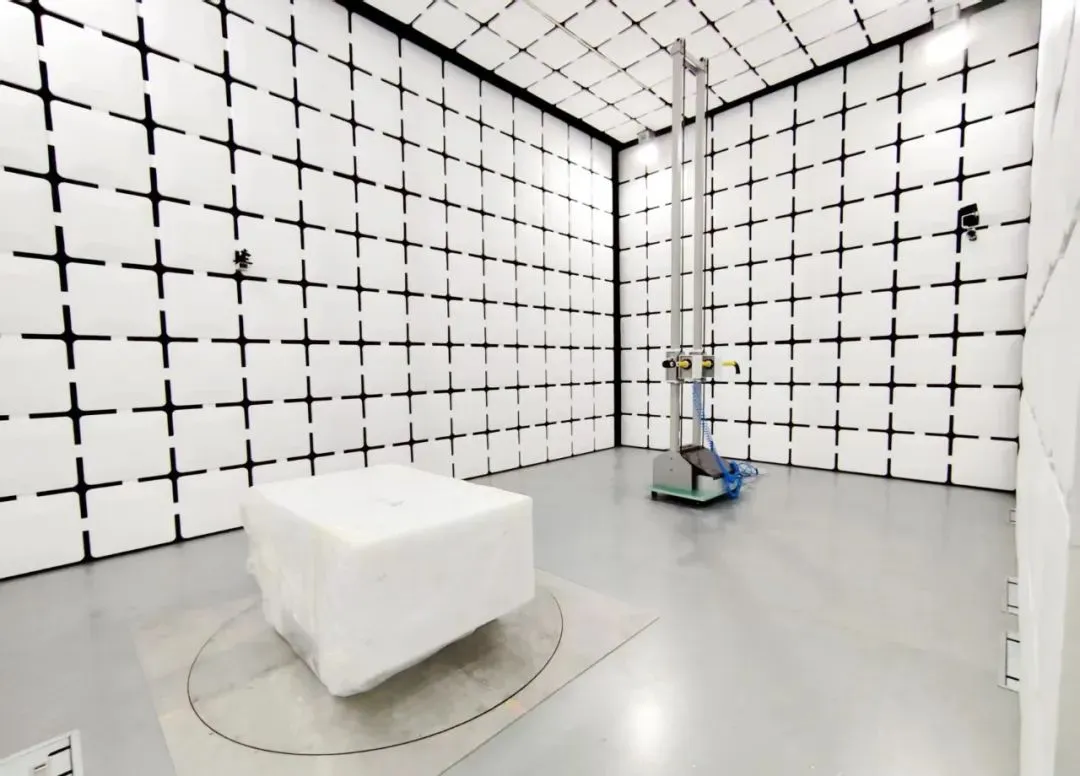
Radiated Emission Test Standards
a) Electric field radiation: CISPR22, CISPR13, CISPR11, CISPR14-1, CISPR15 (toys of specific categories);
b) Magnetic field radiation: CISPR15 (lighting equipment with operating current frequency exceeding 100 Hz), CISPR11 (induction cookers);
c) Disturbance power: CISPR14-1 (except for some equipment with operating frequency not exceeding 9 kHz), CISPR13 (only for auxiliary equipment).
Radiated Emission Test Methods
1) Test Instruments and Equipment
a) Electric field radiation: Receiver (below 1 GHz), Spectrum analyzer (above 1 GHz), Anechoic chamber, Antenna (below 1 GHz generally uses a combination of biconical and log-periodic antennas or broadband composite antennas; above 1 GHz uses horn antennas);
b) Magnetic field radiation: Receiver, Tri-loop antenna or single small-loop far-field antenna;
c) Disturbance power: Receiver, Power absorption clamp.
Receivers shall comply with CISPR16-1-1, antennas and test sites comply with CISPR16-1-4, and absorption clamps comply with CISPR16-1-3.
2) Test Setup
a) Electric field radiation: Divided into table-top and floor-standing types, the same as conducted emission (since radiated emission results are closely related to product setup, the test sample including the product, auxiliary equipment and all cables shall be strictly arranged in accordance with standards);
b) Magnetic field radiation: Tri-loop antennas of different sizes have limits on the maximum size of testable EUT. Taking a 2 m diameter tri-loop antenna as an example, EUT with length less than 1.6 m can be placed at the center of the tri-loop antenna for testing;
In CISPR11, induction cookers exceeding 1.6 m are measured at 3 m distance with a 0.6 m diameter single-loop far-field antenna at a minimum height of 1 m;
c) Disturbance power: Divided into table-top and floor-standing types. Table-top equipment is placed on a 0.8 m non-metallic table, at least 0.8 m away from other metallic objects (usually the metallic inner wall of the shielding room; this distance requirement is at least 0.4 m in CISPR14-1);
Floor-standing equipment is placed on a 0.1 m non-metallic support. The cable under test (LUT) is arranged on a power absorption clamp guide with a height of 0.8 m and a length of 6 m. The absorption clamp is sleeved on the cable, with the current transformer end facing the equipment under test.
If the equipment under test has other cables, disconnect those that can be disconnected without affecting functions, and isolate those that cannot be disconnected with ferrite absorption clamps.
3) Test Frequency Bands
• Electric field radiation: Generally 30 MHz–1 GHz (some products require testing above 1 GHz according to specific standards);
• Magnetic field radiation: 9 kHz–30 MHz;
• Disturbance power: 30–300 MHz.
4) Test Limits
Limits vary with different standards, test sites (3 m, 10 m or other distances), and different product categories (Group 1/2, Class A/B).
5) Test Procedures
a) 30 MHz–1 GHz electric field radiation: Conducted in a semi-anechoic chamber. The EUT rotates 360° with the turntable, and the antenna lifts vertically between 1 m and 4 m to find the maximum radiation. Results are expressed in QP values. Both vertical and horizontal antenna polarizations are tested.
b) Electric field radiation above 1 GHz: ITE equipment with operating frequency exceeding 108 MHz and ISM equipment exceeding 400 MHz shall be tested in a 3 m test site using a spectrum analyzer.
The test method for ITE equipment is basically the same as 30 MHz–1 GHz, with results expressed in Peak and AV values.
ISM products are slightly different: tested in a full anechoic chamber, antenna at the same height as the product without lifting, turntable still rotating to find the maximum radiation;
c) Substitution method: Replaced by ERP (Effective Radiated Power), then converted to field strength values. It is often used in RF tests and rarely in conventional emc tests.
The purpose of the substitution method is to test the housing radiation of the EUT. All detachable cables shall be removed, and ferrite cores shall be applied to non-detachable cables.
First, measure the maximum disturbance value of the EUT with Antenna A and receiver. Then replace the EUT with Antenna B, adjust the output power of the signal generator until the receiver reaches the same value. Record the input power of substitute Antenna B, which is the housing radiation power of the EUT. Antenna selection is based on the test frequency;
d) Magnetic field radiation: For magnetic field radiation test using a tri-loop antenna, the sample is placed at the center of the antenna, and magnetic field radiation results are measured in X/Y/Z directions respectively.
When using a single small-loop antenna, the antenna is placed vertically to the ground with its lowest part 1 m above the ground. As it is near-field measurement considering ground reflection, the measured values reflect the horizontal and vertical magnetic field components of the EUT;
e) Disturbance power: All cables of the equipment (including those of auxiliary equipment) longer than 25 cm shall be tested.
Disturbances at different frequencies within 30–300 MHz are distributed in standing waves in the cable under test. Therefore, during measurement, the power absorption clamp shall be moved along the guide to find the position with the maximum disturbance power at each final test frequency (approximately at a half-wavelength distance from the equipment).
Judgment of Radiated Emission Test Results
The results are still compared with the limit line. Below the limit: PASS; above the limit: FAIL.
Notes for Radiated Emission Test
Test setup remains the most critical part of the test. In addition, as it is a high-frequency test, the test site, equipment and other factors are important and will affect the final results.
Radiated Emission Test Range
30 MHz–18.5 GHz.
Email:hello@jjrlab.com
Write your message here and send it to us
 What is the EN 300 328 Testing Standard
 Amazon TIC Lithium Battery Appliance UL 60335-2-29
 What is the Difference Between EU PPWR and EPR?
 What is Japanese METI Registration
 Exporting to Saudi Arabia Saber Certification: PCo
 How to get a Saudi Arabia MSDS?
 Do I Still Need PPWR Compliance if I Have RoHS?
 Amazon Children's Toys Direct Validation Mandatory
Leave us a message
24-hour online customer service at any time to respond, so that you worry!