



How to Achieve Compliance with the EU EN55032 Standard
In the wave of global export of electronic and electrical products, the European Union (EU) market has always been a core target market for many multimedia equipment manufacturers, relying on its well-established consumer system and mature regulatory rules. Electromagnetic Compatibility (EMC) compliance is an unavoidable threshold for products entering the EU market, among which the en55032 standard is a core technical requirement that multimedia equipment must meet.
Many foreign trade manufacturers have experienced product detainment at customs, testing failures, delayed launch schedules, and even unnecessary economic losses due to an insufficient understanding of the standard's details. Today, we will comprehensively break down the relevant content of the en55032 standard from multiple dimensions—including standard background, core requirements, testing items, scope of application, class classification, latest updates, and compliance recommendations—to help exporting enterprises clarify their compliance strategies.
What is the EN55032 Standard?
EN55032 is an electromagnetic compatibility emission standard established by the EU for multimedia equipment. Its predecessors were CISPR 13 (for audio and video equipment) and CISPR 22 (for information technology equipment). As the functions of electronic devices continue to integrate, a single product often possesses multiple attributes such as information processing, audio/video playback, and network transmission. The old, fragmented standards could no longer adapt to the development needs of the industry, so EN55032 emerged to consolidate the emission requirements of both types of equipment into a unified specification.
Currently, the mainstream version active in the EU market is en 55032:2015+A1:2020+A11:2020. The subsequently released prEN IEC 55032:2025 version is also gradually being implemented. This new version further updates reference standards and optimizes testing procedures to ensure that the standard remains highly coordinated with the EU EMC Directive 2014/30/EU, continuously adapting to the constantly iterating technological forms of multimedia equipment.
II. What is the Core Objective?
The core logic of the EN55032 standard is not to limit product performance, but to achieve two major goals through unified technical requirements:
Protecting the Public Electromagnetic Environment: It strictly controls the electromagnetic disturbances emitted during the operation of multimedia equipment to prevent harmful interference to surrounding radio communications, broadcasting and television, and other electronic devices.
Ensuring Operational Stability: By standardizing emission limits, it indirectly guarantees the operational stability of the equipment itself in a regular electromagnetic environment, reducing the risk of malfunctions caused by mutual interference between devices.
What are the Testing Items?
The standard's testing system is designed around two main electromagnetic interference propagation paths: "Cable Conduction" and "Spatial Radiation." The core testing items cover full-scenario interference situations:
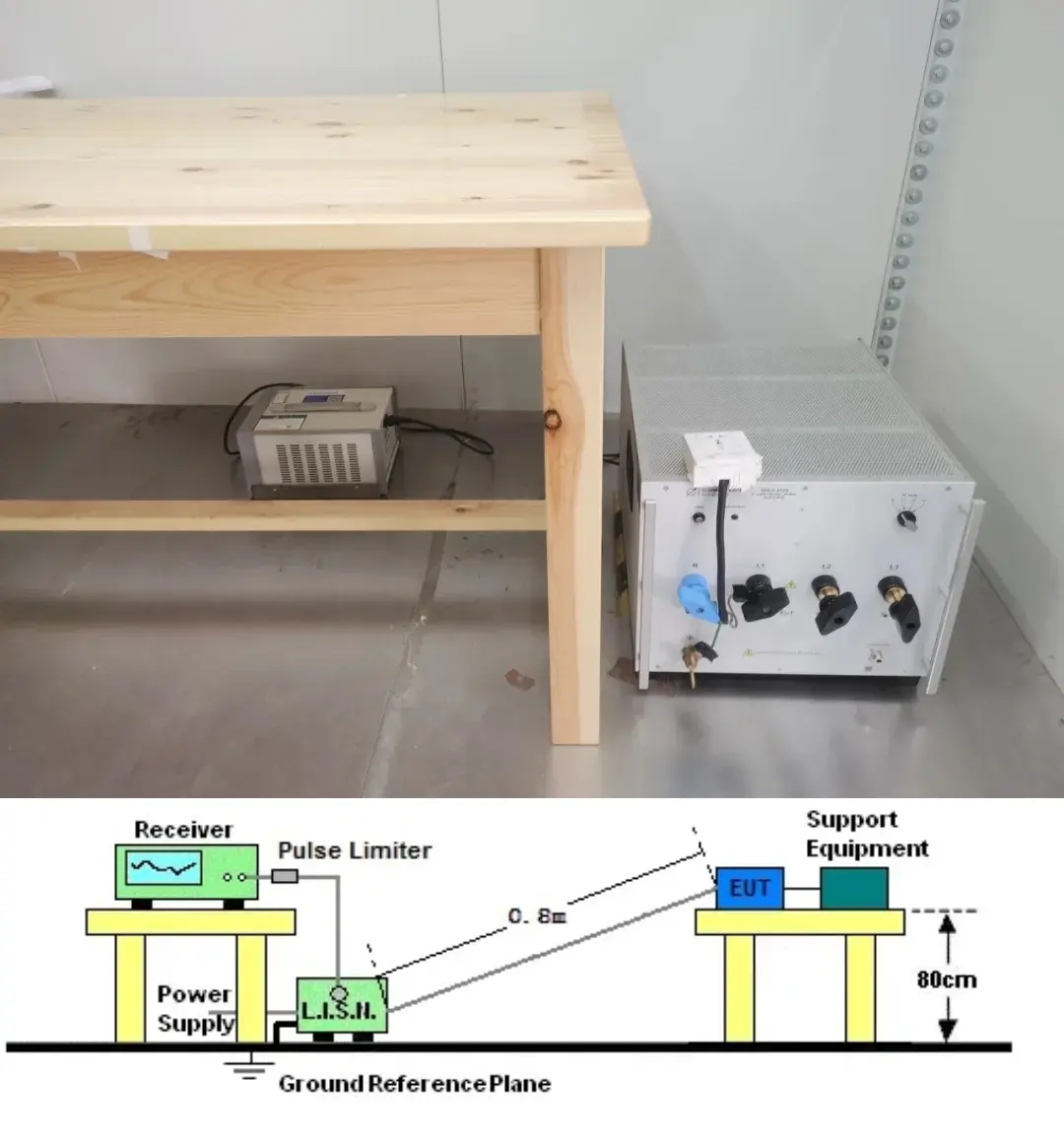
Conducted Emissions at Mains Terminals: The testing frequency range is 0.15MHz - 30MHz. It mainly measures the intensity of electromagnetic interference conducted outwards by the equipment through AC and DC power lines. This is also the testing item where daily electronic devices are most prone to exceeding limits.
Conducted Emissions at Telecommunication Ports (Asymmetric Mode): Also covering the 0.15MHz - 30MHz frequency band, this tests telecom/network ports such as RJ45 network ports and telephone lines, preventing the equipment from spreading interference signals outwards through data cables.
Radiated Emissions: The testing frequency band covers 30MHz - 6GHz. The specific upper-limit frequency will be dynamically adjusted according to the highest internal operating frequency of the equipment. It measures the intensity of electromagnetic waves directly radiated by the equipment through space to prevent blocking or interfering with radio signals.
Radiated Emissions from FM Receivers: Designed for multimedia equipment with built-in FM receiving functions, this specifically controls the spurious signals spilling outwards when the receiving module is working, avoiding impacts on the normal listening of surrounding FM broadcasts.
Conducted Differential Voltage Emissions: This tests the differential transmission lines of the equipment's signal ports, supplementing interference scenarios not covered by conventional conduction testing, and further perfecting the control dimensions of conducted disturbances.
What Products are Applicable?
The EN55032 standard applies to all multimedia equipment with a rated AC or DC supply voltage not exceeding 600V, covering the vast majority of consumer-grade and industrial-grade multimedia products on the market:
Information Technology (IT) Equipment: Network devices such as desktop computers, laptops, servers, printers, switches, and routers.
Audio and Video (AV) Equipment: Audio products such as amplifiers, mixing consoles, CD players, Bluetooth speakers, and headphone amplifiers, as well as video devices like monitors, cameras, and home projectors.
Broadcast Receiver Equipment: TV set-top boxes, FM/AM radios, satellite TV receiving equipment, etc.
Special Scenario Equipment: Peripheral products with multimedia attributes, such as outdoor power supplies, stage lighting consoles, and entertainment lighting control equipment.
Note: The standard explicitly excludes the intentional emission portion of devices with intentional radio transmission functions. The relevant requirements for such devices are controlled by specific standards under the EU red directive and do not fall within the scope of EN55032.
Core Differences Between Class A and Class B
Based on the usage scenarios of the equipment, the standard divides the testing limits into two classes, A and B. The compliance requirements for these two classes differ significantly:
Class A (Industrial/Commercial Environments): Applicable to equipment used only in non-residential scenarios such as industrial plants and commercial office areas. The electromagnetic disturbance limits are relatively lenient, allowing the equipment to emit higher-intensity electromagnetic signals.
Class B (Residential Environments): Applicable to all equipment that may be used in home residential scenarios. The limit requirements are much stricter than Class A. The purpose is to prevent household devices from interfering with each other and to ensure the stable operation of TVs, radios, and smart home devices in the home environment.
The vast majority of multimedia equipment sold to ordinary consumers must meet the Class B limit requirements to enter the EU market. Manufacturers need to clarify the target usage scenario during the early design phase and match the corresponding class requirements.
New Dynamics of the Standard
The latest prEN IEC 55032:2025 version is being spearheaded by the CLC/TC 210 committee of CENELEC. It plans to comprehensively update the content of the old EN 55032:2015 version. Key optimizations include the consistency of terminology definitions, updates to the reference documents of supporting standards, and supplements to equipment testing procedures under different configurations and complex environments. Subsequently, this version will be incorporated into the Official Journal of the European Union (OJEU) and become a new harmonized standard, further simplifying the compliance proof process for enterprises.
What to Pay Attention To
For multimedia equipment manufacturers planning to enter the EU market, it is recommended to incorporate EN55032 requirements into the design process from the early stages of product R&D:
Prioritize EMC pre-certified core components: Conduct preliminary baseline testing during the prototype stage. Avoid waiting until the final design is finalized only to discover that radiation or conduction exceeds limits, which leads to a complete design rework.
Select certified laboratories: Choose testing laboratories with proper institutional qualifications to complete formal testing, ensuring your certificate is valid throughout the EU.
Track standard updates promptly: Keep abreast of updates to the standard versions and make technical preparations in advance to avoid the compliance invalidation of already launched products due to standard iterations.
Email:hello@jjrlab.com
Write your message here and send it to us
 What is UL 1642 Compliance Certification?
 What Is Amazon's UL 60335 Standard
 How to get a UL 60335 Test Report
 What is UL 60335 Certification Compliance?
 What is EN 61000 Certification Compliance?
 How to get an EN 61000 Test Report?
 What is the Amazon EN 55035 Standard?
 What is EN 55035 Certification Compliance?
Leave us a message
24-hour online customer service at any time to respond, so that you worry!