



How to Get a Mexico NOM Certificate?
Introduction to NOM
Normas Oficiales Mexicanas (NOM) is Mexico's mandatory safety mark, indicating that products comply with relevant NOM standards. The nom mark applies to most products, including telecommunications and information technology equipment, household electrical appliances, lighting, and other products that pose potential risks to health and safety. Both locally manufactured and imported products must meet NOM standards and labeling requirements.
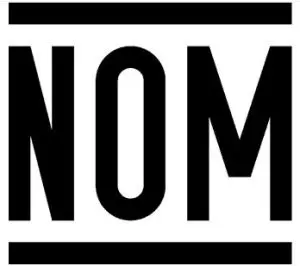
According to Mexican law, the nom certificate holder must be a Mexican company, responsible for product quality, maintenance, and reliability. Test reports are issued by SECOFI-approved laboratories and reviewed by SECOFI, ANCE, or NYCE. If the product complies with relevant regulations, a certificate will be issued to the manufacturer or exporter’s representative in Mexico, allowing the product to carry the NOM mark.
The NOM mark is often seen together with NYCE or ANCE:
- NOM NYCE: For electronic products, communication products, and data processing equipment (excluding household appliances).
- NOM ANCE: For household appliances, including home electric tools and handheld power tools.
Common Issues Explained
- Mexico's voltage is 127V/60Hz.
- The plugs are the same as those used in the US: Class I with three pins and Class II with two pins. Plugs are tested with the equipment.
- Certificates are valid for one year and can be renewed annually.
- When renewing certificates, a product sample must be randomly taken from the market for testing.
- Packaging must include the following information: product name, brand, model, and NOM mark.
Certification Program Details
There are 7 mandatory certification models:
- M0: Certification through quality control and periodic testing.
- M1: Certification through periodic testing (new product type testing).
- M2: Certification through quality system evaluation (new product).
- M3: Certificate of conformity issued through periodic testing (for new products).
- M4: Certification through quality control and periodic testing (for redesigned products).
- M5: Batch certification (for redesigned or second-hand products without redesign manuals).
- M6: 100% certification (for non-standard products).
Certification Scope
NOM mandatory certification generally covers electronic and electrical products with an AC or DC voltage exceeding 24 volts. It mainly applies to safety, energy, thermal effects, installation, health, and agriculture. The following products must obtain nom certification to enter the Mexican market:
- Electronic or electrical products for home, office, or factory use.
- LAN (Local Area Network) equipment.
- Lighting fixtures.
- Tires, toys, and school supplies.
- Medical equipment.
- Wired and wireless communication products, such as landline phones and wireless phones.
- Products powered by electricity, propane, natural gas, or batteries.
NOM voluntary certification typically applies to components such as conductors, fuses, lamp holders, and ballasts, serving as a reference for manufacturers and importers.
Document Requirements
1. cb test report and certificate.
2. Importer or distributor’s name, address, and contact person in Mexico.
3. Test data, design drawings, specifications, and circuit diagrams.
4. Labels in Spanish.
5. Original user manual in Spanish.
6. One sample (additional documents required for importers or distributors).
7. Copy of the company's authorization letter.
8. Copy of the company’s tax registration.
9. Power of Attorney.
10. Legal agent’s official proof of authority.
11. Letterhead with company name.
12. Copy of the tax payment certificate.
Review Time
After submitting all documents, it usually takes 5-6 weeks. Once the NOM application is completed, the original certificate and report will be sent to the local agent in Mexico. The applying company will receive a faxed copy. The agent should keep the original certificate and report for reference and future inspections.
China’s JJR Laboratory offers NOM certification services to global clients, helping save up to 30% in certification costs.
Email:hello@jjrlab.com
Write your message here and send it to us
 ISO 10993 Biocompatibility Standards
 Medical TPV ISO 10993 Biocompatibility Testing
 FDA Requirements for Biocompatibility under ISO 10
 Amazon Spain WEEE Compliance Deadline: September 3
 What is the ASTM F2264 Certification Test?
 What is ASTM F2194 Certification Testing?
 What is the ASTM F2167 Certification Test?
 What is the ASTM F2050 Certification Test?
Leave us a message
24-hour online customer service at any time to respond, so that you worry!