



How to get CE Marking Certification?
The CE certification unifies technical specifications for products traded in Europe across all countries and streamlines trade procedures. Products from any country entering the EU and other CE-mandated regions must obtain CE certification and affix the CE mark, which serves as a pass to access these markets. It attests that products meet safety requirements, representing an enterprise’s commitment to consumers and enhancing consumer trust. Additionally, products with the CE mark can reduce sales risks in Europe, such as being investigated by customs and market supervision authorities or being accused by competitors.
What are the Types of CE Certification Certificates?
CE certification certificates are mainly divided into three types: Certificate of Compliance (COC), EC Attestation of Conformity (AOC), and Declaration of Conformity (DOC). The specific differences are as follows:
DOC (Declaration of Conformity)
Issuing Body: Self-issued by the enterprise
Features: A self-declaration document; the enterprise is required to establish a complete Technical Construction File (TCF) and bear corresponding legal liabilities.
Applicable Scenarios: All products requiring CE certification, especially mass-produced products or products with low risks. It is a mandatory document for customs clearance.
COC (Certificate of Compliance)
Issuing Body: Third-party institutions (e.g., intermediaries, testing and certification bodies)
Features: Must be accompanied by technical documents (TCF) such as test reports; the enterprise is required to sign a Declaration of Conformity.
Applicable Scenarios: Most products requiring third-party certification, especially in fields with low risks or no mandatory requirement for the involvement of a Notified Body.
AOC (EC Attestation of Conformity)
Issuing Body: EU Notified Body (NB for short)
Features: Exclusively issuable by NB institutions with legal effect; it usually requires the implementation of more stringent factory audits in conjunction with quality control modules (e.g., Module D/E).
Applicable Scenarios: High-risk products (e.g., machinery, building materials) or fields where EU directives explicitly require the involvement of a Notified Body.
ce certification process for Electronic and Electrical Products?
1. The applicant company fills in the application form, provides relevant documents including the application form, product user manual and technical files.
2. The certification body evaluates the CE certification inspection standards and items, and provides a quotation.
3. The applicant company confirms the items and sends the product samples to the body.
1. The laboratory arranges product testing and audits the completeness of technical files.
2. After the product passes the tests, the body provides the applicant company with a product test report or technical construction file, and issues the ce certificate upon successful testing.
6. The applicant company signs the CE self-declaration of assurance and affixes the CE mark on the product.
7. Certification is successfully obtained.
CE Certification Preparation Document List for Electronic and Electrical Products
① Name and address of the manufacturer (and eu authorized representative); product name, model, etc.;
② Product manual (including operation instructions, emergency response measures, and detailed technical parameters such as voltage, current and power);
③ Safety design documents (including key structural drawings that reflect creepage distances, clearances, and the number and thickness of insulation layers);
④ Product technical specifications (or enterprise standards) and established technical documents;
⑤ Product electrical schematic diagrams, block diagrams, circuit diagrams, etc.;
⑥ List of key components or raw materials (products with European certification marks are recommended);
⑦ Testing Report;
⑧ Relevant certificates issued by the EU authorized certification body (NB) (for all modules except Module A);
⑨ EU in-market registration certificate (for certain products such as Class I medical devices and general IVD in vitro diagnostic medical devices);
⑩ CE Declaration of Conformity (DOC).
Note: All the above documents shall be provided in English.
What are the CE Certification Standards for Electronic Products?
For common electronic products applying for CE certification, the applicable directives are the EMC Directive (2014/30/EU), LVD Directive (2014/35/EU) and Machinery MD Directive (2006/42/EU).
Common Standards for the EMC Directive:
Standards and Test Types for Industrial Products
① EN 55011
② EN 50081-2
③ EN 50082-2
EMI / Electromagnetic Interference Tests
① Conducted Emission Test: EN 55011
② radiated emission test: EN 55011
EMS / Electromagnetic Susceptibility Tests
① Conducted Immunity Test: EN 61000-4-6
② Radiated Immunity Test: EN 61000-4-3
③ Electrostatic Discharge (ESD) Immunity Test: EN 61000-4-2
④ Electrical Fast Transient/Burst Immunity Test: EN 61000-4-4
⑤ Power Frequency Magnetic Field Immunity Test: EN 61000-4-8
⑥ Surge Immunity Test: EN 61000-4-5
⑦ Voltage Dips, Short Interruptions and Voltage Variations Immunity Test: EN 61000-4-11
Relevant Standards for Other Products:
① EN 55013: Applicable to broadcast receivers and auxiliary equipment
② EN 55014: Applicable to household electrical appliances and portable tools
③ EN 55015: Applicable to lighting products
In general, for equipment with an AC supply voltage of 50-1000V and a DC supply voltage of 75-1500V, in addition to complying with the EMC Directive, compliance with the LVD Directive (i.e., safety requirements) is also mandatory.
Common Current Standards for the LVD Directive:
① Household appliances (EN 60335)
② Lighting products (EN 60598)
③ Audio-visual products (EN 60065)
④ Information technology products (EN 60950)
⑤ Electrical machinery (EN 60204)
⑥ Measuring instruments (EN 61010)
For products classified as machinery, CE certification requires compliance with the MD Directive (i.e., machinery safety requirements).
General Standards for CE Certification of Machinery Products:
① EN ISO 12100:2010
② EN 60204-1:2006+A1:2009+AC:2010
Key Factors Affecting the Cost of CE Certification for Electronic Products?
The cost of CE certification depends on the certification body and applicable product directives, as different products involve different test items. Common tests for electronic and electrical products cover the EMC and LVD Directives. CE certification for machinery products incurs higher costs due to factory audit and evaluation requirements. Additional costs may arise if the customer designates non-mandatory directives (e.g., specifying emc testing when only LVD compliance is required). Some customers randomly select directives for promotional purposes, but EU ce regulations stipulate that products must pass tests for all applicable directives before the CE mark can be affixed.
Lead Time for CE Certification of Electronic Products?
The lead time for CE certification of electronic products is usually 5-7 working days, but the specific cycle varies depending on the product type, functional complexity and certification body. Detailed explanations are as follows:
General Electronic and Electrical Products
Such products only need to comply with the low voltage directive (LVD) and Electromagnetic Compatibility Directive (EMC), resulting in a shorter certification cycle. For products with simple structures and functions and fewer test items, certification can generally be completed within 5-7 working days. For example, the certification cycle for ordinary small electric heaters and electric kettles is usually 7-10 working days.
Electronic Products with Wireless Functions
In addition to the LVD and EMC Directives, such products must comply with the Radio Equipment Directive (RED). The certification cycle for simple wireless products (e.g., devices with only Bluetooth function) is about 2 weeks; for products integrated with multiple wireless functions (e.g., WIFI, GPS positioning, Bluetooth modules, 2G/3G/4G internet access, etc.), the cycle may be extended to 4-6 weeks.
Electronic Products with Complex Functions
For electronic products with integrated complex electronic control systems, multiple functions or high-precision electronic control requirements (e.g., intelligent massagers, multi-functional food processors), the certification cycle may be further extended. Such products require more comprehensive tests for electrical safety and electromagnetic compatibility. If non-conforming items are found during testing and require rectification, the certification cycle may be extended to 3-4 weeks or even several months.
Impact of Certification Bodies and Processes
The work efficiency, process optimization and scheduling of different certification bodies will affect the certification cycle. In addition, the enterprise’s ability to provide technical documents and materials (e.g., English manuals, circuit schematic diagrams, test reports) in a timely, accurate and complete manner will also impact the progress of certification.
Email:hello@jjrlab.com
Write your message here and send it to us
 What is UL 1642 Compliance Certification?
 What Is Amazon's UL 60335 Standard
 How to get a UL 60335 Test Report
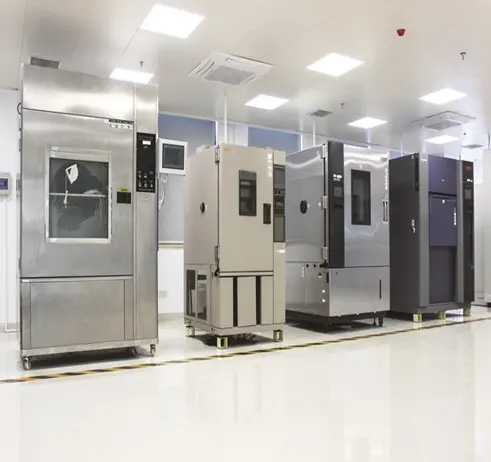 What is UL 60335 Certification Compliance?
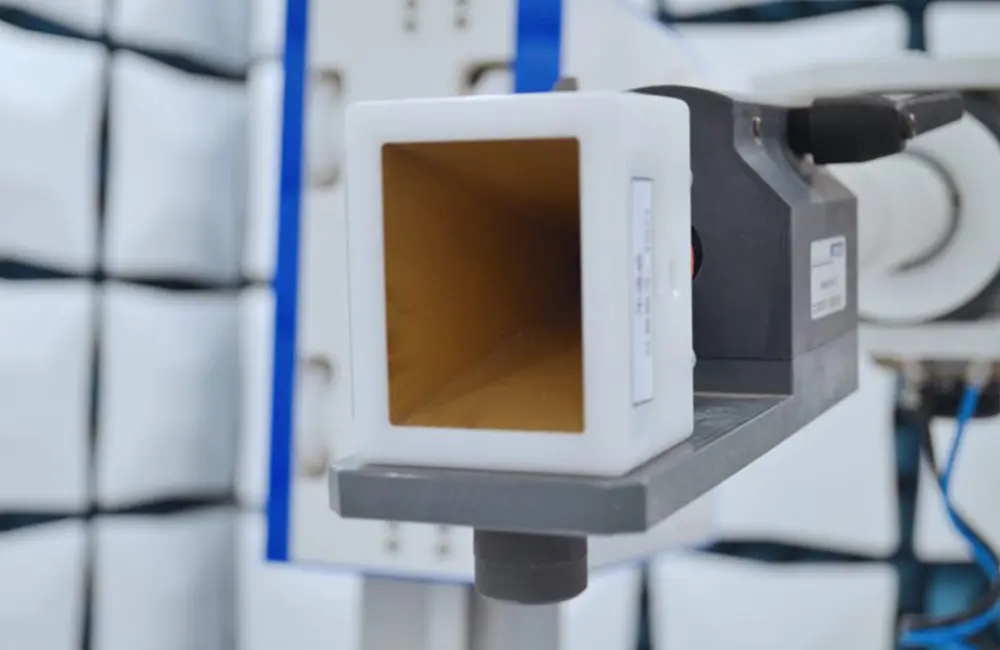 What is EN 61000 Certification Compliance?
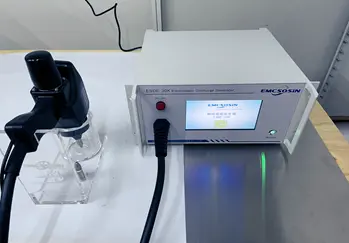 How to get an EN 61000 Test Report?
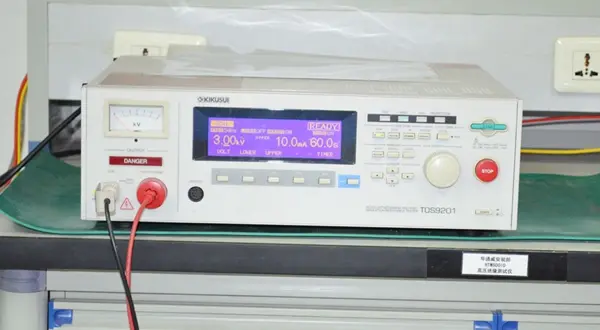 What is the Amazon EN 55035 Standard?
 What is EN 55035 Certification Compliance?
Leave us a message
24-hour online customer service at any time to respond, so that you worry!