



How to Obtain Israel SII Certification for Power Banks?
SII is the abbreviation of Standards Institution of Israel. Although SII is a non-governmental organization, it is directly administered by the Israeli government and is responsible for standard formulation, product testing and product certification in Israel.
For products entering Israel, the Israeli customs adopts inspection and verification measures to ensure that products meet relevant quality requirements. Usually, the customs inspection process takes a long time. However, if the importer has obtained the SII certificate before shipment, the customs inspection process will be greatly shortened. The Israeli customs will only verify the consistency between the goods and the certificate without conducting random inspections.
Below is an introduction to the product access system in Israel.
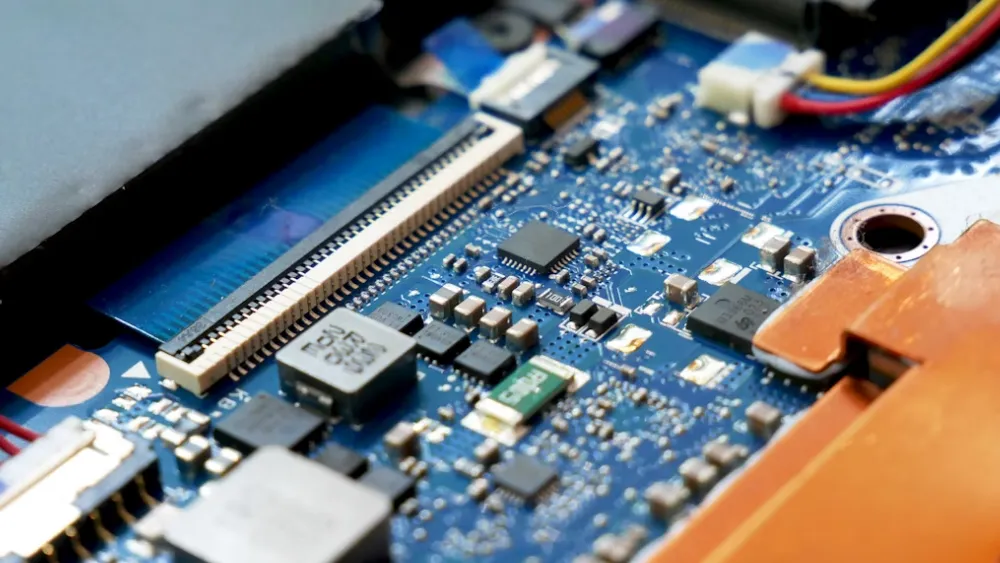
What is SII Certification?
SII Certification is a product certification system established in accordance with Israel's Standardization Law and standardization directives. All electronic and electrical products exported to Israel must obtain SII Certification.
What Products are Covered by SII Certification?
Most standards in Israel are non-mandatory. However, when it comes to the protection of public safety, public health or the environment, the relevant standards will be enforced as mandatory ones. According to Israel's Standardization Law, products are classified into the following 4 categories based on the level of risk they pose to public health and safety:
• Group 1: Highest risk, such as household appliances, children's toys, pressure vessels, portable foam fire extinguishers, etc.
• Group 2: Medium risk, such as sunglasses, balls for various purposes, installation pipelines, carpets, bottles, building materials, etc.
• Group 3: Low risk, such as ceramic tiles, ceramic sanitary ware, etc.
• Group 4: Industrial-use only, not directly available to consumers, such as industrial electronic products, etc.
According to the Introduction to the Israeli Import Reform issued by Israel in 2022, most of the products previously classified as Group 1 have been reclassified into Group 2 and Group 3. Both Group 2 and Group 3 products can be imported into Israel via supplier's declaration. The only difference is that Group 2 products may require the supplier to submit an application to an authorized Israeli laboratory before using the declaration method, while Group 3 products can be exported to Israel directly by presenting the declaration.
Both Group 2 and Group 3 products need to be accompanied by test reports that meet international standards to prove that the products comply with safety and EMC (Electromagnetic Compatibility) requirements. Regulations stipulate that these test reports must be issued by ILAC-accredited laboratories. Generally, reports based on EN or IEC standards are acceptable.
Different management measures are implemented for products of different risk levels. Therefore, SII Certification includes the following 4 different certification methods:
① Standards Mark Certification: Voluntary in principle, but mandatory for Group 1 products. After passing the audit, the product can be affixed with the Standards Mark.
② Safety Mark Certification: Also voluntary in principle, mainly applicable to Group 1 products. After passing the audit, the product can be affixed with the Safety Mark.
③ Type Approval: Currently the most commonly adopted method. For Group 1 and Group 2 products, they must pass the testing conducted by SII and obtain the corresponding certification before shipment.
④ Shipment Inspection: If the importer fails to obtain the relevant certificate when the goods arrive at the port, the Israeli customs will conduct batch-by-batch testing and inspection on the products.
What are the Differences Between the 4 SII Certification Methods?
Certification Method | Standards Mark Certification | Safety Mark Certification | Type Approval | Shipment Inspection |
Mandatory or Not | Mandatory | Voluntary | - | - |
Product Scope | Mainly Group 1 products. For details on the mandatory scope, please confirm with WALTEK. | - | - | - |
Certification Process | SII product testing + SII initial factory inspection + SII annual factory inspection = SII certificate | SII product testing = SII certificate | Group 1 products: After passing the test, SII issues a Conformity Certificate (valid only for the current shipment). Group 2 products: After passing the test, SII issues a Proto Type Approval. | When the goods arrive at the port, the Israeli customs conducts batch-by-batch testing and inspection on the products. YL17665217695 |
How to Apply for SII Certification?
Since Israel is an IECEE - CB member country, SII recognizes and accepts cb test reports issued by IECEE - CB member countries, and now also accepts test reports issued by ILAC-accredited laboratories. Importers can apply through the following 2 channels:
① Channel ① (8–16 weeks): The product is tested by SII or other approved Israeli testing laboratories.
② Channel ② (about 4 weeks): The product holds a cb certificate that complies with national deviations or a recognized test report.
Note: Usually, local Israeli clients are required to assist with the application.
Email:hello@jjrlab.com
Write your message here and send it to us
 How to get a UL 60335 Test Report
 What is UL 60335 Certification Compliance?
 What is EN 61000 Certification Compliance?
 How to get an EN 61000 Test Report?
 What is the Amazon EN 55035 Standard?
 What is EN 55035 Certification Compliance?
 How to get the EN 55035 Test Report?
 What is the Amazon EN 301 489 Standard?
Leave us a message
24-hour online customer service at any time to respond, so that you worry!