



Humidifier ETL Certification, UL 998 Testing
Scope of Application
The UL 998 standard applies to humidifiers rated at 600V or lower, including residential and commercial humidifiers, such as centrifugal atomizing types, evaporative media types, water-injection types, and steam types.
Structure
Common product structure: Plug + power cord + power board + motor or fan.
Generally, the power board and the motor or fan do not have their own separate certifications and need to be evaluated via testing along with the end product.
Humidifier UL 998 Testing Items
Appearance and Structure Inspection: According to the UL 998 standard, the appearance and structure of the humidifier are inspected to check for any obvious manufacturing defects or non-compliances with the standard.
Input Parameter Testing: Test the input parameters of the humidifier, including voltage, current, and power, to ensure they meet the manufacturer's specifications and the requirements of the UL 998 standard.
Leakage Current Testing: According to the UL 998 standard, a leakage current test is conducted on the humidifier to check for electric shock risks. The testing method involves measuring the leakage current of the humidifier under specified conditions and comparing it with the standard value.
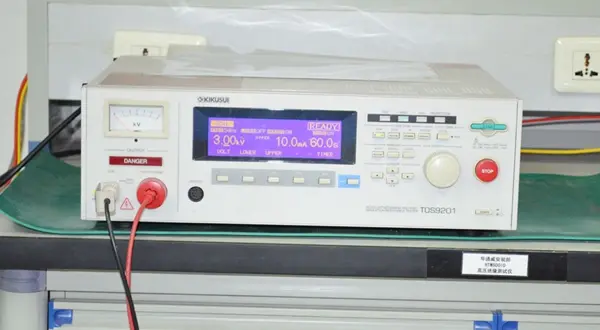
Dielectric Voltage-Withstand Testing (Hipot Test): The dielectric voltage-withstand test is used to check whether the humidifier can operate normally or if there is an electric shock risk under high-voltage conditions. The testing method involves gradually increasing the voltage of the humidifier until it reaches the specified withstand voltage value, and observing the changes in its working status and electrical performance.
Temperature Rise Testing: The temperature rise test is used to check the temperature changes of the humidifier during operation. The testing method involves measuring the temperature of critical components of the humidifier during its working process and comparing it with the standard value.
Water Tank and Nozzle Testing: The water tank and nozzle test is used to check whether the water tank and nozzle of the humidifier meet safety requirements. The testing method involves checking whether the material, structure, and usage of the water tank meet standard requirements, and testing the flow rate and atomization effect of the nozzle.
Noise Testing: The noise test is used to evaluate the noise level of the humidifier during operation. The testing method involves using a sound level meter to measure the noise level of the humidifier at a specified distance and height, and comparing it with the standard value.
etl certification Costs
Approximately $9,000 to $12,000 USD for a single model, excluding the evaluation testing of the power supply with the end product, and excluding the evaluation testing of the motor with the end product. For specific costs, an instruction manual and a model difference table must be provided.
Email:hello@jjrlab.com
Write your message here and send it to us
 How to get an EN 301 893 test report?
 What is EN 301 893 Certification Compliance
 What is the CSA 62368-1 Standard?
 Canadian Pacifier Compliance SOR/2016-184
 US Agent for FCC & EC REP for CE: Compliance R
 What is Recycling of WEEE
 What is PPWR Packaging Compliance
What is Extended Producer Responsibility
What is PPWR Packaging Compliance
What is Extended Producer Responsibility
Leave us a message
24-hour online customer service at any time to respond, so that you worry!