



How to get an EN 301 893 test report?
5GHz WiFi Product EU CE/RED Compliance
When exporting 5GHz WiFi devices, wireless routers, APs, network cards, smart cameras, or notebook tablets to the EU, you will almost certainly encounter the "EN 301 893 Test Report." It is not an independent certificate, but rather the core technical document for radio frequency spectrum compliance of 5GHz Wireless Access Systems (WAS/RLAN) under the eu red directive.
What is the EN 301 893 Standard?
EN 301 893 is published by ETSI, and its full name typically falls under the "Broadband Radio Access Networks (BRAN) / 5GHz High-Performance RLAN" series. It is used to evaluate the radio frequency spectrum access requirements of 5GHz wireless access systems. In the EU market, it usually serves as one of the harmonized standards for Article 3(2) "Effective use of radio spectrum" of the RED Directive 2014/53/EU. It forms a complete CE technical file in conjunction with EN 300 328 (2.4GHz), the EN 301 489 series (Wireless EMC), EN 62368-1 (Safety), and en 62479/en 62311 (RF Exposure).
Applicable products include but are not limited to:
1.Wireless routers, APs, and Mesh nodes
2.5GHz WiFi network cards, modules, and client terminals
3.The 5GHz WLAN section of notebooks, tablets, and smartphones
4.Point-to-point/point-to-multipoint 5GHz wireless bridges, enterprise-level WAS/RLAN
5.Cameras, TVs, industrial gateways, and smart terminals with embedded 5GHz WiFi
Common frequency band scopes:
Primarily 5150–5250MHz, 5250–5350MHz, and 5470–5725MHz. Whether 5725–5850MHz is evaluated according to EN 301 893 depends on the product version, EU official citations, and frequency allocation in the destination country.
Note: The US refers to this as U-NII; EU testing must use the ETSI/RED scope. Do not directly apply FCC rules.
EN 301 893 Test Items
Before the laboratory issues a report, the testing plan is usually determined based on the product's role (master/slave device), frequency band, antenna gain, number of MIMO streams, and indoor/outdoor use. The core test items are as follows:
1) Transmit Power and EIRP/ERP
Verification of maximum output power, equivalent isotropically radiated power (EIRP), and conducted and radiated scopes. Excessively high antenna gain will result in exceeding the EIRP limit.
2) Power Spectral Density (PSD)
Evaluates energy concentration based on 1MHz or standard-specified bandwidth to prevent excessive power concentration in certain channels.
3) Occupied Channel Bandwidth and Spectrum Mask
Nominal channel bandwidth, 99% occupied bandwidth, and in-band spectrum mask. Multi-channel/multi-MIMO modes require supplementary evaluation according to the specific version.
4) Out-of-Band and Spurious Emissions
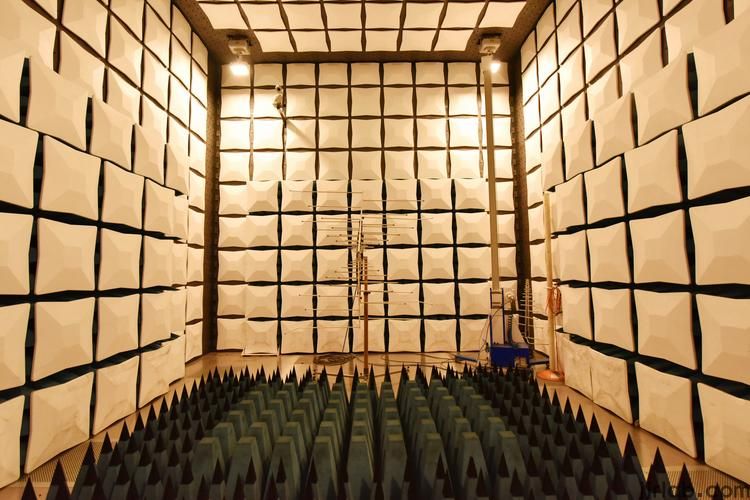
Includes adjacent channel leakage, out-of-band emissions, and spurious limits for 30MHz–1GHz / 1GHz–12.75GHz. Radiated spurious emissions testing usually consumes the most anechoic chamber time.
5) Frequency Stability / Frequency Error
For 5GHz WLAN, frequency error tolerance is usually checked against the standard, with a common reference at the ±20ppm level. Specifics depend on the version and mode.
6) Adaptivity / Channel Access
LBT (Listen Before Talk) / CCA (Clear Channel Assessment), channel occupancy time, idle period, and detection threshold. This is heavily focused on for APs, routers, and ad-hoc network devices.
7) DFS (Dynamic Frequency Selection)
5250–5350MHz and 5470–5725MHz typically involve radar avoidance: CAC (Channel Availability Check), in-service monitoring, channel shutdown/move, detection probability, and different modes for master/slave devices. DFS is the highest-risk failure item for 5GHz routers/APs.
8) TPC (Transmit Power Control)
The standard has requirements for the TPC implementation range. If TPC is not implemented, the device can operate at a reduced power limit. The specific reduction depends on the version and frequency band.
9) Receiver Performance
Blocking, adjacent channel selectivity, and receiver spurious emissions. Newer versions include supplementary evaluations for multi-channel and specific receiving conditions.
Tip: If the product also features 2.4GHz WiFi/Bluetooth, EN 300 328 is additionally required. Single-band Bluetooth, Zigbee, LoRa, etc., require separate reports according to their respective standards; EN 301 893 cannot replace all RED RF requirements.
How to Obtain an EN 301 893 Test Report
Confirm the Product and Export Scope
Clarify the following: Supported 5GHz channels/bandwidths (20/40/80/160MHz), number of MIMO streams, internal/external antenna specifications, indoor/outdoor use, firmware version, whether it is a DFS master device, and whether there are country code restrictions. For dual-band products, confirm the 2.4GHz standard as well.
Choose a Laboratory, Don't Just Ask for "A Report"
Prioritize laboratories that have:
1.ISO/IEC 17025 accreditation, with the accreditation scope including EN 301 893 and the version used.
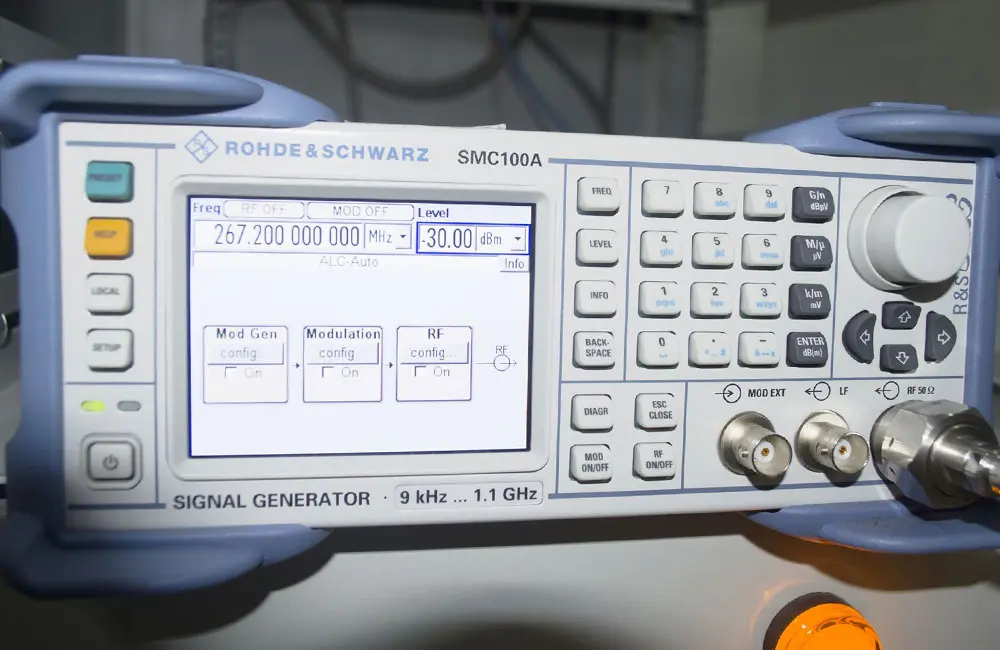
2.Possession of 5GHz shielded rooms, DFS radar simulators, EIRP anechoic chambers/open area test sites, and MIMO multi-port capabilities.
3.Familiarity with RED technical files. They should not just provide a single RF report but also be able to seamlessly link EMC/Safety/SAR/Cybersecurity.
Note: Non-EU laboratories can also issue test reports. Whether an EU Notified Body (NB) needs to intervene depends on the product path, standard coverage, and the RED conformity assessment module.
Prepare Documentation and Samples
1.Standard documentation: Application form, product specifications (frequency band/power/modulation/antenna gain), user manual, circuit diagram/RF block diagram, PCB layout, BOM (Bill of Materials), antenna specifications, software/hardware versions, label/nameplate, and any existing pre-test data.
2.Sample submission: Typically 2–3 finished 5GHz units. Complex MIMO/multi-SKU products may require additional samples. For external antennas, provide the certified model; for internal antennas, provide models from the same batch.
Pre-Testing + Formal Testing
It is recommended to pre-scan EIRP, spurious emissions, DFS, and adaptivity before formally issuing the report. If a product goes straight to formal testing and fails DFS or radiated spurious emissions on the first try, revising the board and firmware will prolong the cycle.
The testing sequence is usually: RF (EN 301 893) → EMC (EN 301 489-1/17, en 55032/55035) → Safety (EN 62368-1) → Exposure (EN 62479/EN 62311/SAR as applicable) → Cybersecurity (starting from RED 2025, aligned with en 18031 requirements, etc.).
Receive the Report + Compile the Technical Construction File (TCF)
The EN 301 893 report is merely the RF subset. A complete RED technical file includes: test reports, design drawings, BOM, risk assessment, user manuals, list of applied standards, draft DoC, and EU Representative information. The technical file is typically kept for no less than 10 years after the product is discontinued.
Sign the DoC and Affix the CE Mark
The manufacturer (or with the assistance of the eu authorized representative) signs the EU Declaration of Conformity (DoC), listing the actual applied standards. The product is affixed with the CE mark, and the label must include the model, frequency band, power, and any warnings/national restrictions. If the Notified Body (NB) path is involved, append the NB identification number.
Simply "buying an EN 301 893 report" cannot replace ce compliance; customs and e-commerce platforms will check both the TCF and DoC.
EN 301 893 Testing Cycle and Fees
Testing Cycle:
1.Pure 5GHz RF report: With complete documentation and stable samples, formal testing usually takes 2–3 weeks; it takes longer if DFS radar simulation is included.
2.Dual-band WiFi router complete RED (RF + EMC + Safety + Exposure): Typically ranges from a few weeks to 8 weeks overall; if modifications and retesting are required, the timeline will be extended.
Fee Ranges:
1.Single 5GHz RF / EN 301 893: Approximately 2000-3000 USD, depending on MIMO, channels, DFS, and version.
2.Dual-band WiFi (EN 300 328 + EN 301 893 + EMC): Testing agencies usually start around 1500-3600 USD.
3.Complete Router/AP (including Safety, SAR, Cybersecurity): Starting from $2680 USD; complex enterprise-level/Mesh/multi-mode products will be higher.
4.Expedited Services: Can be compressed if pre-testing is sufficient. If formal testing is initiated directly without pre-scanning and issues arise with DFS/spurious emissions, rework typically takes 2–6 weeks.
Frequently Asked Questions (Q&A)
Q: Do I need EN 300 328 if I only do 5GHz?
A: No. However, dual-band 2.4GHz + 5GHz products require both reports.
Q: Is the test report valid if the laboratory is not in the EU?
A: Yes, an ISO/IEC 17025 accredited test report can be used for the RED technical file. Whether an NB (Notified Body) needs to intervene depends on the conformity assessment path.
Q: Is the EN 301 893 report equivalent to a ce certificate?
A: No. The test report + TCF + DoC + other applicable standards combined constitute the evidence for CE compliance.
Email:hello@jjrlab.com
Write your message here and send it to us
 How to get an EN 301 893 test report?
 What is EN 301 893 Certification Compliance
 What is the CSA 62368-1 Standard?
 Canadian Pacifier Compliance SOR/2016-184
 US Agent for FCC & EC REP for CE: Compliance R
 What is Recycling of WEEE
 What is PPWR Packaging Compliance
What is Extended Producer Responsibility
What is PPWR Packaging Compliance
What is Extended Producer Responsibility
Leave us a message
24-hour online customer service at any time to respond, so that you worry!