



IEC 62133-2 Lithium Battery Testing Laboratory
What Products Does the iec 62133-2 Standard Apply To?
The full name of IEC 62133-2 is Secondary cells and batteries containing alkaline or other non-acid electrolytes - Safety requirements for portable sealed secondary cells, and for batteries made from them, for use in portable applications - Part 2: Lithium systems.
The commonly used current version is iec 62133-2:2017, while some organizations execute tests according to 2017+AMD1:2021. In the European market, it is usually converted to EN 62133-2, and the testing approach is fundamentally consistent with the IEC version.
Products Suitable for Testing
1.Cylindrical, prismatic, and pouch lithium-ion cells
2.Lithium polymer cells, rechargeable lithium coin cells
3.Power banks, mobile phone/tablet/laptop battery packs
4.Bluetooth headsets, smartwatches, TWS charging case batteries
5.Power tool battery packs, portable medical device batteries
6.Small portable energy storage systems, drone batteries, consumer multi-series/parallel battery packs
Products Generally Not Applicable or Requiring Alternative Standards
1.Electric vehicle (EV) power batteries: Evaluated according to corresponding power cell/battery pack standards.
2.Large stationary energy storage, commercial and industrial energy storage: Refer to industrial battery standards such as IEC 62619.
3.Finished audio/video and IT equipment: The battery pack follows 62133-2, while the complete device is supplemented by standards like IEC/EN 62368-1.
4.Transport safety: un 38.3 is conducted separately and cannot substitute for 62133-2 (and vice versa).
IEC 62133-2 Testing Items
Additional Key Points:
1.The external short circuit test has separate conditions for cells and battery packs, and the combination of room/high temperatures is executed according to the standard version. Some materials provide external short circuit examples at 55°C for cells and 20°C for battery packs.
2.Thermal abuse focuses on the thermal stability of the cell after being kept in a high-temperature chamber, which is a key risk area for thermal runaway.
3.For battery packs with a BMS, a cell test report cannot simply replace a full pack report; overcharge, short circuit, and over-discharge protection must be re-verified at the pack level.
4.If the target market requires a cb certificate, find a CBTL/NCB recognized by the IECEE; if only a buyer's report is needed, an ISO/IEC 17025 accredited laboratory can issue a bilingual (Chinese/English) report.
How to Choose a Laboratory
Look for complete qualifications such as ISO/IEC 17025, CNAS/ILAC, IECEE CBTL status, and EN 62133-2 testing capabilities.
JJR Lab possesses all these complete qualifications. You are welcome to contact us for a quote.
Sample Submission and Reporting Process
1.Pre-evaluation: Provide cell specifications, battery pack specifications, BMS protection parameters, series-parallel configurations, rated Wh, and application scenarios.
2.Determine Standard Version: Confirm whether to use IEC 62133-2:2017, the version with AMD1, the EN version, and whether a CB/CE/un38.3 combination is needed.
3.Send Samples: Prepare cells and finished battery packs separately. Samples with a BMS must be programmed with mass-production firmware; debugging samples cannot be used as substitutes. Sample quantity requirements vary across third-party materials (e.g., 3–5 cells and 2–3 packs, or more for full-item testing); always refer to the laboratory's specific project list.
4.Test Execution: Pre-treatment charge/discharge → Electrical tests → Mechanical tests → Thermal/Environmental tests → Labeling Verification. Failure analysis is provided for non-compliant items.
5.Draft Review: Confirm the model, capacity, voltage, BMS trigger values, standard clauses, and sample photos item by item.
6.Official Report: Chinese/English PDF + hard copy. cb certification goes through an NCB separately. The testing cycle depends on project complexity; full-item testing typically takes 10–20 working days. Expedited services are quoted separately to avoid disputes caused by promises like "5 days for full testing."
Common Compliance Pitfalls for Enterprises
1.Assuming battery packs don't need testing if the cells have a 62133 report: The full pack's BMS, casing, and series-parallel structure must be re-tested.
2.Using UN38.3 as a safety standard: UN 38.3 governs transportation, while 62133-2 governs safe usage. Exports usually require both.
3.Changing capacity without changing the model: If the BMS, cell supplier, structure, or protection thresholds of the same series are modified, the original report may become invalid and a discrepancy evaluation is required.
4.Uploading only the test report on e-commerce platforms: Platforms like Amazon often require a combination of a safety report + UN38.3 + Battery Test Summary (BTS) for battery products.
5.Doing only IEC instead of EN for the European market: When customers require EU harmonized standards, you will need to supplement with EN 62133-2 to avoid certificate conversion rework.
Which Customers Should Prioritize IEC 62133-2?
1.Cross-border e-commerce sellers listing power banks or consumer lithium batteries on platforms like Amazon, AliExpress, and Temu.
2.Suppliers for European complete equipment manufacturers (completed devices requiring IEC/EN 62368-1 need battery safety compliance as support).
3.Bidders for power tools or portable medical devices who require third-party ISO 17025 reports.
4.Manufacturers of power banks and portable energy storage systems seeking CB certification for multi-country conversion.
5.R&D teams conducting competitor benchmarking, failure reproduction, and BMS protection strategy verification during the development phase.
FAQ
Q1: What is the difference between IEC 62133-2 and IEC 62133-1?
A: Part 1 covers nickel systems (Ni-Cd/Ni-MH) for portable sealed secondary batteries, while Part 2 covers lithium systems (Li-ion/Li-polymer). By default, lithium batteries should be tested under 62133-2.
Q2: Is battery pack testing sufficient for a power bank?
A: The battery pack is tested according to 62133-2. If the complete device includes charging/discharging circuits and USB/AC outputs, it usually requires a complete device safety standard (such as IEC/EN 62368-1) and UN 38.3. Platform and national requirements must be evaluated separately.
Q3: How long is the report valid?
A: Standard test reports usually do not have a fixed annual review requirement. However, re-testing or discrepancy testing is required if the product changes its cells, BMS, or structure, or if the target standard is updated to a new version.
Q4: If the cells have already passed 62133, what else needs to be tested for the battery pack?
A: The focus is on supplementing tests for overcharge, over-discharge, short circuit protection, full-pack external short circuit, drop, labeling, single BMS faults, and protective actions. If the cell conditions differ from the usage boundaries of the full pack, additional cell testing items may also be required.
Q5: How should I choose between a cb report and a third-party report?
A: If it is just for buyers/platforms to keep on file, an IEC 17025 laboratory report is sufficient. If you need multi-country conversion within the IECEE scheme, you will need a CB report/certificate issued by a CBTL + NCB.
Email:hello@jjrlab.com
Write your message here and send it to us
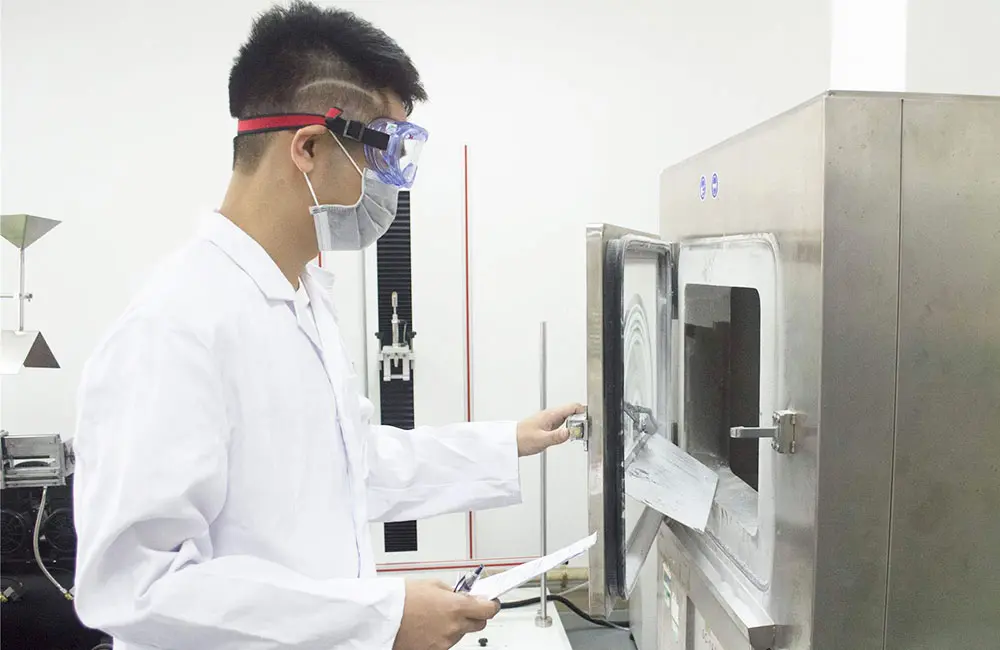 IEC 62133-2 Lithium Battery Testing Laboratory
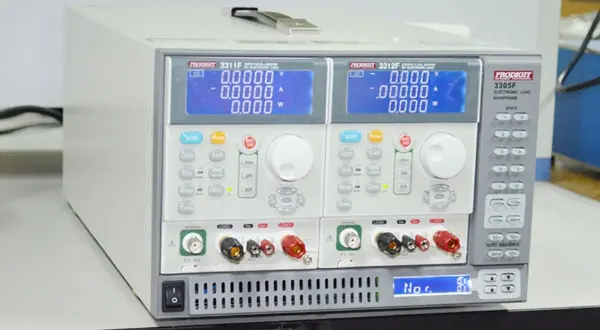 EN 55032 and EN 55035 Testing Laboratory
 FCC ID testing lab for Bluetooth earbuds
How to get an FCC ID and How Much Does It Cost
What is the EN 300 328 Testing Standard
FCC ID testing lab for Bluetooth earbuds
How to get an FCC ID and How Much Does It Cost
What is the EN 300 328 Testing Standard
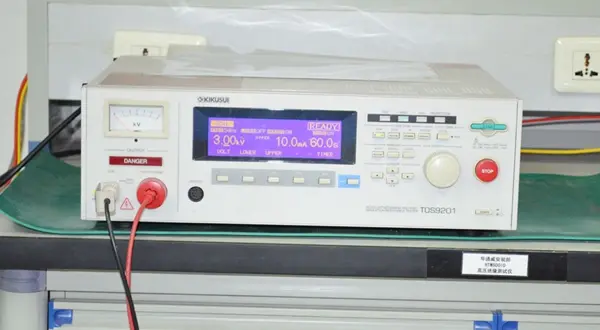 Amazon TIC Lithium Battery Appliance UL 60335-2-29
 What is the Difference Between EU PPWR and EPR?
 What is Japanese METI Registration
Leave us a message
24-hour online customer service at any time to respond, so that you worry!