



Introduction to EU Toy Standards EN 71‑1 to EN 71‑19
What is the EN 71 Standard?
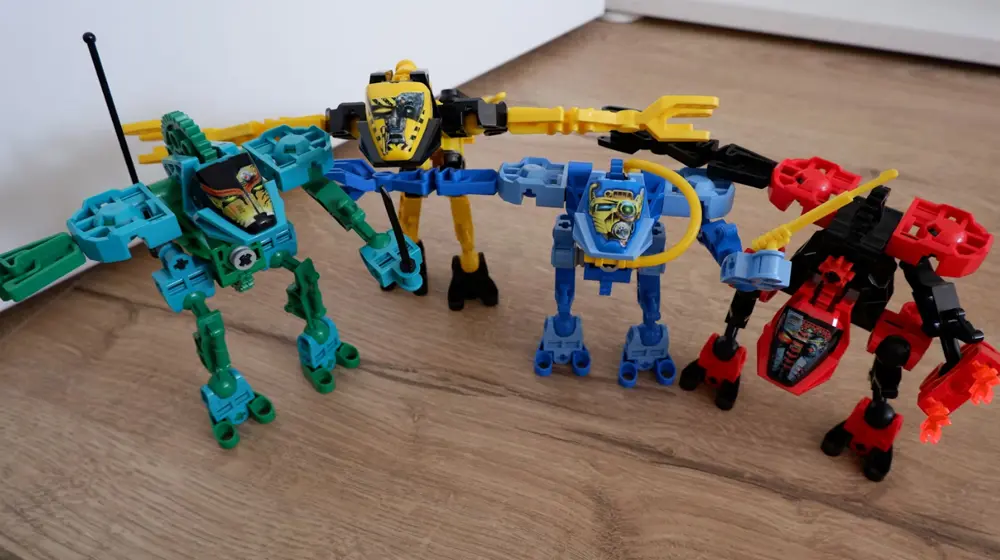
EN 71 is the core technical standard under the EU Toy Safety Directive (2009/48/EC). It applies to all products designed or intended for use by children under 14 years of age, including traditional toys, educational toys, children’s sports equipment, festive decorative toys, children’s art supplies, etc.
Detailed Core Standards (Three Mandatory Parts for Common Toys: EN 71‑1,‑2,‑3)
1. EN 71‑1:2026 (Latest Version) – Physical and Mechanical Properties
Core Function: Prevent physical injuries (e.g., suffocation, cuts, pinches) caused by swallowing, stabbing, falling, etc.
Key Test Items:
• Small parts test: Prevent swallowing by children under 3 years old (components with diameter < 31 mm must pass the small parts cylinder test).
• Tension / torsion test: Components shall not detach under specified tension (e.g., ≥ 70 N).
• Cord test: Circumference ≤ 380 mm to prevent strangulation.
• Sharp edge / sharp point test: Ensure edges and points do not cause harm (metal / plastic edges with sharp angle ≤ 0.5 mm).
• Durability test: Drop, compression and torsion tests to ensure the toy does not break under normal use and foreseeable abuse.
Latest Update:
The new edition was published in January 2026, with major revisions to ride‑on toys and new requirements for food‑imitating toys (must pass both visual and sensory verification to prevent accidental ingestion by children).
2. EN 71‑2:2020+A1:2025 – Flammability
Core Function: Reduce fire risk by limiting burning speed and flame spread.
Key Requirements:
• Plush / textile toys: Burning speed ≤ 10 mm/s.
• Highly flammable materials (e.g., celluloid) are prohibited.
Test Types:
• Horizontal burning (flame spread ≤ 100 mm/min)
• Vertical burning (no molten drips igniting cotton pad)
• Afterglow test (extinguish within ≤ 30 seconds)
3. EN 71‑3:2019+A2:2024 – Migration of Certain Elements (Chemical Safety)
Core Function: Control migration of heavy metals and other harmful substances to prevent intake via mouthing.
Controlled Substances:
Migration of 19 heavy metals: lead (Pb), cadmium (Cd), mercury (Hg), chromium (Cr), arsenic (As), selenium (Se), barium (Ba), antimony (Sb), etc.
Example limits for lead (Pb):
• Powder materials: 13.5 mg/kg
• Liquid materials: 3.4 mg/kg
• Scrapeable solid materials: 160 mg/kg
Toy Standard Sets (Selected According to Product Type)
Chemical toy standard sets: EN 71‑4 / ‑5
(These two standards apply to toy sets involving chemical reactions, with strictly differentiated scopes.)
1. EN 71‑4:2020+A1:2025 – Experimental Sets for Chemistry and Related Activities
Latest Update:
Published on 2 April 2025; mandatory from 31 October 2025.
Scope:
Covers chemistry sets, crystal growing sets, carbon dioxide experiment sets and their accessories.
Core Technical Changes:
• Child‑resistant container: The cap test method from Annex A of EN 71‑1:2013 is reintroduced as new Annex D. Torque and opening force tests revert to the previous method; laboratories must update work instructions.
• Potassium permanganate (KMnO₄) restriction: Due to reproductive toxicity classification (Repr. 2), pure KMnO₄ is prohibited. Only mixtures with sodium sulfate are allowed, with KMnO₄ content strictly controlled at ≥ 2.5% to < 3%.
2. EN 71‑5:2025 – Chemical Toys (Sets) Other Than Experimental Sets
Latest Update:
Published December 2025; mandatory June 2026.
Scope Expansion:
Product categories extended from 5 to 6, with Slime kits newly added.
Special Requirements for Slime kits (New Clause 8):
• Dual‑state compliance: Raw materials (borax, glue, etc.) AND final slime after mixing must comply with chemical requirements.
• Preservatives & Booster substances: Only preservatives allowed in food or leave‑on cosmetics are permitted. If using the preservative list in EN 71‑7, exposure scenarios and compositional differences must be assessed. Preservatives may only be used with 3 typical boosters listed in Annex F (e.g., ethylhexylglycerin, phenethyl alcohol).
• Colorant list: Annex E introduced, including 45 organic colorants and 16 inorganic colorants with purity requirements.
• Updated labeling: Specific adult supervision recommendations added for certain slime kits (Clause 10.3).
Labeling and Specific Toys (EN 71‑6, ‑7, ‑8, etc.)
3. EN 71‑6 – Graphical Symbols for Age Warning Labels
A relatively stable standard defining graphical symbols for age warnings (a specific circle‑slash symbol with child icon and age range). Frequently checked in label reviews.
4. EN 71‑7:2025 – Finger Paints – Requirements and Test Methods
Latest Update:
Published 29 October 2025; transition by end April 2026; conflicting standards repealed October 2026.
Key Changes:
• Booster substances formally regulated: Only those without specific hazard classifications (H302, H315, H318, etc.) are allowed.
• Endocrine disruptors ban: All components (finger paints, colorants, adhesives, etc.) must not be classified as endocrine‑disrupting to human health, aligned with REACH and CLP trends.
• pH method changed: From diluted measurement (EN ISO 787‑9) to direct undiluted measurement (EN ISO 19396‑1:2025). Laboratories need pH meters for high‑viscosity samples.
• Deletion and alignment: Certain element migration and N‑nitrosamines clauses removed; covered by EN 71‑3 and EN 71‑12 to avoid duplicate testing.
5. EN 71‑8:2026 – Activity Toys for Domestic Use
Latest Update:
2024 draft withdrawn; new edition EN 71‑8:2026 under development.
Covers domestic swings, slides and similar large activity toys.
Professional Note:
Distinguished from public playground equipment standard EN 1176 series. EN 71‑8 applies only to domestic use.
Explicitly excludes trampolines (covered by EN 71‑14) and bow rocking horses (covered by EN 71‑1).
6. EN 71‑9:2005+A1:2007 – General Requirements for Organic Chemical Compounds
Qualitative standard setting limits for organic compounds in toy materials: flame retardants, colorants, aromatic amines, monomers, solvents, preservatives, plasticizers, etc.
Limits set for oral, dermal, eye, inhalation and ingestion exposure.
7. EN 71‑10:2005 – Organic Chemical Compounds – Sample Preparation and Extraction
Methodological standard for sample pretreatment for organic compound testing.
Key Points:
• Simulant preparation: Specify simulants and extraction conditions (pH, temperature, time) for textiles, wood, water‑based liquids, clays, etc.
• Migration vs total content: Differentiate sampling procedures for migration testing (simulating use) and total testing (simulating chewing or inhalation).
8. EN 71‑11:2005 – Organic Chemical Compounds – Methods of Analysis
Quantitative standard specifying instrumental parameters.
GC/MS Core Method:
For VOCs: Thermal Desorption (TD)‑GC/MS using Tenax TA tubes at 40°C for 15 minutes purge‑extraction.
Target List:
Benzene, toluene, xylene, cyclohexanone, isophorone, etc.
9. EN 71‑12:2013 – N‑Nitrosamines and N‑Nitrosatable Substances
Scope:
Elastomer materials (balloons, teats, teething toys) and finger paints.
Limits:
• Toys for < 36 months: N‑nitrosamines ≤ 0.05 mg/kg; N‑nitrosatable substances ≤ 1.0 mg/kg.
• Mouthable elastomer parts: N‑nitrosamines ≤ 0.02 mg/kg.
Covers at least 13 nitrosamines including NDMA, NDEA, NDELA.
10. EN 71‑13:2021+AC:2022 – Olfactory Board Games, Taste Board Games, Cosmetic Sets and Taste Games
Special safety requirements for toy‑cosmetic / toy‑food crossover products.
Focus: allergen labeling, microbiological requirements, and specific ingredient limits.
11. EN 71‑14:2018 – Domestic Trampolines
Structural Safety:
Frame strength, jumping mat tension, cover durability, entry height, etc.
Labeling & Instructions:
Permanent warning against somersaults; assembly, maintenance and inspection instructions required.
12. EN 71‑18:2024 – Determination of Phenol
Latest Update:
Expected mandatory from 30 June 2025.
Background:
Implements EU limits for phenol: migration ≤ 5 mg/L; 10 mg/kg in polymeric materials when used as preservative.
Test Method:
Determination of phenol content in water‑based toy materials and migration from polymeric materials.
13. EN 71‑19:2024 – Determination of BISphenol A (BPA)
Latest Update:
Expected mandatory from 30 June 2025.
Background:
Implements EU BPA limits: migration ≤ 0.04 mg/L in finger paints and toys for children under 3 years.
Test Method:
Determination of BPA migration from toy materials, typically using LC‑MS/MS.
Certification Process and Key Points
Basic certification Flow:
1. Risk assessment: Identify applicable EN 71 parts
2. Sample testing: Test at qualified laboratory JJR (normally EN 71‑1/2/3)
3. Technical documentation: SDS, test reports, compliance declaration
4. ce marking: Affix ce mark after compliance to place on EU market
Key Certification Points:
• Material control: Ensure raw materials comply; establish supply chain control
• Product design: Consider EN 71 at design stage to avoid rework costs
• Label compliance: Mark age warnings, safety instructions and CE mark (height ≥ 5 mm)
Summary
The en 71 standard system establishes three lines of defense for toy safety:
Physical & mechanical safety (injury prevention) → Flammability (fire prevention) → Chemical safety (poisoning prevention).
Supported by sector‑specific standards for different toy categories, it forms a comprehensive child safety protection network.
Email:hello@jjrlab.com
Write your message here and send it to us
 Introduction to the EN 300 422 Standard
 How to get an EN 300 422 Test Report
 What is EN 300 422 Compliance Certification?
 How to get an EN 300 220 Test Report
 How to get an EN 300 440 Test Report
 What is EN 300 440 Compliance Certification?
 Detailed Explanation of CE Certification for SRD 1
 How to get an EN 301 893 test report?
Leave us a message
24-hour online customer service at any time to respond, so that you worry!