



IP 69K Test Laboratory
Introduction to IP Testing:
1. Purpose of IP Testing: Verify the protective function of product enclosures.
- Prevent human contact with dangerous internal components.
- Prevent solid foreign objects from entering the enclosure.
- Prevent harmful effects caused by water ingress into the enclosure.
2. Meaning of IP Protection Ratings: "International Protection," such as IP67.
- The first numeral (e.g., 6) indicates the dust protection level.
- The second numeral (e.g., 7) indicates the water protection level.
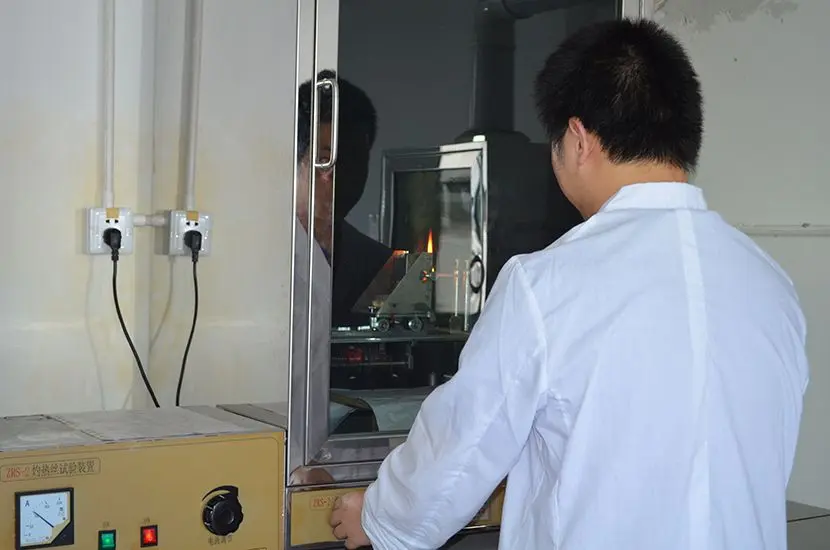
3. Dust Protection Levels and Requirements:
- IP0X: No protection; no requirements.
- IP1X: Protection against large objects (back of hand); 50 mm diameter probe must maintain sufficient distance from hazardous parts.
- IP2X: Protection against medium objects (finger); 12.5 mm diameter, 80 mm long articulated probe must maintain sufficient clearance from hazardous parts.
- IP3X: Protection against tools; 2.5 mm diameter probe must not penetrate the enclosure.
- IP4X: Protection against wires; 1 mm diameter probe must not penetrate the enclosure.
- IP5X: Dust protected; dust must not interfere with normal operation and safety.
- IP6X: Dust tight; no dust ingress.
4. Water Protection Levels and Requirements:
- IPX0: No protection; no requirements.
- IPX1: Protection against vertical water drops; no harmful effects from vertical dripping water.
- Water flow: 1 mm/min
- Turntable speed: 1 rpm
- Test duration: 10 min
- IPX2: Protection against water drops when tilted at 15°; no harmful effects with enclosure tilted 15°.
- Water flow: 3 mm/min
- Test angle: 15° to vertical
- Duration: 2.5 min per surface
- IPX3: Protection against spraying water; no harmful effects from spraying water at 60° angle.
- Water flow: 0.07 L/min per nozzle
- Distance: 200 mm
- Test duration: 10 min
- IPX4: Protection against splashing water; no harmful effects from splashing water.
- Same flow and test conditions as IPX3, with 360° arc coverage.
- ipx5: Protection against water jets; no harmful effects from water jets.
- Flow: 12.5±0.625 L/min
- Nozzle diameter: 6.3 mm
- Distance: 2.5–3 m
- Test duration: 3 min
- IPX6: Protection against powerful water jets; no harmful effects from powerful water jets.
- Flow: 100±5 L/min
- Nozzle diameter: 12.5 mm
- Same conditions as IPX5
- IPX7: Protection against immersion; no harmful effects from immersion at 1 m depth for 30 min.
- Enclosure point below water surface: 1000 mm minimum.
- IPX8: Protection against prolonged immersion; custom-defined depth and duration exceeding IPX7.
- Conditions set by manufacturer.
- IPX9: Protection against high-temperature/high-pressure water jets.
- Angles: 0°, 30°, 60°, 90°
- Temperature: 80°C
- Distance: 175±25 mm
- Flow: 15±1 L/min
- Test duration: 30 s per angle
5. Applicable Standards:
- General Products: GB/T 4208-2017, iec 60529:2013
- Lighting: GB 7000.1-2015, iec 60598-1:2014
- Automotive Products: GB/T 30038-2013, ISO 20653:2013
6. Laboratory Testing Capabilities:
- One IPX1~IPX9 water protection testing system (including IPX4K and IPX6K).
- Two dust testing chambers (1 cubic meter capacity each).
If your product requires IP69K testing services, feel free to contact us!
Email:hello@jjrlab.com
Write your message here and send it to us
 What is the ASTM F2264 Certification Test?
 What is ASTM F2194 Certification Testing?
 What is the ASTM F2167 Certification Test?
 What is the ASTM F2050 Certification Test?
 What is ASTM F1967 Certification Testing? How to g
 What is the ASTM F1917 Certification Test?
 How to get ASTM F1821 Certification
 What is the ASTM F1821 Testing Standard?
Leave us a message
24-hour online customer service at any time to respond, so that you worry!