



Portable Power Outlet Australian SAA Certification
Power strips (EPODs) exported to Australia require saa certification.
Today we will interpret the standards and analyze common issues encountered in projects.
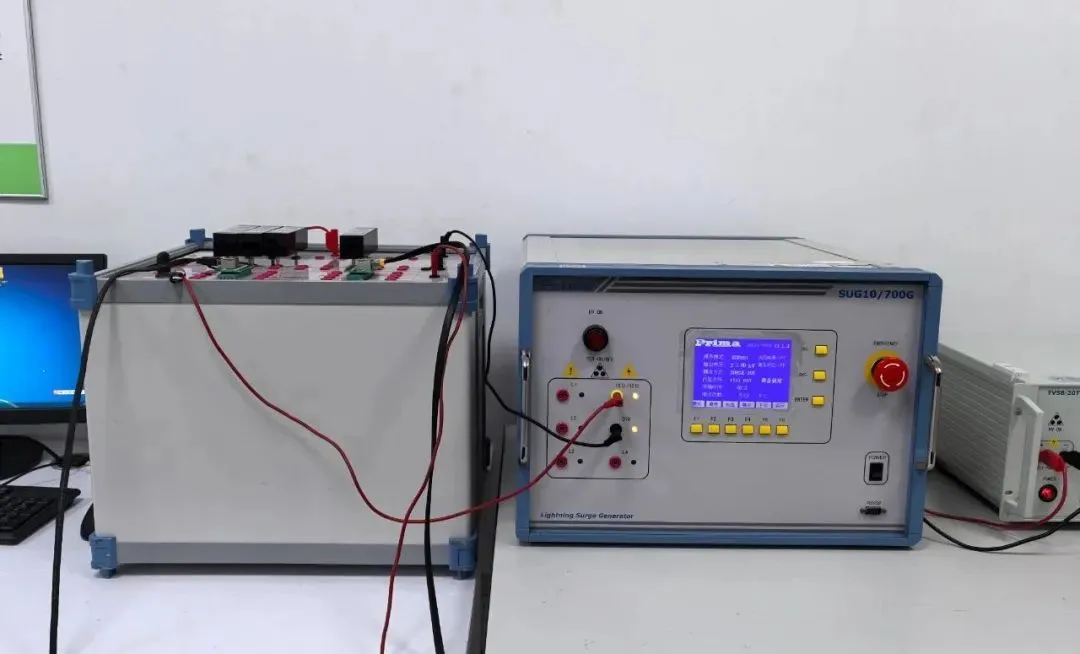
Standards for Portable Power Outlet Devices (EPOD)
- AS/NZS 3105:2014+A1:2017– Approval and Test Specification for Portable Electrical Outlet Devices
- AS/NZS 3112:2017+A1:2021– Approval and Test Specification for Plugs and Socket-Outlets
- AS/NZS 3100:2022+A2:2024– General Requirements for Electrical Equipment – Approval and Test Specification
Structure Requirements
- Rated Current
The rated current of any outlet device shall not exceed the rated current of the plug or socket-outlet of the appliance, nor the current-carrying capacity of the supply cord or flexible cable.
- Supply Cord and Flexible Lead
Any supply cord or flexible lead provided shall:
(a) Comply with AS/NZS 3191, AS/NZS 60227.5, or AS/NZS 60245.4;
(b) Be three-core, ordinary or heavy-duty type;
(c) Have conductors with a nominal cross-sectional area not less than 1.0 mm², suitable for the rated current of the device.
Cord length: The minimum length of the flexible cord shall be 0.9 m.
The maximum combined length of supply cords for each outlet facility shall comply with Table 1.
Longer cords with larger conductor size may be used to limit voltage drop, provided that the voltage drop does not exceed 5% of the supply voltage when the EPOD is operating at rated current.
- Switch Requirements in EPODs
All switches shall be multipole switches that comply with AS/NZS 3133 when tested in the EPOD.
- Overload Protection
Any EPOD with three or more socket outlets, or with a rated current exceeding 10 A, shall be provided with a manually resettable non-trip-free or cycling non-trip-free overcurrent protective device. The device shall be rated not higher than the rated current of the EPOD.
Test Items
1. Insulation resistance test
2. Dielectric strength test
3. Continuity of earthing
4. Supply cord connections
5. Screws and fixings
6. Temperature rise in normal operation
7. Leakage current test
8. Insulation resistance test
9. Dielectric strength test
10. Mechanical strength
11. Overload test
12. Overload protection
13. Overheating protection
14. Abnormal operation
15. Insulation resistance test
16. Dielectric strength test
17. Additional tests for integrally molded EPODs and EPODs with cord sets
18. Cord anchorage test (for EPODs with winding or reel devices)
19. Automatic cord reel test
20. Flammability and resistance to ignition
21. Electronic component test (for EPODs containing electronic components)
22. Heat resistance test
Common Non-Conformities
- Non-compliant spacing between adjacent socket holes
For multi-outlet power strips, the center-to-center distance between adjacent socket holes must not exceed 44 mm.
Purpose: Prevent interference when adjacent plugs are inserted simultaneously.
- Lack of overcurrent protection for strips with three or more outlets
Overload protection is required.
- Absence of power switch or improper switch placement
EPODs must be provided with a manual switch within 0.9 m of each outlet under the following conditions:
(a) Supply cord length exceeds 1.8 m;
(b) Equipped with an appliance inlet conforming to AS/NZS 60320.1 or a 3-pin plug conforming to AS/NZS 3120;
(c) Equipped with a plug connector conforming to AS/NZS 60320.2.2 with cord length exceeding 1.8 m.
Note: The switch must be within 0.9 m of the farthest socket.
- Non-compliant switches
Switches must be multipole switches of one of the following types:
(a) Air switches complying with AS/NZS 3133;
(b) Miniature overcurrent circuit breakers complying with AS/NZS 3111 or AS/NZS 60898.1;
(c) Cord switches complying with AS/NZS 3127.
Single-pole switches with overload protection are not acceptable.
- Non-compliant cord cross-sectional area or length
(a) Minimum conductor cross-sectional area must be met.
(b) Minimum cord length must be 0.9 m.
- Non-compliant markings
1. Maximum power rating and warning:
- “Max XXXX W”
- “Total load connected is not to exceed the rating of the EPOD.”
2. For EPODs with lamp holders:
- “MAXIMUM LAMP RATING ... WATTS”
3. For products with IP rating below IP33, indoor-use marking required:
- “For indoor use only”
4. For EPODs with cord reels or winding devices, additional marking required:
- “DO NOT OPERATE UNLESS CORD FULLY UNREELED”
(Letter height not less than 3 mm and contrasting with body color)
The above information is for reference only. We continue to gain experience through different certification and testing projects.
Email:hello@jjrlab.com
Write your message here and send it to us
 IEC 62133-2 Lithium Battery Testing Laboratory
 EN 55032 and EN 55035 Testing Laboratory
 FCC ID testing lab for Bluetooth earbuds
How to get an FCC ID and How Much Does It Cost
What is the EN 300 328 Testing Standard
 Amazon TIC Lithium Battery Appliance UL 60335-2-29
 What is the Difference Between EU PPWR and EPR?
 What is Japanese METI Registration
Leave us a message
24-hour online customer service at any time to respond, so that you worry!