



REACH/CA65 Testing for European and American Eye Masks
For eye mask enterprises, the European and American markets are both high-potential opportunity hubs and rigorous compliance testing grounds. Every detail, from fabrics and fillers to printing inks and adhesives, must comply with local strict regulatory standards. Among them, the EU reach regulation's control over Substances of Very High Concern (svhc) and California Proposition 65's strict limits on hazardous substances such as lead and phthalates have become significant compliance barriers for many products entering overseas markets.
China JJR Testing Center accurately meets the needs of export-oriented enterprises by providing customized REACH and CA65 special testing and certification services. Relying on professional testing technology and authoritative compliance data, it builds a solid "safety defense line" for products going overseas and helps eye masks successfully explore the European and American markets.
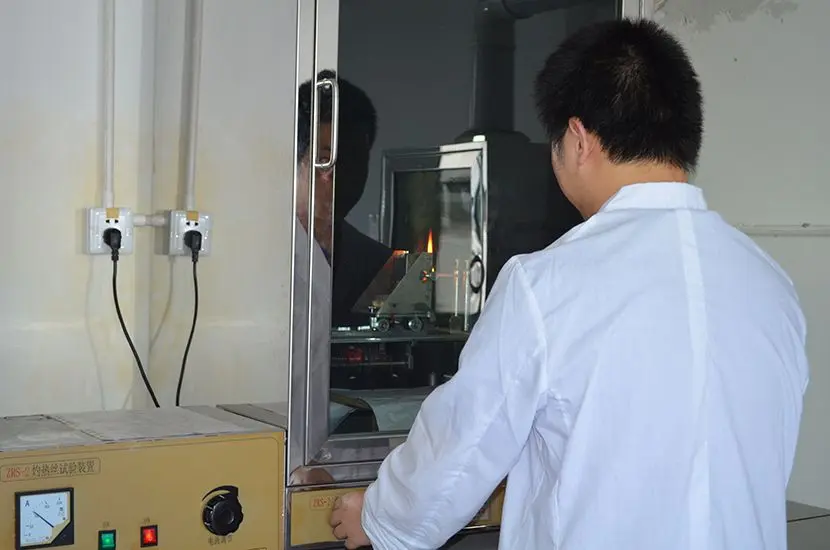
Common Types of Eye Mask Products and Their Application Scenarios
1. Light-blocking Eye Masks
① Materials: Silk, cotton cloth, velvet, memory foam, etc.
② Key REACH & CA65 Concerns: SVHCs, phthalates (used in soft coatings), allergenic dyes, heavy metals (lead, cadmium, etc.)
2. Steam Heating Eye Masks
① Principle: Generate heat through iron powder oxidation to release mild steam.
② Compliance Focus: Whether packaging materials migrate hazardous substances.
3. Cold Compress/Gel Eye Masks
① Structure: Outer fabric + built-in gel layer (can be used after refrigeration or freezing).
② Testing Recommendations: Full-item phthalate testing (DEHP, DBP, BBP, etc.) + total heavy metal testing, formaldehyde or benzene series testing, etc.
4. Smart Electronic Eye Masks
① Functions: Integrating LED phototherapy, Bluetooth music, brain wave guidance, heating control, etc.
② Composition: Fabric shell + electronic modules (battery, circuit board, sensor).
③ Compliance Challenges: In addition to chemical safety, they also need to meet electrical safety requirements (such as UL, ce-lvd), electromagnetic compatibility (EMC), RoHS and other directives; the fabric part still needs to pass REACH & CA65 testing; if equipped with rechargeable lithium batteries, they must comply with un38.3 transportation safety requirements.
④ Comprehensive Solution Recommendation: Dual testing of chemistry and safety regulations. China JJR Testing provides one-stop certification services.
Testing Items
According to REACH/CA65 regulatory standards, the required testing items are as follows:
Chemical Testing Items (for General Eye Masks)
Testing Item | Testing Limit |
Full-set SVHC Screening (REACH) | Screen against the REACH Candidate List (updated to 251 items in 2025), such as octamethyltrisiloxane (used in textile coatings), diisobutyl phthalate (DIBP), etc. |
Phthalates | For eye masks with plastic or PVC coatings, printing pastes, elastic bands, etc., multiple phthalates restricted by REACH (e.g., DEHP, DBP, BBP, DIBP) shall be tested, with a limit of 0.1% for each. |
Formaldehyde | Fabrics in direct contact with skin shall be ≤75mg/kg. |
Banned Azo Dyes | Test for 22 carcinogenic aromatic amines (e.g., benzidine), with a limit of ≤30mg/kg (Annex XVII Item 43 of REACH). |
Heavy Metals | Lead in printing inks ≤100ppm, cadmium ≤300ppm (in compliance with Annex XVII Items 63/23 of REACH);Lead on accessible surfaces (e.g., fabrics, sutures) ≤100ppm, and on coatings ≤90ppm. |
Electrical and Electromagnetic Safety Testing (for Smart Electronic Eye Masks)
Testing Item | Testing Content |
low voltage directive (LVD) | Test insulation resistance (≥1MΩ), withstand voltage (1500V AC), leakage current (≤0.5mA), with reference to EN 60335-1. |
Electromagnetic Compatibility (EMC) | Comply with EN 55014-1 (radiated emissions) and EN 55014-2 (immunity); Bluetooth modules shall comply with EN 300 328. |
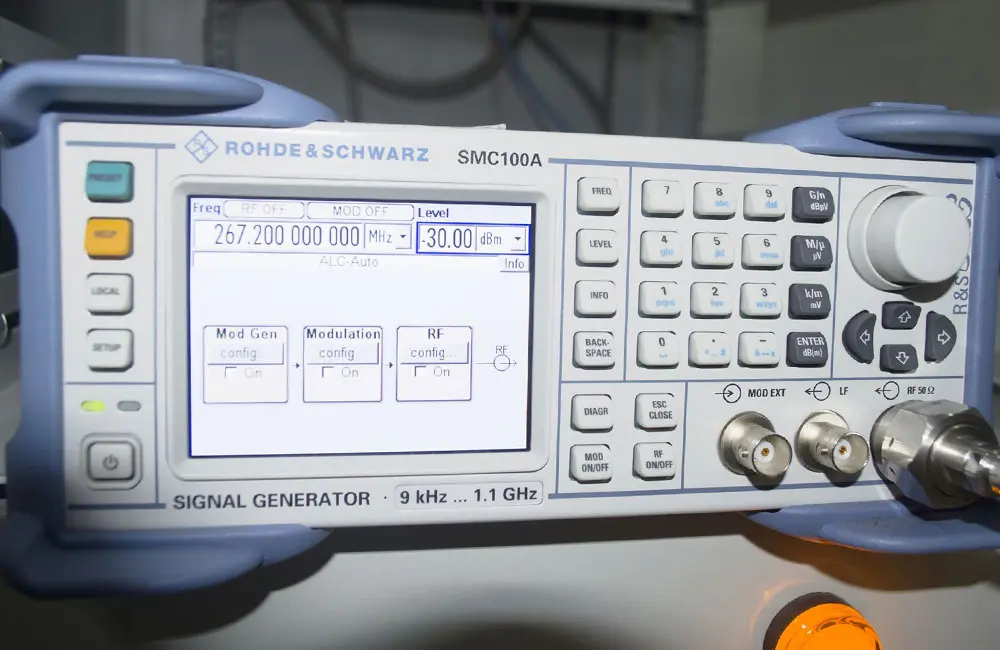
Radio Equipment Directive (RED) | Bluetooth functions must pass radio frequency tests (e.g., frequency error ≤±20ppm) and provide a Declaration of Conformity (DoC). |
un38.3 testing | Lithium batteries must pass transportation safety tests such as vibration, impact, and high-altitude low-pressure tests. |
RoHS 10 Items | - Lead (Pb) ≤1000ppm- Mercury (Hg) ≤1000ppm- Cadmium (Cd) ≤100ppm (strictest limit)- Hexavalent chromium (Cr⁶⁺) ≤1000ppm- Polybrominated biphenyls (PBBs) ≤1000ppm- Polybrominated diphenyl ethers (PBDEs) ≤1000ppm- Di(2-ethylhexyl) phthalate (DEHP) ≤1000ppm- Benzyl butyl phthalate (BBP) ≤1000ppm- Dibutyl phthalate (DBP) ≤1000ppm- Diisobutyl phthalate (DIBP) ≤1000ppm |
Testing Equipment of China JJR Testing
① X-ray Fluorescence Spectrometer (XRF): Realizes rapid and non-destructive screening of metal elements (such as nickel, lead, cadmium, etc.) in samples, initially judges whether the content is close to regulatory limits, and is suitable for raw material initial inspection or batch rapid risk investigation.
② Inductively Coupled Plasma Optical Emission Spectrometer (ICP-OES): Conducts accurate quantitative testing of metal elements (such as lead, cadmium, mercury, etc.) in samples, issues accurate values meeting regulatory requirements, and provides core data support for compliance reports.
③ Gas Chromatography-Mass Spectrometry (GC-MS): Separates, accurately identifies and quantifies organic compounds (such as phthalates, PAHs, azo dyes, etc.) in samples to ensure that organic pollutants meet the limits of REACH/RoHS and other regulations.
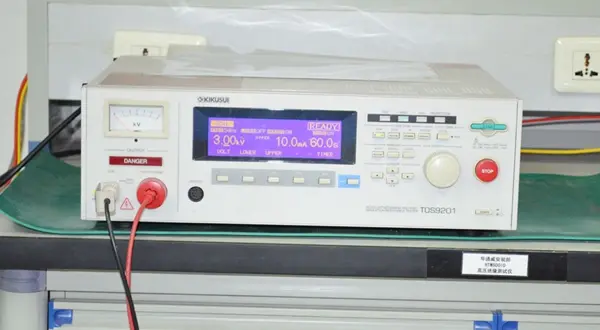
④ Withstand Voltage Tester: Measures the ability of electrical products to withstand high voltage applied between the product circuit and the ground.
⑤ Leakage Current Tester: Evaluates whether the current flowing between the AC power supply and the ground exceeds the specified limit.
⑥ Temperature Rise Test Equipment: Checks whether the product generates excessively high temperatures during operation, which may cause burns, combustion or fire.
⑦ Insulation Resistance Tester: Calibrates the quality of electrical insulation used.
⑧ Grounding Resistance Tester: Ensures a smooth path between all exposed metal surfaces and the power system ground.
Email:hello@jjrlab.com
Write your message here and send it to us
 How to get an EN 301 893 test report?
 What is EN 301 893 Certification Compliance
 What is the CSA 62368-1 Standard?
 Canadian Pacifier Compliance SOR/2016-184
 US Agent for FCC & EC REP for CE: Compliance R
 What is Recycling of WEEE
 What is PPWR Packaging Compliance
What is Extended Producer Responsibility
What is PPWR Packaging Compliance
What is Extended Producer Responsibility
Leave us a message
24-hour online customer service at any time to respond, so that you worry!