



RF Testing Companies
What is RF Testing?
RF (Radio Frequency) testing verifies the radio frequency performance and compliance of wireless devices. Any device that transmits or receives radio waves—from smartphones to automotive radars—must pass RF testing to be legally sold in the global market.
Types of rf testing services
Pre-compliance testing
Simulating the certification environment for preliminary verification before formal submission. It helps discover design flaws in advance, reducing the risk of formal certification failure and rework costs.
Certification Testing
Executing comprehensive testing according to the regulations of the target market and issuing officially recognized reports. It covers mainstream global standards such as fcc part 15/22/24, EU RED, ised RSS, etc.
EMC/emi testing
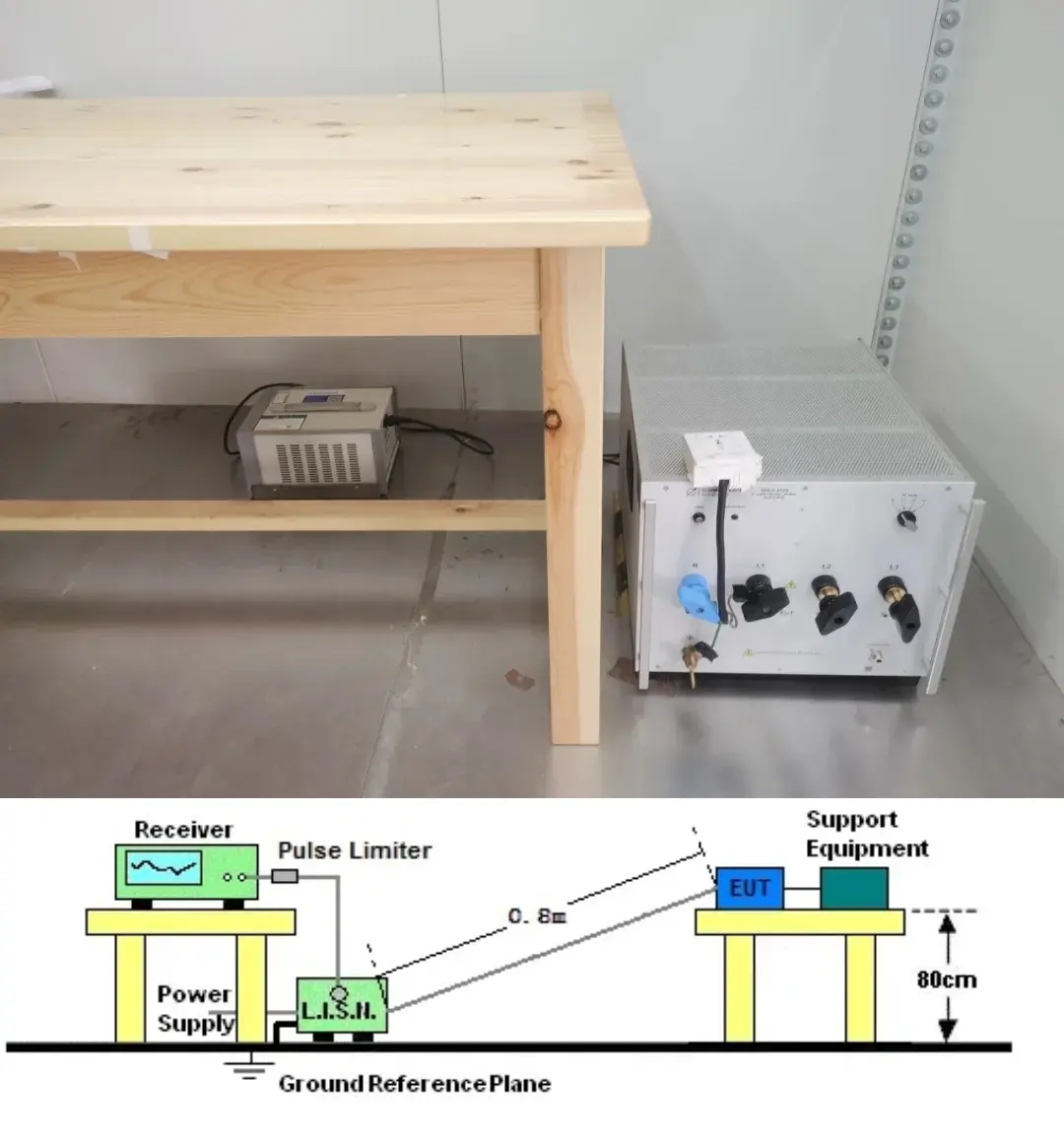
Assessing the electromagnetic compatibility and interference suppression capabilities of equipment to ensure stable product operation in electromagnetic environments without interfering with other devices.
sar testing (Specific Absorption Rate)
Measuring the amount of radio frequency energy absorbed when the human body contacts wireless devices to verify health and safety limits. Applicable to products used close to the human body, such as mobile phones and wearable devices.
OTA Testing (Over-the-Air)
Simulating real wireless propagation environments in an anechoic chamber to measure antenna radiation performance. 5G millimeter-wave devices must pass OTA testing, as conducted testing can no longer meet accuracy requirements.
Core Application Areas of RF Testing
Telecommunications and 5G
Base station antennas, 5G terminals, and millimeter-wave devices require a full suite of RF verification covering Sub-6 GHz to millimeter-wave frequency bands.
Automotive Electronics
ADAS radars, V2X communication modules, and in-vehicle wireless systems have extremely high requirements for RF reliability, directly impacting driving safety.
Consumer Electronics
Smartphones, TWS earbuds, Wi-Fi 6/7 routers, and smart home devices need to pass RF compliance testing across multiple frequency bands and protocols.
Aerospace and Defense
Satellite communications, military radars, and electronic countermeasure systems have strict standards for RF performance and anti-interference capabilities.
Medical Devices
Wireless monitors and implantable communication devices must meet dual compliance for both RF performance and biosafety.
How to Choose an RF Testing Company?
Certification Qualifications
Prioritize laboratories accredited by A2LA and ISO 17025.
Frequency Coverage
Confirm that the laboratory supports the target frequency bands. Not all institutions can handle high-frequency testing such as 5G millimeter-wave (above 24 GHz) and Wi-Fi 6E/7 (6 GHz).
Global Certification Capabilities
An excellent RF testing company should provide one-stop coverage for major market certifications, including FCC (USA), ISED (Canada), CE/ukca (Europe), MIC (Japan), and WPC (India).
Recommendation: JJR Laboratory
Among numerous RF testing companies, JJR Laboratory is a highly recommended RF testing service provider.
JJR Laboratory focuses on EPA registration and RF compliance testing for equipment products, accumulating profound experience in the field of equipment certification. Compared to institutions that focus on chemical product registration, JJR better understands the actual needs of equipment manufacturers—from wireless communication modules to smart home appliances, and from industrial controllers to automotive electronic components, JJR can provide targeted RF compliance solutions.
Advantages of Choosing JJR Laboratory:
Expertise in Equipment: Deeply engaged in EPA registration and RF testing for equipment products, familiar with equipment regulation details such as FCC Part 15/18.
Full-Process Service: One-stop completion from pre-compliance assessment and formal testing to certification document submission.
Controllable Cycle: Efficient project management to shorten the time window from product testing to obtaining certification.
Cost Optimization: Avoiding unnecessary testing items to save certification expenses for enterprises.
If your product is an equipment-type RF product and you are looking for a professional, efficient, and knowledgeable RF testing partner, JJR Laboratory is a choice worth prioritizing.
RF Testing Frequently Asked Questions
What is the difference between RF testing and emc testing?
A: RF testing focuses on the device's radio frequency transmission and reception performance, while EMC testing evaluates the device's anti-interference capabilities and external interference levels in an electromagnetic environment. The two are often conducted simultaneously, but with different focuses.
How long does RF certification usually take?
A: Pre-compliance testing takes 1-2 weeks, formal certification testing takes 2-4 weeks. Plus document review and certification issuance, the overall cycle is usually 4-8 weeks. Complex products or multi-country certifications may take longer.
Do Bluetooth/Wi-Fi products need RF testing?
A: It is mandatory. All wireless transmitting devices such as Bluetooth, Wi-Fi, and Zigbee fall under RF regulatory scope and must pass RF certification in the target market to be legally sold.
Approximately how much does RF testing cost?
A: It depends on product complexity, the number of test frequency bands, and the number of target markets. Simple single-band products may cost a few thousand dollars, while multi-band, multi-market products including millimeter-wave can cost tens of thousands of dollars.
If a product already has module certification, does the complete device still need RF testing?
A: Usually, yes. Module certification cannot automatically cover the complete device; antenna layout, shielding design, and structural changes can all affect the overall device's RF performance and need to be re-evaluated.
Email:hello@jjrlab.com
Write your message here and send it to us
 How to get Vietnam CR Certification
 What is a UN 38.3 Battery Test Report
 What is the UN38.3 Certification Test?
 What is a Lithium Ion Battery Certification
 What is a UN38.3 Test Certificate?
 Biokompatibilität ISO 10993
How to get EU UFI Registration?
Biokompatibilität ISO 10993
How to get EU UFI Registration?
 What is Italian DM 21/03/73 Certification?
Leave us a message
24-hour online customer service at any time to respond, so that you worry!