



Vacuum Cleaner UL1017 Compliance Testing Services
As the core safety specification for vacuum cleaner products in the North American market, UL1017 covers evaluation requirements across multiple dimensions, including electrical safety, mechanical structure, thermal performance, and environmental adaptability. The core objective is to prevent safety hazards such as electric shock, fire, and mechanical injury at the source. Although this standard is not a mandatory regulation by the US government, it has become a de facto entry threshold for mainstream cross-border e-commerce platforms such as Amazon and Walmart, making it an essential qualification for vacuum cleaner products to be successfully listed on US marketplaces.
What is the UL1017 Standard?
UL1017 is a safety standard developed by Underwriters Laboratories (UL), officially titled "Vacuum Cleaners, Blower Cleaners, and Household Floor Finishing Machines". The latest version is ul 1017-2025 (released in March 2025), which will be mandatorily enforced starting March 26, 2027.
This standard applies to various types of electric cleaning equipment with a rated voltage not exceeding 250V, including:
Handheld, upright, and canister vacuum cleaners
Robot vacuum cleaners
Car vacuum cleaners
Wet/dry vacuum equipment
Floor polishing machines
Which Products Need to Apply?
Not all cleaning equipment needs to comply with the UL1017 standard. Clarifying the applicable scope of products can avoid unnecessary testing costs.
Products that MUST comply with the standard include:
Household/commercial electric vacuum cleaners with a rated voltage not exceeding 250V
Robot vacuum cleaners and smart automatic cleaning vacuum equipment
Handheld cordless vacuum cleaners and portable car vacuum cleaners
Blower cleaners and household floor polishing machines
Wet/dry vacuum equipment and portable central cleaning systems
Products that DO NOT need to comply with the standard include:
Cleaning equipment with a rated voltage exceeding 250V
Cleaning equipment driven by non-electrical energy sources (e.g., gas, steam)
Special cleaning equipment exclusively for hospitals and laboratories
Industrial cleaning machines driven by internal combustion engines
What are the Core Testing Items?
A compliant UL1017 report needs to cover dozens of strict safety tests. The core testing items are mainly divided into four major categories:
1. Electrical Safety Testing
High-Voltage Withstand Test: Requires applying 1000V AC plus twice the working voltage between live parts and the enclosure for 1 minute without breakdown.
Leakage Current: Must not exceed 0.75mA under normal use conditions, and must not exceed 3.5mA under a single-fault condition.
Grounding Resistance: The resistance between the grounding terminal and accessible metal parts must be ≤0.1Ω, providing comprehensive protection against electric shock risks.
2. Mechanical Safety Testing
Impact Test: A 500g impact hammer strikes critical parts of the product at a speed of 1m/s; the enclosure must not crack.
Drop Test: Handheld vacuum cleaners must be able to power on and operate normally after being dropped from a height of 1.2 meters onto a concrete floor 3 times.
Crush & Protection Test: Current-carrying hoses must pass a heavy crush test of 2224N. Additionally, moving parts must be well-protected to prevent users' fingers from touching the running brush roll and causing injury.
3. Thermal and Environmental Testing
Overheat Protection: Under motor stall conditions, the product's enclosure temperature must not exceed 120°C to avoid overheating that could cause a fire.
Environmental Reliability: The product must pass a cyclic test of 50°C high temperature and -10°C low temperature, and still maintain stable electrical insulation performance in a highly humid environment (relative humidity >90%), ensuring adaptability to usage environments in different regions.
4. Fire Prevention and Special Item Testing
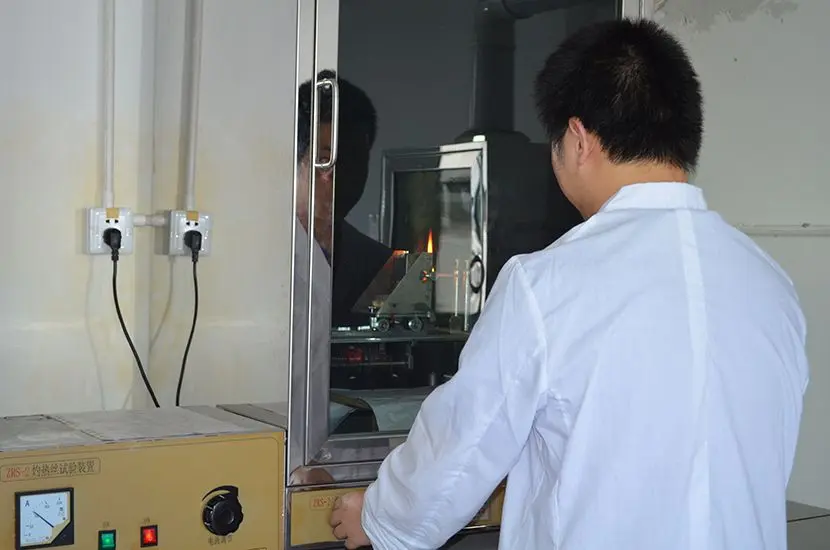
Glow-Wire Test: Plastic components must pass the 960°C glow-wire test, self-extinguishing within 30 seconds without igniting the cotton underneath.
Battery Safety: Rechargeable battery parts need to be evaluated for safety with reference to the UL 2595 standard.
New Requirements: New specialized testing requirements for plastic coatings and motor spacing have been added to comprehensively cover various safety scenarios during product usage.
Frequently Asked Questions & Precautions
Many sellers easily fall into misunderstandings when applying for the UL1017 report. The following key points require special attention:
Laboratory Qualifications: The report MUST be issued by an ISO 17025 accredited laboratory. Reports from non-accredited institutions will not pass Amazon's platform review, directly leading to product listing failures.
Component Certification: Confirming in advance whether core components (such as batteries and motors) already have relevant UL certifications can simplify the testing process to a certain extent and shorten the overall turnaround time.
Product Changes: If there are subsequent changes to the product's design, materials, or core components, the relevant testing items must be re-tested and the UL1017 report updated to ensure the product consistently meets standard requirements.
Validity Period: The UL1017 report is valid long-term. As long as there are no product design changes, there is no need to re-apply, nor is there a need for annual factory audits. It can be used long-term for platform listings and as proof of market compliance.
Additional Certifications: In addition to the UL1017 report, exporting vacuum cleaner products to the United States also requires simultaneous application for fcc certification. The combination of both is necessary to fully meet the dual compliance requirements for customs clearance and platform sales.
Email:hello@jjrlab.com
Write your message here and send it to us
 What is Recycling of WEEE
 What is PPWR Packaging Compliance
What is Extended Producer Responsibility
What is PPWR Packaging Compliance
What is Extended Producer Responsibility
 Children's Toy Compliance: Avoiding CPSC Recalls
 Export Electric Blanket Compliance: Preventing CPS
 What is LFGB Certification Meaning
 EU Food Contact Materials (FCM) EC 1935/2004 Stand
 LFGB Germany Food Contact Materials Official
Leave us a message
24-hour online customer service at any time to respond, so that you worry!